 Bug FAQ
Lepisma chlorosoma
Lepisma chlorosoma · Order: Zygentoma · Family: Lepismatidae


It lives in Mediterranean climates across the western Mediterranean Basin, including southern Europe and North Africa.
Source: Wikipedia
Is it a pest in the house?
In homes it stays near ant nests but does not become fully integrated, usually keeping to the periphery and avoiding direct contact with workers.
Source: Wikipedia
Where it lives
Lepisma chlorosoma prefers Mediterranean climates.
Source: Wikipedia
What it eats
It is often found near ant nests, feeding in association with ant genera like Bothriomyrmex, Camponotus, Crematogaster, Pheidole, Tapinoma, and Tetramorium.
Source: Wikipedia
Where it comes from
It is native to the western Mediterranean Basin, recorded in Portugal, Spain, Italy (including Sicily and Sardinia), Croatia, and North African countries such as Morocco, Algeria, and Tunisia.
Source: Wikipedia
Lookalikes
It looks very similar to Lepisma baeticum, and can only be separated by microscopic details of the chaetotaxy.
Source: Wikipedia
Questions people ask
How can I tell Lepisma chlorosoma apart from similar silverfish?
Look for dark head and antennae, metallic dark-green thorax and abdomen with whitish abdominal marks, and yellowish legs with reddish setae; definitive ID needs microscopic chaetotaxy examination.
Source: Wikipedia
Where might I find this bug in my house?
It tends to hang out near ant nests inside homes, staying at the nest edge and avoiding direct contact with the ants.
Source: Wikipedia
What region is Lepisma chlorosoma native to?
It is native to the western Mediterranean Basin, including parts of southern Europe and North Africa.
Source: Wikipedia
Same family (Lepismatidae)
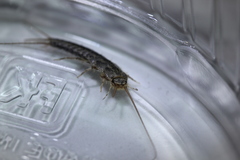 CtenolepismaCtenolepismaCan damage your home
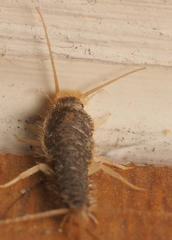 Long-tailed SilverfishCtenolepisma longicaudatumCan damage your home
 Common SilverfishLepisma saccharinumCan damage your home
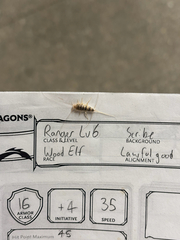 FirebratThermobia domesticaCan damage your home
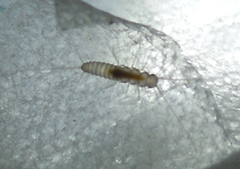 Four-lined SilverfishCtenolepisma lineataFour-lined SilverfishCtenolepisma lineatumNuisance, not dangerous
Sources
- Wikipedia: https://en.wikipedia.org/wiki/Lepisma_chlorosoma
Look it up elsewhere: GBIF · iNaturalist · BugGuide · Wikipedia
Text written 2026-10-23 from the sources above and checked sentence by sentence against them. Data fetched 2026-10-23.