 Bug FAQ
Common Silverfish
Lepisma saccharinum · Order: Zygentoma · Family: Lepismatidae
Also called: Silverfish, Silver Fish
Source: Wikipedia

Silverfish are small, nocturnal insects about 7 to 10 mm long with a tapered, fish-like abdomen that becomes a metallic grey as they age. They thrive in moist indoor spots like basements, bathrooms, kitchens and attics, needing humidity between 75 % and 95 %. These insects feed on starchy substances, paper adhesives, cotton, silk and even their own shed skins, which can lead to damage of walls, fabrics and stored food.
Source: Wikipedia
How to recognize it
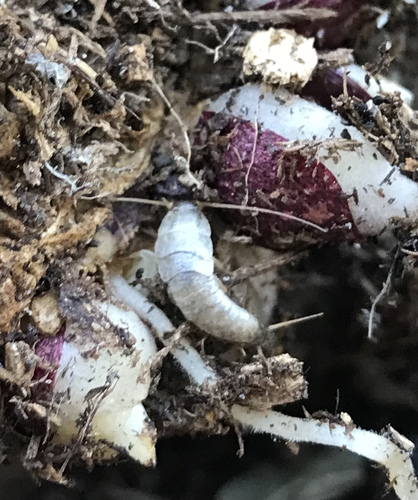
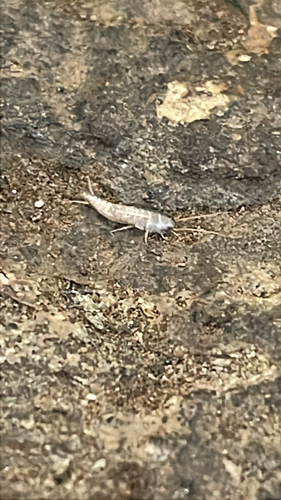
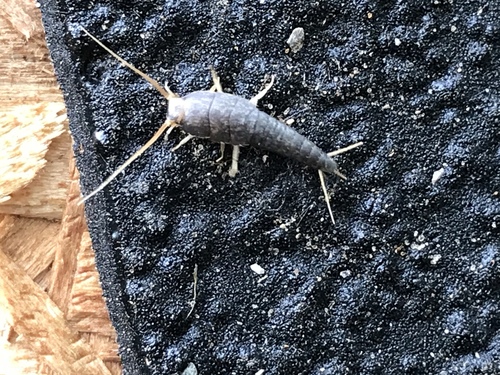
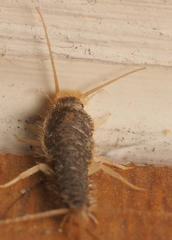
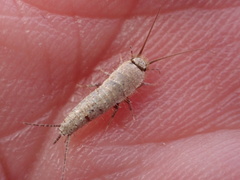
The abdomen narrows to a point, giving the bug a shape that resembles a tiny fish. Young ones start out white and turn a greyish, metallic shade as they mature.
Source: Wikipedia
Size
Adults are typically 7 to 10 mm (about 0.3 to 0.4 in) long and are active at night.
Source: Wikipedia
Is it a pest in the house?
Because they eat adhesives and fabrics, they can damage wallpaper, tapestries and other household items.
Source: Wikipedia
Does it bite or sting?
Silverfish do not spread disease to people.
Source: Wikipedia
How to get rid of it
Essential oil from Japanese cedar has shown promise as a repellent and insecticide against silverfish. Natural predators such as house centipedes and spiders like the spitting spider can also help keep silverfish numbers down.
Source: Wikipedia
Where it lives
They need high humidity, usually between 75 % and 95 %, and are found in damp places such as basements, attics, bathrooms, kitchens and even libraries.
Source: Wikipedia
What it eats
They eat anything containing starches or dextrin, like glue, paper paste, and leftover crumbs. Other foods include cotton, linen, silk, dead insects and even their own molted skins.
Source: Wikipedia
Life cycle
Nymphs hatch looking like tiny, white adults and later develop the typical grey metallic color. A single silverfish may molt anywhere from 17 up to 66 times during its life, sometimes over 30 times in one year.
Source: Wikipedia
Lookalikes
Other silverfish species in North America include Ctenolepisma longicaudatum and Ctenolepisma quadriseriatum, while the firebrat looks similar but has a mottled gray-brown body.
Source: Wikipedia
Where it is found in the US
Recorded in 47 of 51 states and DC. Most records: Pennsylvania, Minnesota, New York, Indiana, Colorado, Ohio, Washington, Illinois.
Darker = more records. Counts are museum and citizen-science records, not population size.
Source: GBIF
Status: introduced in Canada. Source: iNaturalist
Months it is reported in the US
Source: GBIF
More photos

Questions people ask
What do silverfish look like?
They have a tapered, fish-shaped abdomen and turn from white when young to a metallic grey as they age.
Source: Wikipedia
Where in my home might I find silverfish?
They prefer moist areas such as basements, attics, bathrooms, kitchens, sinks and even libraries, needing high humidity.
Source: Wikipedia
How can I get rid of silverfish?
Japanese cedar essential oil has been found effective as a repellent, and natural predators like house centipedes and spitting spiders also help control them.
Source: Wikipedia
Same family (Lepismatidae)
 CtenolepismaCtenolepismaCan damage your home
 Long-tailed SilverfishCtenolepisma longicaudatumCan damage your home
 FirebratThermobia domesticaCan damage your home
 Four-lined SilverfishCtenolepisma lineatumNuisance, not dangerous
 Ctenolepisma ciliatumCtenolepisma ciliatum
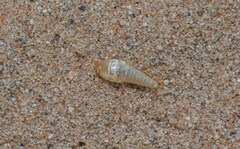 Mirolepisma deserticolaMirolepisma deserticola
Sources
- Wikipedia: https://en.wikipedia.org/wiki/Silverfish
Look it up elsewhere: GBIF · iNaturalist · BugGuide · ITIS · Wikipedia
Text written 2026-10-23 from the sources above and checked sentence by sentence against them. Data fetched 2026-10-22.