 Bug FAQ
Four-lined Silverfish
Ctenolepisma lineatum · Order: Zygentoma · Family: Lepismatidae
Source: Wikipedia
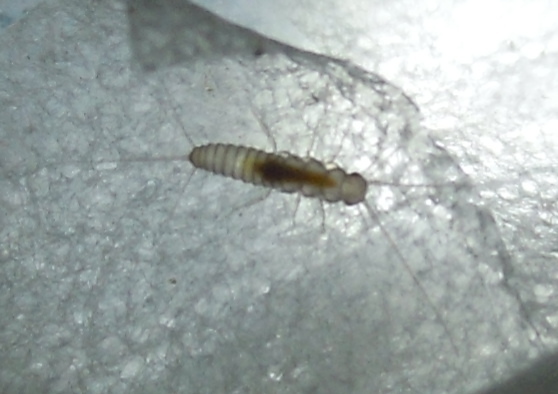
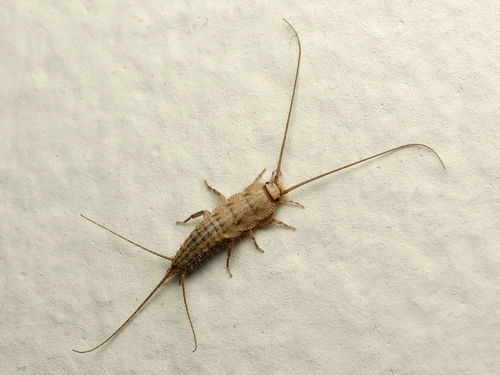
The four-lined silverfish is stouter and less shiny than other silverfish, with long antennae and three long tail-like appendages. Its abdomen often shows dark brown lines and it can be found both inside and outside buildings. Native to southern Europe, it has spread worldwide except to very cold regions.
Source: Wikipedia
How to recognize it
The abdomen is frequently marked with dark brown lines.
Source: Wikipedia
Size
It is relatively stout, less shiny, and has noticeably longer antennae and three tail-like appendages.
Source: Wikipedia
Is it a pest in the house?
It is considered a nuisance pest in homes and other buildings.
Source: Wikipedia
Where it lives
It lives both indoors and outdoors and can become a nuisance pest.
Source: Wikipedia
Where it comes from
Originally from southern Europe, it is now found across most of the world, avoiding polar and cooler temperate areas.
Source: Wikipedia
Where it is found in the US
Recorded in 40 of 51 states and DC. Most records: California, Virginia, New York, Maryland, Illinois, Oregon, Massachusetts, Ohio.
Darker = more records. Counts are museum and citizen-science records, not population size.
Source: GBIF
Status: introduced in Canada; introduced in United States. Source: iNaturalist
Months it is reported in the US
Source: GBIF
More photos
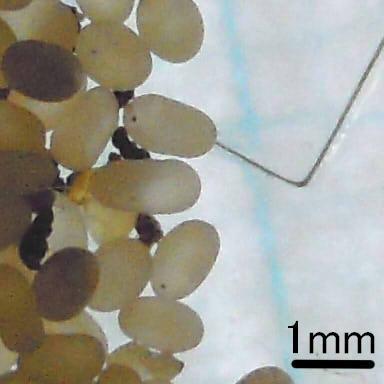
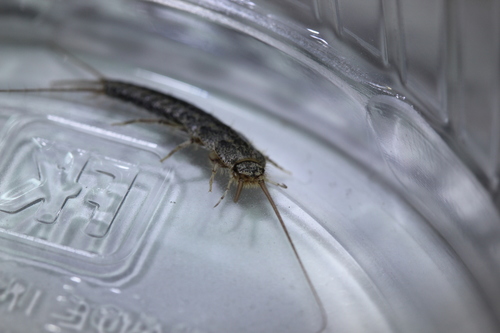
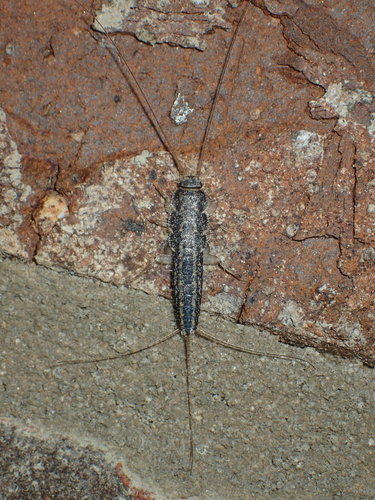
Same family (Lepismatidae)

Sources
- Wikipedia: https://en.wikipedia.org/wiki/Ctenolepisma_lineatum
Look it up elsewhere: GBIF · iNaturalist · BugGuide · ITIS · Wikipedia
Text written 2026-10-22 from the sources above and checked sentence by sentence against them. Data fetched 2026-10-22.