 Bug FAQ
Long-tailed Silverfish
Ctenolepisma longicaudatum · Order: Zygentoma · Family: Lepismatidae
Also called: Silverfish, paper silverfish, Grey Silverfish
Source: Wikipedia
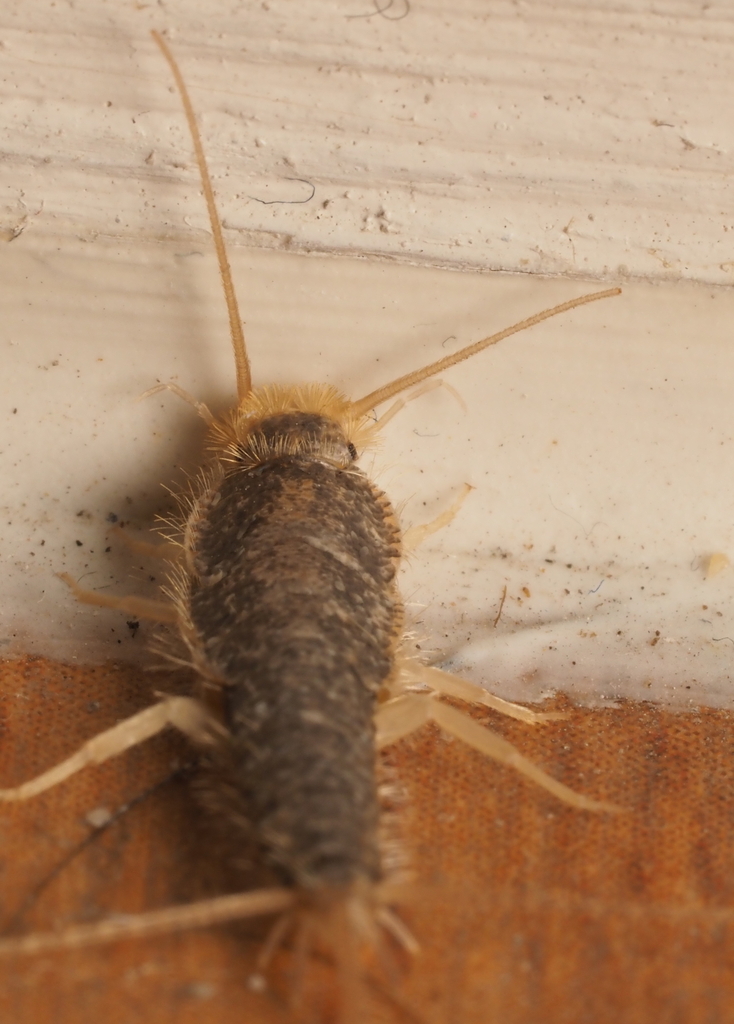
These insects live in homes worldwide and feed on many dry organic materials such as paper, bread crumbs and synthetic fabrics, but avoid wool, fur and natural silk. They develop slowly, reaching adulthood after two to three years and can live for several years, surviving up to ten months without food.
Source: Wikipedia
How to recognize it
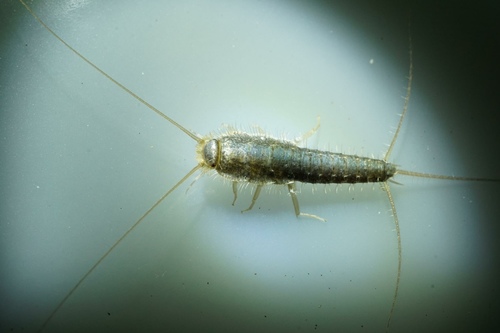
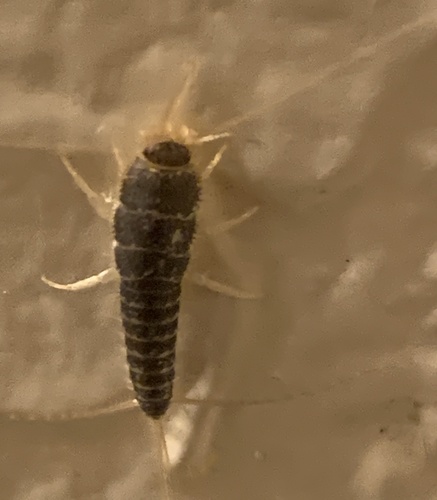
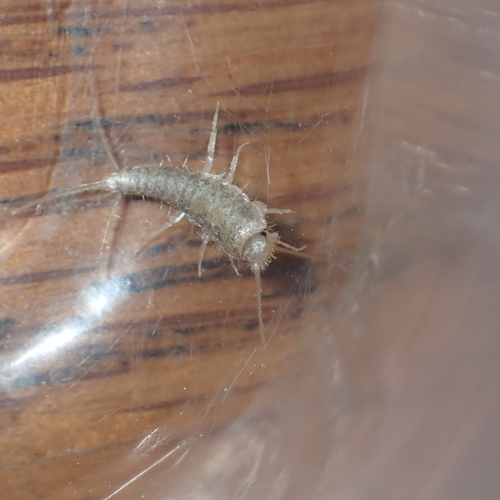
Adults and nymphs are slender, fast movers with long antennae and three rear appendages: two cerci and one epiproct. Except for the youngest stages, their bodies are covered in scales that give them a shiny grey-to-dark appearance.
Source: Wikipedia
Is it a pest in the house?
They are reported as nuisance pests in homes, schools and museums, and can damage cellulose-based materials in warehouses and cultural heritage collections. Because they develop slowly and can survive many months without food, control efforts must be sustained over a long period.
Source: Wikipedia
How to get rid of it
Integrated pest management that combines several control methods at once is the most effective approach.
Source: Wikipedia
Where it lives
They are synanthropic insects that live inside human buildings; their natural outdoor food sources are unknown. First described from South Africa in 1905, they are now found worldwide in homes.
Source: Wikipedia
What it eats
They eat a wide range of dry organic matter, including plant debris, insect remains, bread crumbs, paper, and synthetic silk or cotton fabrics. They do not eat wool, flannel, carpet, fur, felt or natural silk.
Source: Wikipedia
Life cycle
They reach sexual maturity after two to three years and can reproduce for at least three years.
Source: Wikipedia
Lookalikes
Their bristly sides make them look somewhat like firebrats.
Source: Wikipedia
Where it is found in the US
Recorded in 33 of 51 states and DC. Most records: Texas, California, Florida, Alabama, North Carolina, Georgia, Louisiana, South Carolina.
Darker = more records. Counts are museum and citizen-science records, not population size.
Source: GBIF
Status: introduced in Canada. Source: iNaturalist
Months it is reported in the US
Source: GBIF
More photos
Questions people ask
What can I do to get rid of them?
Use an integrated pest management plan that includes multiple control tactics and keep it going for several months because they survive long without food.
Source: Wikipedia
What household items can they damage?
They can damage paper, books, cardboard, dried food, and synthetic fabrics, but they avoid wool, fur and natural silk.
Source: Wikipedia
Same family (Lepismatidae)
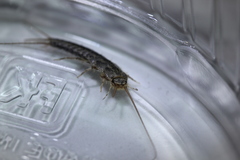 CtenolepismaCtenolepismaCan damage your home
 Common SilverfishLepisma saccharinumCan damage your home
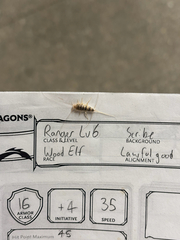 FirebratThermobia domesticaCan damage your home
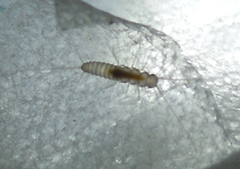 Four-lined SilverfishCtenolepisma lineatumNuisance, not dangerous
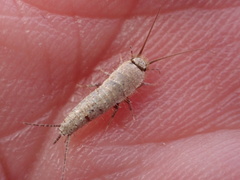 Ctenolepisma ciliatumCtenolepisma ciliatum
 Mirolepisma deserticolaMirolepisma deserticola
Sources
- Wikipedia: https://en.wikipedia.org/wiki/Ctenolepisma_longicaudatum
Look it up elsewhere: GBIF · iNaturalist · BugGuide · ITIS · Wikipedia
Text written 2026-10-22 from the sources above and checked sentence by sentence against them. Data fetched 2026-10-22.