 Bug FAQ
Knobbled Orbweaver
Socca pustulosa · Order: Araneae · Family: Araneidae
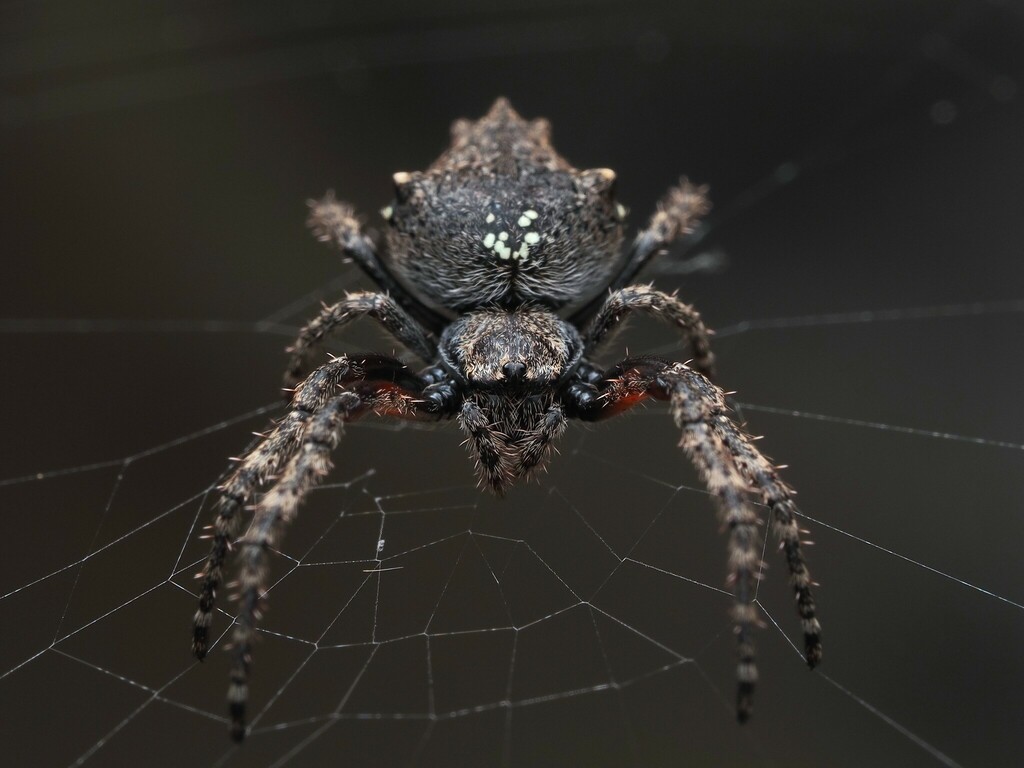
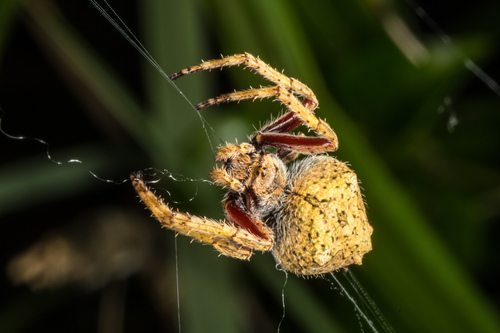
Female knobbled orbweavers are about 11 mm long, roughly twice the size of males at 6 mm. They have a triangular abdomen with two front humps, rear knobs, and a leaf-shaped pattern that can be reddish-brown, yellow, green, grey, white, or black.
Source: Wikipedia
How to recognize it
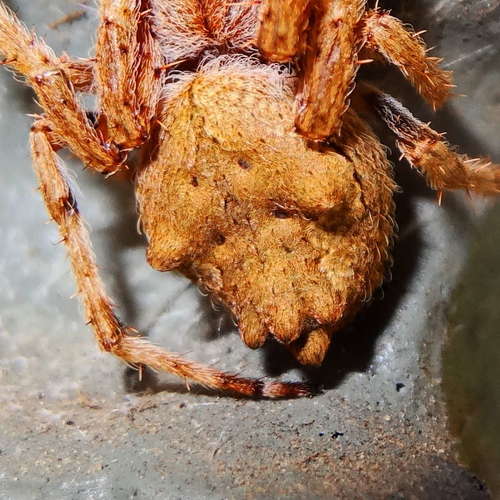
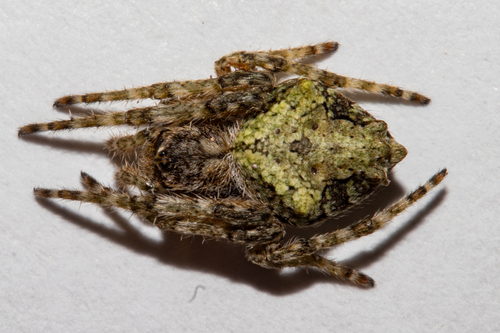
The abdomen is roughly triangular, bears two front humps and five-pointed knobs on the rear, and is covered with leaf-shaped markings that vary in colour.
Source: Wikipedia
Size
Mature females measure about 11 mm in body length, while males are about 6 mm.
Source: Wikipedia
Where it lives
It lives across southern Australia, including Tasmania, Victoria, New South Wales and Queensland.
Source: Wikipedia
What it eats
It builds orb webs to catch flying insects such as flies, moths, beetles, wasps and mosquitoes.
Source: Wikipedia
Life cycle
Females lay egg sacs in late summer or early autumn; after about 17 days the spiderlings hatch and can spin webs on their own, dispersing by ballooning.
Source: Wikipedia
When you see it
Adults appear in summer, mate on warm, humid evenings, and may continue mating into winter if conditions stay mild.
Source: Wikipedia
Where it comes from
The species is native to Australia and also occurs in New Zealand and many Pacific islands, likely having arrived by ballooning on silk.
Source: Wikipedia
More photos

Questions people ask
Where can I find knobbled orbweavers?
They are found throughout southern Australia, Tasmania, New Zealand and many Pacific islands.
Source: Wikipedia
Same family (Araneidae)


Sources
- Wikipedia: https://en.wikipedia.org/wiki/Socca_pustulosa
Look it up elsewhere: GBIF · iNaturalist · BugGuide · Wikipedia
Text written 2026-10-22 from the sources above and checked sentence by sentence against them. Data fetched 2026-10-22.