 Bug FAQ
Katipō
Latrodectus katipo · Order: Araneae · Family: Theridiidae
Also called: katipo spider
Source: Wikipedia
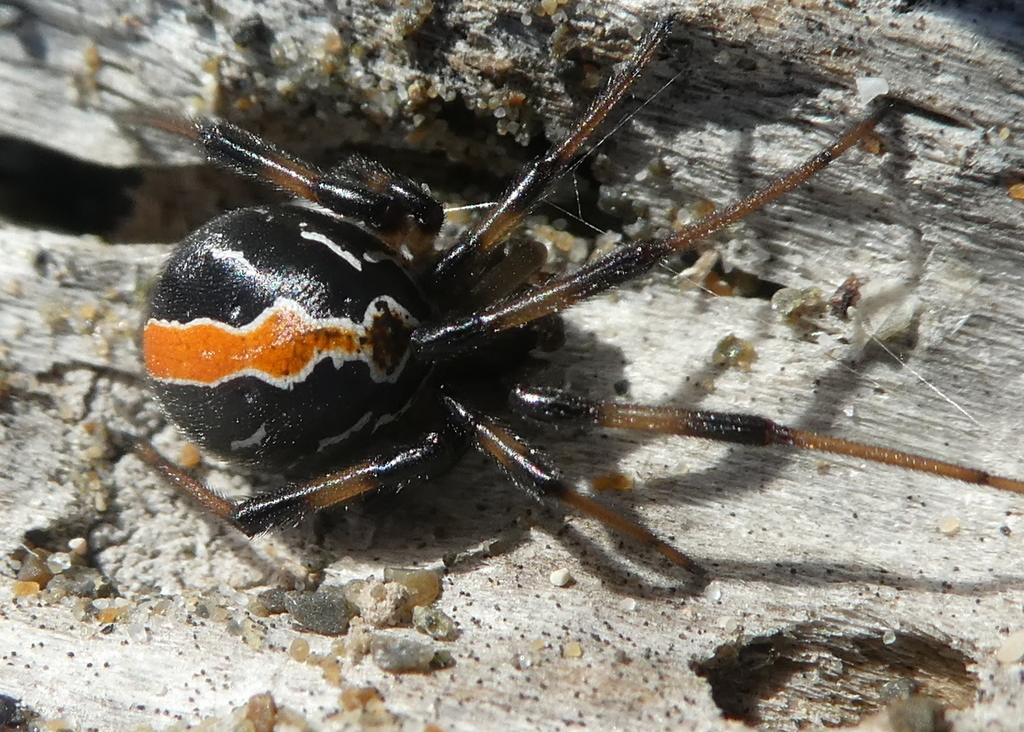
Katipō spiders are native to New Zealand and live mainly in coastal sand dunes. Females are 8 to 10 mm long (35 to 41 mm leg-span) and have a red stripe on the abdomen in the south, while males are white with black stripes and a red hourglass marking.
Source: Wikipedia
How to recognize it
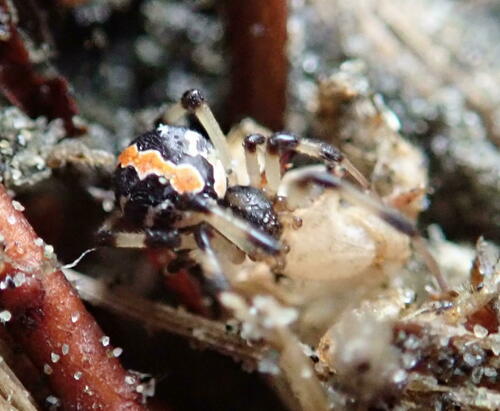
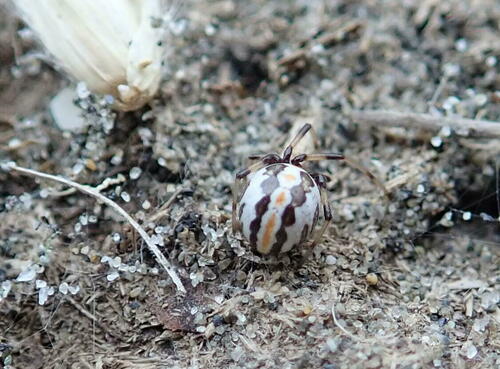
Southern females show a red stripe bordered in white on the abdomen; northern females may lack the stripe or have pale or cream blotches. Males are white with black stripes and have red hourglass-shaped markings.
Source: Wikipedia
Size
Female body length is 8 to 10 mm; including leg span it measures 35 to 41 mm. Males are smaller, about 4 to 5 mm long.
Source: Wikipedia
What it eats
They catch ground-dwelling insects such as beetles and amphipods in tangled webs among dune plants, and may also take moths, flies and other spiders.
Source: Wikipedia
When you see it
Egg laying occurs in November to December and juveniles spread in January to February.
Source: Wikipedia
Where it comes from
Katipō occur only in New Zealand.
Source: Wikipedia
More photos

Questions people ask
Do katipō spiders bite people?
Yes, their bite can cause severe pain and systemic symptoms, though bites are rare and antivenom exists.
Source: Wikipedia
Where can I find katipō spiders?
They live in sand dunes near the sea along most of New Zealand’s coast, except the far south and West Coast.
Source: Wikipedia
How can I tell a female katipō from other spiders?
Females are 8 to 10 mm long with a red stripe bordered in white on the abdomen in southern regions; northern females may lack the stripe or have pale or cream blotches.
Source: Wikipedia
What do katipō spiders eat?
They catch ground insects like beetles and amphipods in webs among dune vegetation, and occasionally moths, flies and other spiders.
Source: Wikipedia
Same family (Theridiidae)


Sources
- Wikipedia: https://en.wikipedia.org/wiki/Katip%C5%8D
Look it up elsewhere: GBIF · iNaturalist · BugGuide · ITIS · Wikipedia
Text written 2026-10-23 from the sources above and checked sentence by sentence against them. Data fetched 2026-10-22.