 Bug FAQ
Japanese Maple Leafhopper
Japananus hyalinus · Order: Hemiptera · Family: Cicadellidae
Also called: Leafhopper, The Japanese Maple Leafhopper
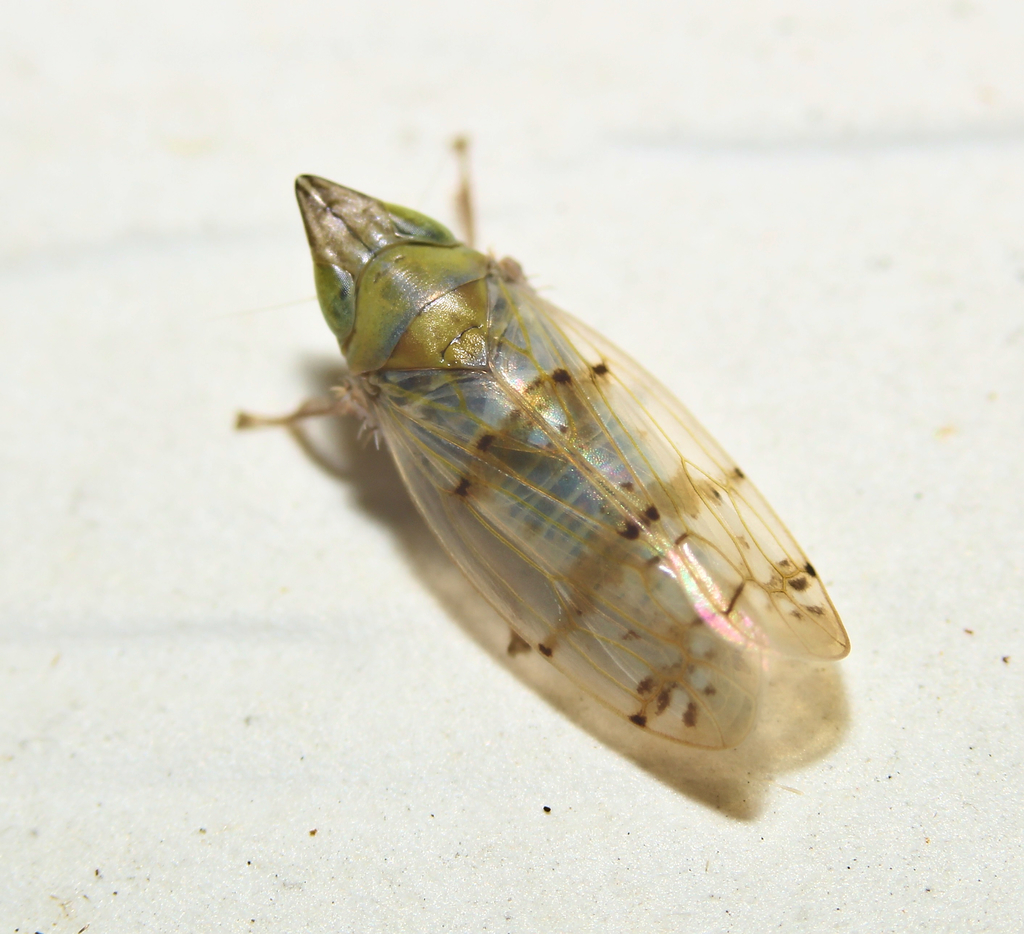
Japanese Maple Leafhopper is a small leafhopper that lives on maples and has spread worldwide with traded trees. It lays eggs in branch nodes, has one generation per year, and is not known to spread disease or cause major damage.
Source: Wikipedia
How to recognize it
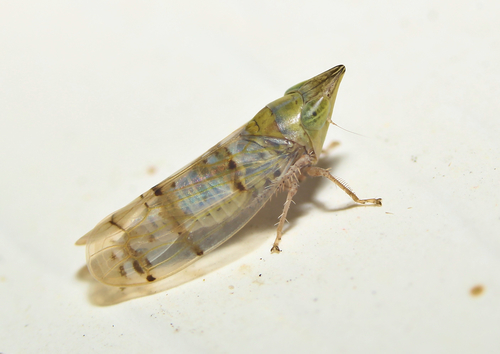
The head ends in a sharp point and is greenish-yellow, as is the prothorax. Forewings are clear with reddish veins and show three straight purplish-brown bands when at rest.
Source: Wikipedia
Size
Females are about 5.5 mm long (up to 6.5 mm) and males about 4.25 mm.
Source: Wikipedia
Is it a pest in the house?
It is not known to transmit diseases and its potential to cause serious damage is considered very small.
Source: Wikipedia
How to get rid of it
Eggs are hidden in branch nodes, making them hard to detect in dormant stock.
Source: Wikipedia
Where it lives
It travels with cultivated maples and is now common in Europe, North America and Australia.
Source: Wikipedia
What it eats
In its native range it feeds on Japanese maples (Acer japonicum and A. palmatum) and will use other maple species elsewhere.
Source: Wikipedia
Life cycle
Usually one generation occurs each year, with eggs overwintering; nymphs are sharply pointed and often yellowish.
Source: Wikipedia
When you see it
In North America it has been found from North Carolina up to Ontario. Two specimens were intercepted on imported Korean maple stock in 1999.
Source: Wikipedia
Where it comes from
It is thought to originate from eastern Asia.
Source: Wikipedia
Lookalikes
Its introduction is linked to exotic plant trade, suggesting it is not a native species.
Source: Wikipedia
Where it is found in the US
Recorded in 43 of 51 states and DC. Most records: Maryland, Virginia, North Carolina, Massachusetts, Pennsylvania, Ohio, New York, Illinois.
Darker = more records. Counts are museum and citizen-science records, not population size.
Source: GBIF
Status: introduced in North America; introduced in United States. Source: iNaturalist
Months it is reported in the US
Source: GBIF
More photos
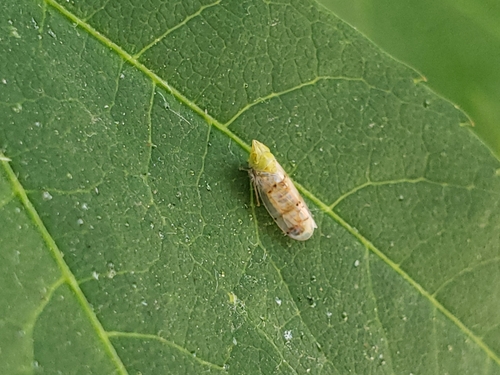
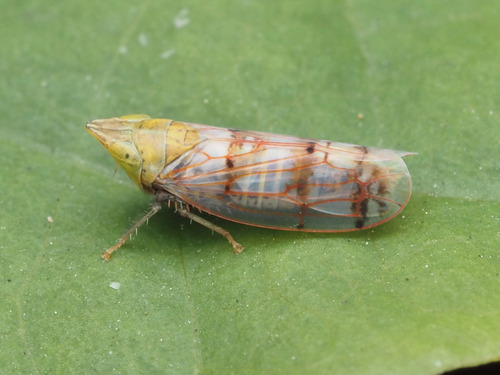
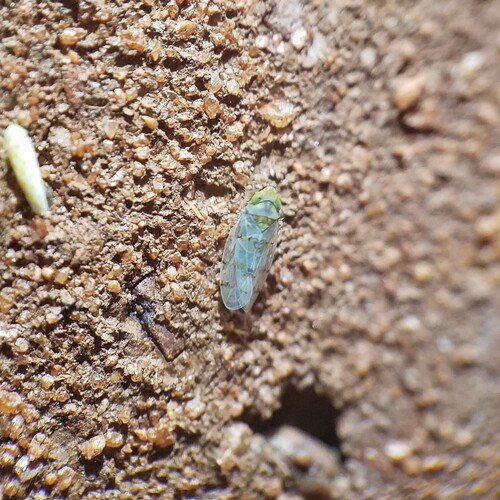
Questions people ask
How can I tell if I have Japanese Maple Leafhopper?
Look for tiny insects about 4 to 6 mm long with a pointed greenish head and clear wings marked by three straight purplish-brown bands.
Source: Wikipedia
Do they damage my maple trees?
They feed on maple leaves but are considered to cause only very small damage.
Source: Wikipedia
How do I prevent them from spreading to my garden?
Inspect new maple stock for eggs hidden in branch nodes, as these are hard to see in dormant material.
Source: Wikipedia
Same family (Cicadellidae)
 Red-banded LeafhopperGraphocephala coccineaDamages trees, gardens or crops
 Coppery LeafhopperJikradia olitoria
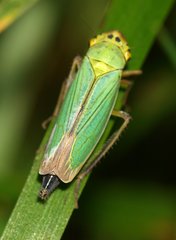 Green LeafhopperCicadella viridis
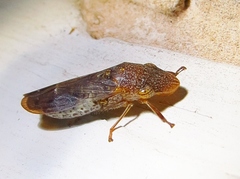 Glassy-winged SharpshooterHomalodisca vitripennisCan spread germs or disease
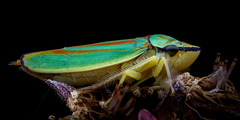 Rhododendron LeafhopperGraphocephala fennahiDamages trees, gardens or crops
 Japanese LeafhopperOrientus ishidaeCan spread germs or disease
Sources
- Wikipedia: https://en.wikipedia.org/wiki/Japananus_hyalinus
Look it up elsewhere: GBIF · iNaturalist · BugGuide · Wikipedia
Text written 2026-10-22 from the sources above and checked sentence by sentence against them. Data fetched 2026-10-22.