 Bug FAQ
Izatha katadiktya
Izatha katadiktya · Order: Lepidoptera · Family: Oecophoridae
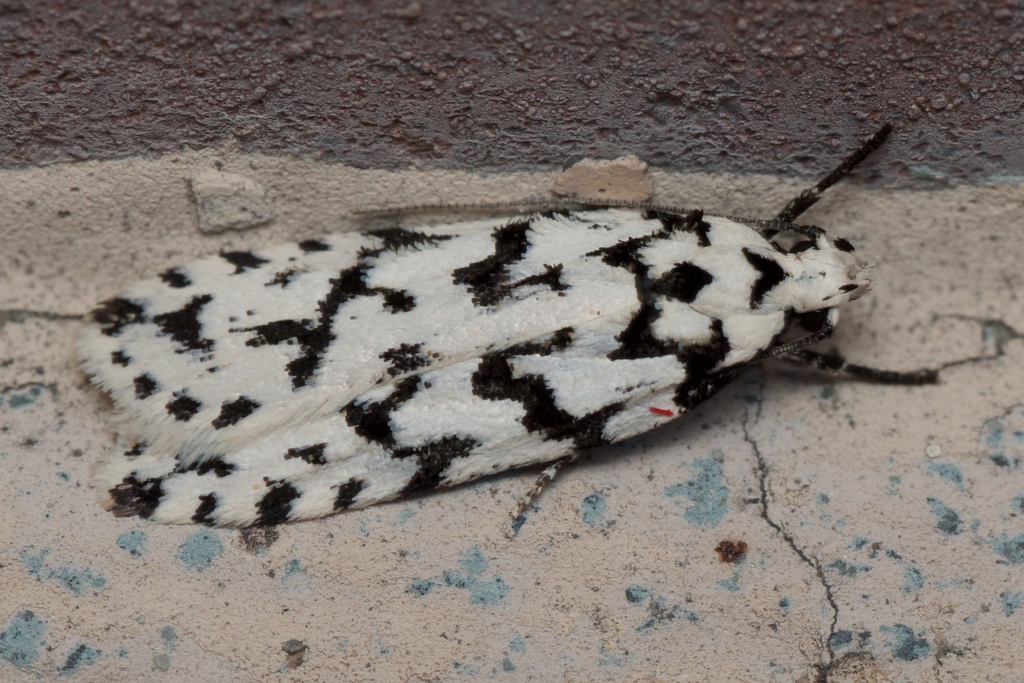
Izatha katadiktya is a moth in the Oecophoridae family that lives only in New Zealand, mainly the eastern South Island and possibly Hawke’s Bay. Adults have a wingspan of about 21 to 30 mm and are on the wing in October, November and January. The larvae feed on dead wood, so the species is not a crop or household pest.
Source: Wikipedia
How to recognize it
Izatha katadiktya belongs to the moth family Oecophoridae.
Source: Wikipedia
Size
Males have a wingspan of 21 to 27.5 mm and females 21.5 to 30 mm.
Source: Wikipedia
Where it lives
It is found only in New Zealand, especially the eastern South Island and probably Hawke’s Bay.
Source: Wikipedia
What it eats
The larvae eat dead wood.
Source: Wikipedia
Life cycle
Adults have been observed in October, November and January.
Source: Wikipedia
When you see it
The moth is active as an adult in the spring and early summer months of October, November and again in January.
Source: Wikipedia
Where it comes from
The species is endemic to New Zealand, recorded from the eastern South Island and likely Hawke’s Bay.
Source: Wikipedia
Lookalikes
It is a member of the Oecophoridae family, which includes many similar-looking moths.
Source: Wikipedia
Questions people ask
When can I see adult Izatha katadiktya?
Adults are on the wing in October, November and January.
Source: Wikipedia
Where is this moth found?
It is endemic to New Zealand, mainly the eastern South Island and possibly Hawke’s Bay.
Source: Wikipedia
Same family (Oecophoridae)



Sources
- Wikipedia: https://en.wikipedia.org/wiki/Izatha_katadiktya
Look it up elsewhere: GBIF · iNaturalist · BugGuide · Wikipedia
Text written 2026-10-23 from the sources above and checked sentence by sentence against them. Data fetched 2026-10-23.