 Bug FAQ
Iron Prominent
Notodonta dromedarius · Order: Lepidoptera · Family: Notodontidae


The Iron Prominent moth has a wingspan of about 35 to 40 mm and flies from April to August, depending on where it lives. Its forewings are grey or dark brown with rusty and yellowish stains and a broken rust-brown band along the outer edge. It occurs across Europe, Anatolia and parts of Amurland, and its caterpillars feed on hazel, birch, alder and oak.
Source: Wikipedia
How to recognize it
Forewings are grey or dark brown with rusty-yellow stains and a broken rust-brown band along the outer edge.
Source: Wikipedia
Size
Wingspan ranges from 35 to 40 mm.
Source: Wikipedia
Where it lives
Found throughout Europe and Anatolia.
Source: Wikipedia
What it eats
Caterpillars feed on hazel (Corylus avellana), birch, alder and oak.
Source: Wikipedia
Life cycle
Adults are on the wing from May through August. Some summer-brood pupae overwinter before emerging.
Source: Wikipedia
When you see it
The moth flies from April to August, varying with location.
Source: Wikipedia
Where it comes from
Also recorded from Amurland.
Source: Wikipedia
More photos


Questions people ask
When can I see the Iron Prominent moth?
Adults are active from April through August, depending on the region.
Source: Wikipedia
Where is the Iron Prominent found?
It occurs across Europe, Anatolia and also in Amurland.
Source: Wikipedia
Same family (Notodontidae)
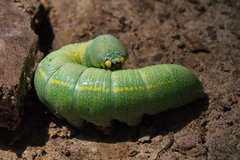 White-dotted ProminentNadata gibbosaDamages trees, gardens or crops
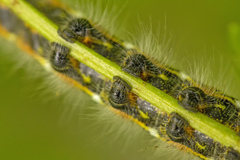 Buff-tipPhalera bucephalaDamages trees, gardens or crops
 Common Gluphisia MothGluphisia septentrionis
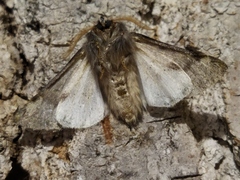 Pine Processionary-mothThaumetopoea pityocampaDamages trees, gardens or crops
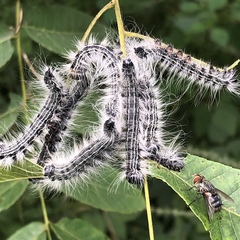 Walnut Caterpillar MothDatana integerrimaDamages trees, gardens or crops
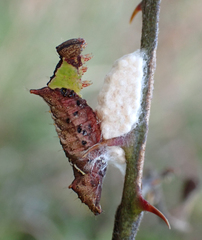 Unicorn ProminentCoelodasys unicornisDamages trees, gardens or crops
Sources
- Wikipedia: https://en.wikipedia.org/wiki/Notodonta_dromedarius
Look it up elsewhere: GBIF · iNaturalist · BugGuide · Wikipedia
Text written 2026-10-23 from the sources above and checked sentence by sentence against them. Data fetched 2026-10-22.