 Bug FAQ
Intermediate Rove Beetle
Leptacinus intermedius · Order: Coleoptera · Family: Staphylinidae
Also called: Staph beetle
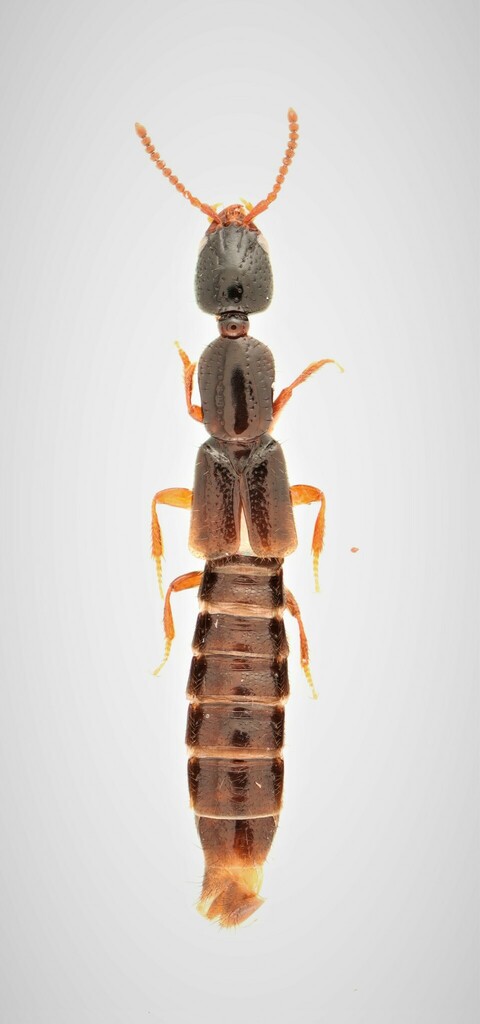
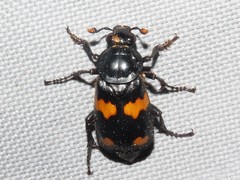
The Intermediate Rove Beetle has very short wing covers that leave several abdominal segments exposed, a key ID feature. Males can be identified by the size of their aedeagus. It is a European species and its larvae hunt other insects.
Source: Wikipedia
How to recognize it
Short elytra expose three to six abdominal segments.
Source: Wikipedia
Size
Male aedeagus size is used for identification.
Source: Wikipedia
What it eats
Both adults and larvae are predatory on other insects.
Source: Wikipedia
Where it comes from
It is native to Europe.
Source: Wikipedia
Where it is found in the US
Recorded in 2 of 51 states and DC. Most records: Arizona, Alaska.
Darker = more records. Counts are museum and citizen-science records, not population size.
Source: GBIF
Status: introduced in Canada; native in North America; native in Canada. Source: iNaturalist
Months it is reported in the US
Source: GBIF
Questions people ask
What do Intermediate Rove Beetles eat?
They prey on other insects, both as adults and larvae.
Source: Wikipedia
Same family (Staphylinidae)


Sources
- Wikipedia: https://en.wikipedia.org/wiki/Leptacinus_intermedius
Look it up elsewhere: GBIF · iNaturalist · BugGuide · Wikipedia
Text written 2026-10-27 from the sources above and checked sentence by sentence against them. Data fetched 2026-10-27.