 Bug FAQ
Humped Trashline Orbweaver
Cyclosa turbinata · Order: Araneae · Family: Araneidae
Also called: Trashline orbweaver, orb weaver, orb weavers
Source: Wikipedia
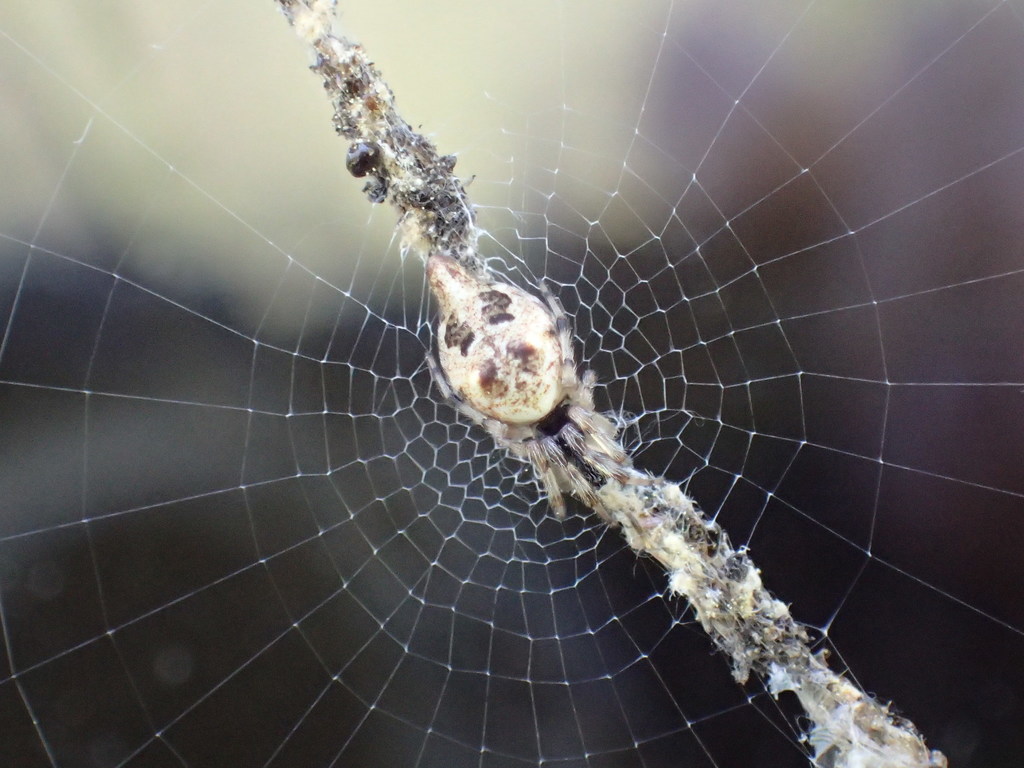
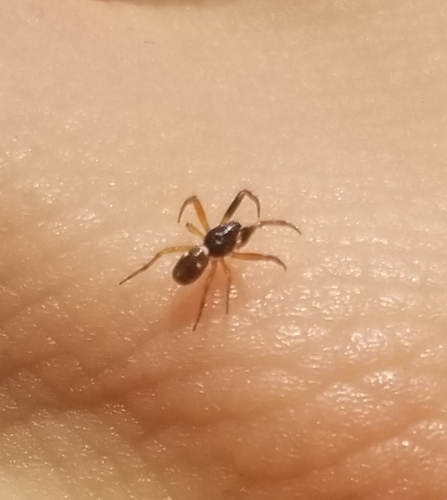
The humped trashline orbweaver is a small spider about 3 to 5 mm long, brown-black-white in color with a pointed abdomen. It lives in North America, Mexico and parts of Central and South America, often building webs on trees, shrubs and wooden structures. It has two generations per year, with adults appearing in spring and fall, and males wander to find mates while females stay in webs.
Source: Wikipedia
How to recognize it
Its body shows a mix of brown, black and white colors and the abdomen tapers to a rounded point.
Source: Wikipedia
Size
Adults range from about 2.5 mm for males to up to 5.2 mm for females. Overall length of the species is roughly 4 to 7 mm.
Source: Wikipedia
Is it a pest in the house?
They readily build webs in wooden frames and have been found on many cultivated plants such as cotton, peanuts, pecan orchards and various garden species.
Source: Wikipedia
Where it lives
It is found across North America, Mexico and northern South America, favoring live oak, other oak species, elm and hollow sycamore trees, as well as shrubs.
Source: Wikipedia
What it eats
Females tend to forage midday when predators are most common.
Source: Wikipedia
Life cycle
The species is bivoltine, producing one generation in late spring and another in the fall.
Source: Wikipedia
When you see it
Males are active from March through September; females are active from March through October. Males mature in spring, leave their webs and search for mates, while females stay in their webs.
Source: Wikipedia
Where it comes from
The spider is native to the United States and Mexico and also occurs from the U.S. to Panama, the West Indies and the Galapagos, with introductions in Hawaii.
Source: Wikipedia
Lookalikes
The lined orbweaver (Mangora gibberosa) is often mistaken for this spider because of a similar appearance. Females differ from the similar Cyclosa conica by being smaller and having two dorsal humps on the front of the abdomen.
Source: Wikipedia
Where it is found in the US
Recorded in 42 of 51 states and DC. Most records: California, Texas, Ohio, North Carolina, Florida, Virginia, Tennessee, Georgia.
Darker = more records. Counts are museum and citizen-science records, not population size.
Source: GBIF
Status: native in North America; native in Canada. Source: iNaturalist
Months it is reported in the US
Source: GBIF
More photos
Questions people ask
Do they bite?
Yes, they can bite and deliver venom, but the bite is not serious for healthy people or pets.
Source: Wikipedia
Where might I find them in my house?
They often spin webs in wooden frames and can appear on indoor wooden structures.
Source: Wikipedia
Same family (Araneidae)


Sources
- Wikipedia: https://en.wikipedia.org/wiki/Cyclosa_turbinata
Look it up elsewhere: GBIF · iNaturalist · BugGuide · ITIS · Wikipedia
Text written 2026-10-22 from the sources above and checked sentence by sentence against them. Data fetched 2026-10-22.