 Bug FAQ
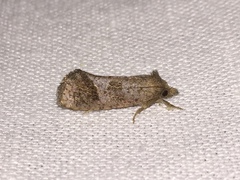
Detritus Moth
Opogona omoscopa · Order: Lepidoptera · Family: Tineidae
Also called: Eastern Detritus Moth, Moth

The Detritus Moth has a wingspan of about 18 to 22 mm.
Source: Wikipedia
How to recognize it
Detritus Moth belongs to the family Tineidae.
Source: Wikipedia
Size
Wingspan ranges from 18 to 22 mm.
Source: Wikipedia
Where it lives
Found in western Australia, New Zealand, southeast Asia, Africa from Ethiopia to South Africa, several Indian Ocean islands, and recorded on Île Amsterdam.
Source: Wikipedia
What it eats
Recorded host plants include species of Persea, Limonium, Cyclamen, Thuja, Fuchsia, Saccharum and Quercus suber.
Source: Wikipedia
Where it comes from
Native to western Australia, New Zealand, southeast Asia, and Africa from Ethiopia to South Africa, plus several Indian Ocean islands.
Source: Wikipedia
Lookalikes
It is a moth of the family Tineidae.
Source: Wikipedia
Where it is found in the US
Recorded in 6 of 51 states and DC. Most records: California, Hawaii, Louisiana, Georgia, Mississippi, North Carolina.
Darker = more records. Counts are museum and citizen-science records, not population size.
Source: GBIF
Status: introduced in United States. Source: iNaturalist
Months it is reported in the US
Source: GBIF
More photos


Questions people ask
What family does the Detritus Moth belong to?
It is a member of the Tineidae family.
Source: Wikipedia
Same family (Tineidae)
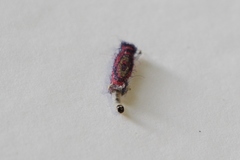 Webbing Clothes MothTineola bisselliellaCan damage your home
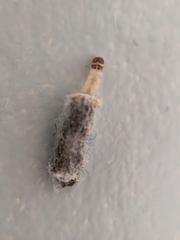 Case-bearing Clothes MothTinea pellionellaCan damage your home
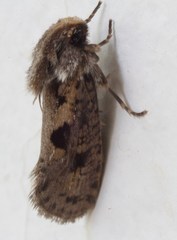 Clemens' Grass Tubeworm MothAcrolophus popeanella
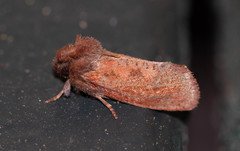 Eastern Grass Tubeworm MothAcrolophus plumifrontella
 Arcane Grass Tubeworm MothAcrolophus arcanella
 Texas Grass Tubeworm MothAcrolophus texanella
Sources
- Wikipedia: https://en.wikipedia.org/wiki/Opogona_omoscopa
Look it up elsewhere: GBIF · iNaturalist · BugGuide · Wikipedia
Text written 2026-10-22 from the sources above and checked sentence by sentence against them. Data fetched 2026-10-22.