 Bug FAQ
Horned Leafhopper
Ledra aurita · Order: Hemiptera · Family: Cicadellidae
Also called: Devil leafhopper


The horned leafhopper is a large, grey insect about 13 to 18 mm long with ear-like projections on its back. It lives in the treetops of deciduous forests across Europe and Asia, especially on lichen-covered oak trees. Both nymphs and adults feed on sap from a wide range of deciduous trees and bushes and are well camouflaged against bark.
Source: Wikipedia
How to recognize it
Adults are grey and have distinctive ear-like projections on the pronotum.
Source: Wikipedia
Size
They measure between 13 and 18 mm in length.
Source: Wikipedia
Where it lives
They are found in the treetops of deciduous forests in Europe and Asia. They favour lichen-covered trees, especially oaks.
Source: Wikipedia
What it eats
They pierce leaves and branches with specialised mouthparts to drink sap. They are polyphagous and will feed on many different deciduous trees and bushes.
Source: Wikipedia
Life cycle
Both the immature and adult stages are camouflaged and blend into bark.
Source: Wikipedia
When you see it
Adults are attracted to lights at night and may appear near houses.
Source: Wikipedia
Where it comes from
They are the only Ledrinae species that occurs naturally in Europe, including the British Isles.
Source: Wikipedia
More photos


Questions people ask
What does a horned leafhopper look like?
It is a large grey bug about 13 to 18 mm long with ear-like bumps on its back.
Source: Wikipedia
Where can I find horned leafhoppers?
They live in the treetops of deciduous forests across Europe and Asia, especially on lichen-covered oak trees.
Source: Wikipedia
What do they eat?
They feed on sap from many different deciduous trees and bushes using their tree-piercing mouthparts.
Source: Wikipedia
Same family (Cicadellidae)
 Red-banded LeafhopperGraphocephala coccineaDamages trees, gardens or crops
 Coppery LeafhopperJikradia olitoria
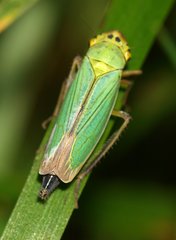 Green LeafhopperCicadella viridis
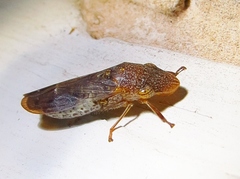 Glassy-winged SharpshooterHomalodisca vitripennisCan spread germs or disease
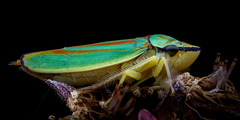 Rhododendron LeafhopperGraphocephala fennahiDamages trees, gardens or crops
 Japanese LeafhopperOrientus ishidaeCan spread germs or disease
Sources
- Wikipedia: https://en.wikipedia.org/wiki/Ledra_aurita
Look it up elsewhere: GBIF · iNaturalist · BugGuide · Wikipedia
Text written 2026-10-23 from the sources above and checked sentence by sentence against them. Data fetched 2026-10-22.