 Bug FAQ
Hissing Longhorn
Tetrorea cilipes · Order: Coleoptera · Family: Cerambycidae


The Hissing Longhorn lives in New Zealand. Adults are seen from November through late January, and the larvae make a distinctive clicking sound.
Source: Wikipedia
How to recognize it
The larvae produce a characteristic clicking noise.
Source: Wikipedia
Where it lives
It is found in New Zealand.
Source: Wikipedia
Life cycle
Eggs are laid singly or in small groups on chewed bark, incubate for 16 to 25 days, and some adults emerge after one year while others take two years; pupal and adult development then lasts 24 to 36 days.
Source: Wikipedia
When you see it
Adults emerge from November to late January.
Source: Wikipedia
Where it comes from
It is native to New Zealand.
Source: Wikipedia
More photos


Questions people ask
When are adult Hissing Longhorns active?
Adults appear from November through late January.
Source: Wikipedia
How long does it take for eggs to develop?
Eggs incubate for 16 to 25 days before hatching.
Source: Wikipedia
Same family (Cerambycidae)
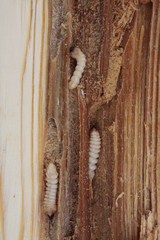 House LonghornHylotrupes bajulusCan damage your home
 Asian Longhorned BeetleAnoplophora glabripennisDamages trees, gardens or crops
 Red Milkweed BeetleTetraopes tetrophthalmus
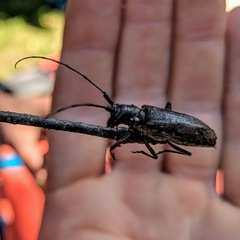 White-spotted SawyerMonochamus scutellatusCan damage your home
 Red Pine Longhorn BeetleStictoleptura rubra
 Spotted Longhorn BeetleRutpela maculataDamages trees, gardens or crops
Sources
- Wikipedia: https://en.wikipedia.org/wiki/Tetrorea_cilipes
Look it up elsewhere: GBIF · iNaturalist · BugGuide · Wikipedia
Text written 2026-10-23 from the sources above and checked sentence by sentence against them. Data fetched 2026-10-23.