 Bug FAQ
Hawaiian Garden Spider
Argiope appensa · Order: Araneae · Family: Araneidae
Also called: Banana Spider, Garden spider
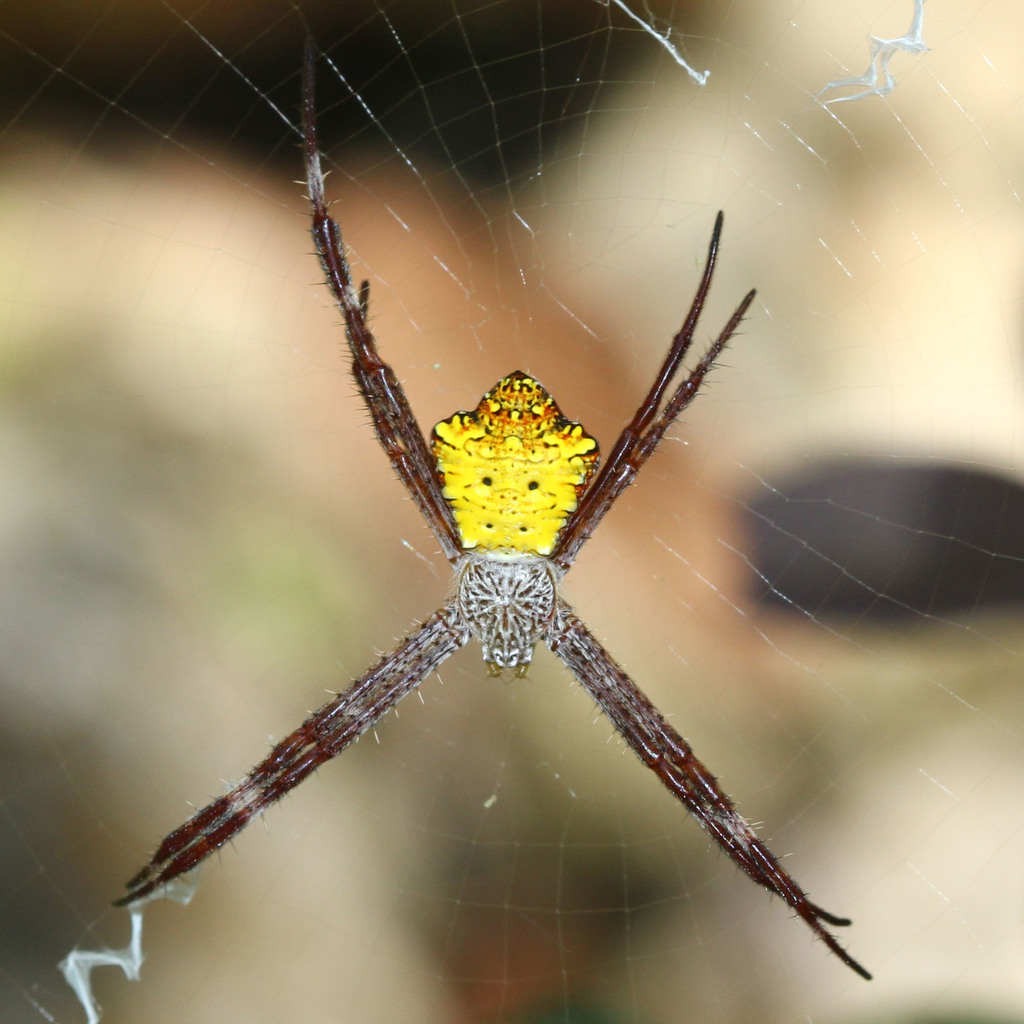
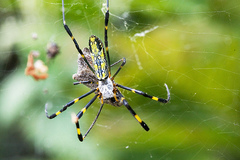
Female Hawaiian garden spiders are strikingly black and yellow and measure about 5 to 6 cm long, while males are much smaller and brown, about 2 cm long. They build their webs in bushes, between branches, and on human structures, often adding a bright stabilimentum that may warn birds away. The species lives across many western Pacific islands, from Hawaii to Indonesia, and is common in sunny edge habitats during the rainy season (June-November).
Source: Wikipedia
How to recognize it
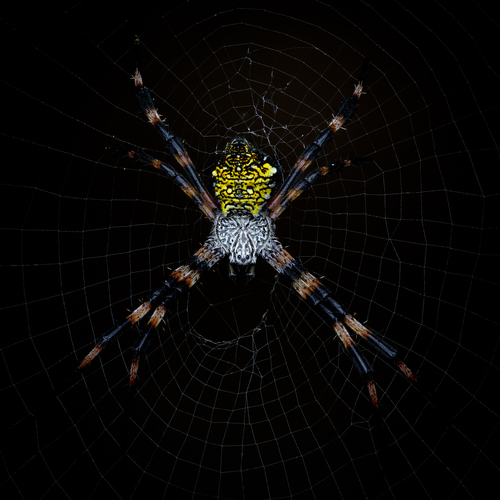
Females are black and yellow; males are brown and much smaller.
Source: Wikipedia
Size
Females reach 5.1 to 6.4 cm (including legs); males are about 1.9 cm long.
Source: Wikipedia
Where it lives
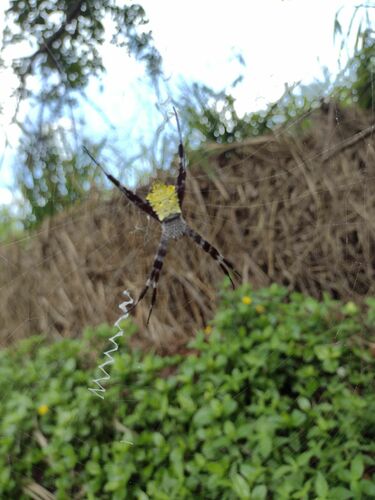
They occupy many habitats from coasts to upland forests, building webs in bushes, between branches, and on human constructions.
Source: Wikipedia
What it eats
They are large spiders that occur in great numbers, as noted by naturalist David Quammen.
Source: Wikipedia
Where it comes from
Found on several western Pacific islands, including Hawaii, Taiwan, Australia, New Caledonia, New Guinea and Indonesia.
Source: Wikipedia
Lookalikes
Their webs are often visited by the kleptoparasitic spider Argyrodes argentatus, which steals uneaten prey.
Source: Wikipedia
Where it is found in the US
Recorded in 1 of 51 states and DC. Most records: Hawaii.
Darker = more records. Counts are museum and citizen-science records, not population size.
Source: GBIF
Months it is reported in the US
Source: GBIF
More photos

Same family (Araneidae)


Sources
- Wikipedia: https://en.wikipedia.org/wiki/Argiope_appensa
Look it up elsewhere: GBIF · iNaturalist · BugGuide · ITIS · Wikipedia
Text written 2026-10-22 from the sources above and checked sentence by sentence against them. Data fetched 2026-10-22.