 Bug FAQ
Hairy rove beetle
Creophilus maxillosus · Order: Coleoptera · Family: Staphylinidae
Also called: Carrion Beetle
Source: Wikipedia

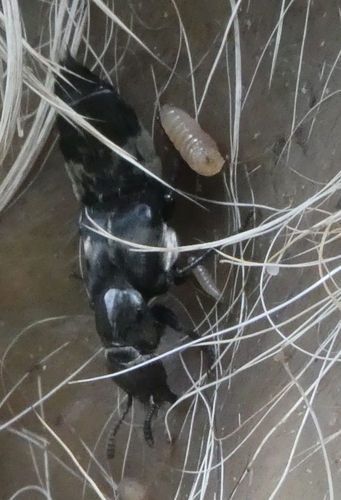
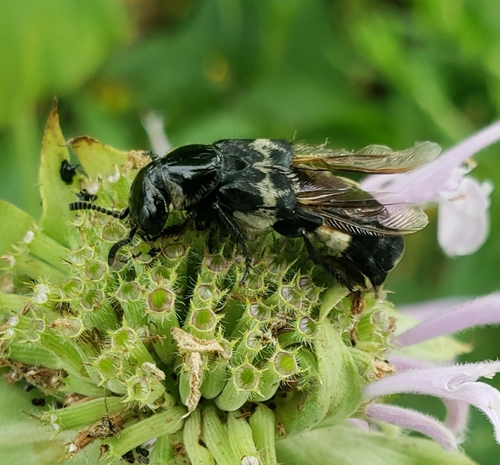
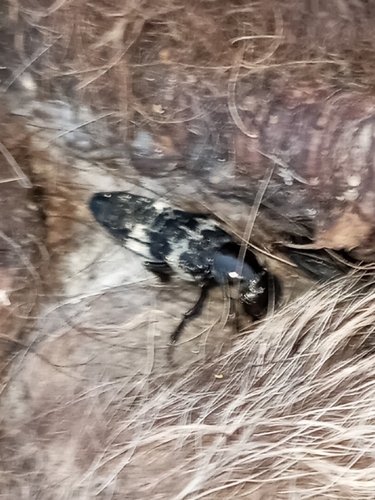
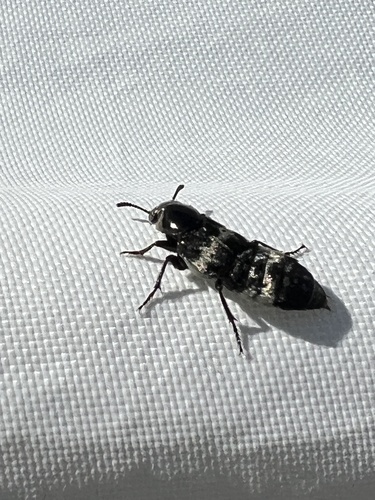
Adult hairy rove beetles are shiny black and 12 to 18 mm long, with needle-like jaws and large eyes. They live in woods and on carrion across the eastern United States from spring through autumn, and they are predatory on maggots and other carrion insects.
Source: Wikipedia
How to recognize it
Their short elytra cover only the first few abdominal segments. They have needle-like jaws that close in front of the head and prominent eyes.
Source: Wikipedia
Is it a pest in the house?
Infestations of homes have been reported, though the reason is unclear; adults prefer to lay eggs in fresh sand.
Source: Wikipedia
Does it bite or sting?
Their mandibles can deliver a painful stab if the beetle is harassed or handled carelessly. They possess abdominal glands that release irritant chemicals when threatened.
Source: Wikipedia
How to get rid of it
Permethrin-based pesticide Atroban (0.05%) can reduce adult and larval numbers.
Source: Wikipedia
Where it lives
They are found in woods and wherever carrion is present, usually from spring to autumn. They occur throughout the eastern United States in fall, spring, and also summer.
Source: Wikipedia
What it eats
Both larvae and adults are predatory, feeding on carrion and maggot blow flies.
Source: Wikipedia
Life cycle
Eggs develop in about 4 days, larvae in 14 days, and pupae in 16 days, totaling roughly 37 days from egg to adult.
Source: Wikipedia
When you see it
Active beetles fly swiftly or run on the ground with the abdomen tip raised like a scorpion’s stinger.
Source: Wikipedia
Where it comes from
The species is native to the eastern United States. It belongs to the rove beetle family (Staphylinidae).
Source: Wikipedia
Lookalikes
They are a species of rove beetle and share the predatory habit of feeding on carrion and dipteran larvae.
Source: Wikipedia
Where it is found in the US
Recorded in 51 of 51 states and DC. Most records: California, Arizona, Pennsylvania, Virginia, Alaska, Michigan, Ohio, Kansas.
Darker = more records. Counts are museum and citizen-science records, not population size.
Source: GBIF
Months it is reported in the US
Source: GBIF
More photos
Questions people ask
Can hairy rove beetles bite?
Yes, their mandibles can stab and cause pain if the beetle is handled roughly.
Source: Wikipedia
Where are these beetles usually found?
They live in woods and on carrion across the eastern United States from spring through autumn.
Source: Wikipedia
How can I control an infestation in my house?
A permethrin spray such as Atroban (0.05%) is effective against both adults and larvae.
Source: Wikipedia
What do they eat?
Both stages prey on carrion and maggot blow flies that are present on dead animals.
Source: Wikipedia
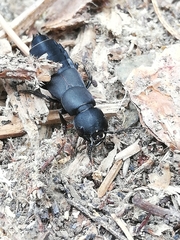
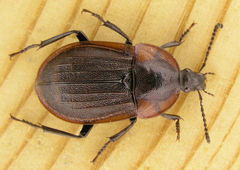
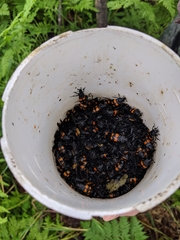
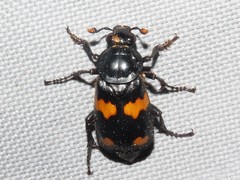
Same family (Staphylinidae)


Sources
- Wikipedia: https://en.wikipedia.org/wiki/Creophilus_maxillosus
Look it up elsewhere: GBIF · iNaturalist · BugGuide · ITIS · Wikipedia
Text written 2026-10-23 from the sources above and checked sentence by sentence against them. Data fetched 2026-10-22.