 Bug FAQ
Hadrobunus grandis
Hadrobunus grandis · Order: Opiliones · Family: Sclerosomatidae
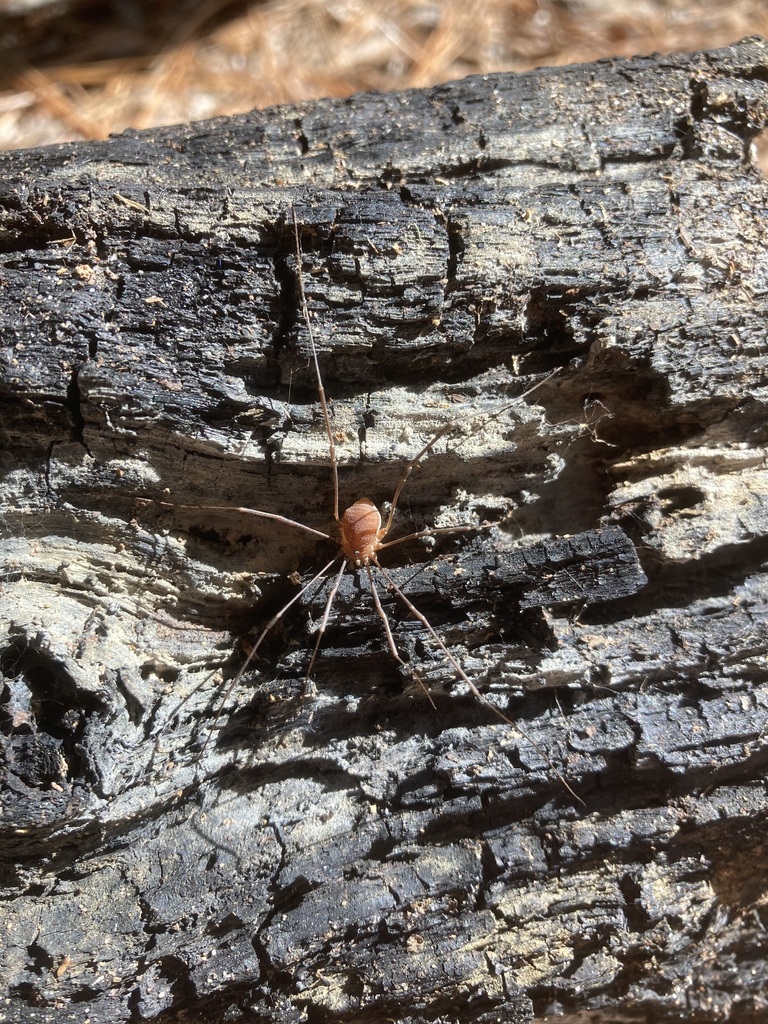
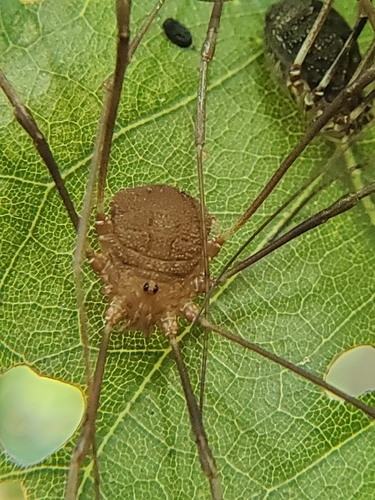
Hadrobunus grandis has a brown back that may show a central marking, and its legs appear banded. Adults are most often seen in early summer.
Source: Wikipedia
How to recognize it
The back is brown and may have a central marking, though this marking can be missing. The legs show a banded pattern.
Source: Wikipedia
Where it lives
Adults can be found during early summer.
Source: Wikipedia
Lookalikes
It resembles H. maculosus, but H. maculosus lacks spines on its back and is darker in color.
Source: Wikipedia
Where it is found in the US
Recorded in 9 of 51 states and DC. Most records: Florida, Illinois, Georgia, Virginia, Indiana, Missouri, North Carolina, Ohio.
Darker = more records. Counts are museum and citizen-science records, not population size.
Source: GBIF
Status: native in North America. Source: iNaturalist
Months it is reported in the US
Source: GBIF
More photos
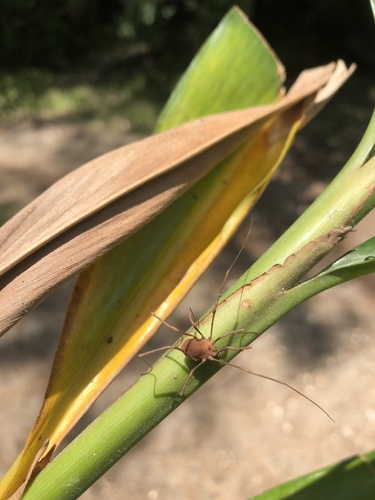
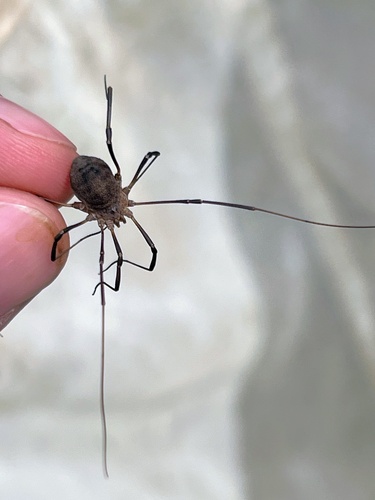
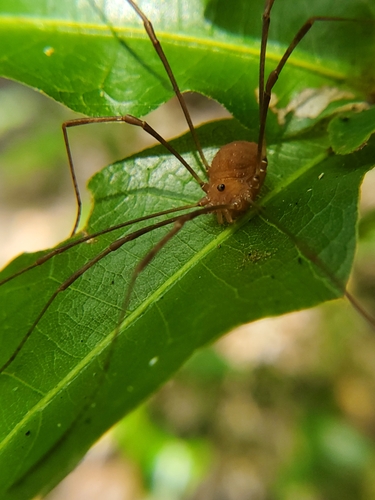
Questions people ask
When are Hadrobunus grandis adults active?
Adults are typically seen in early summer.
Source: Wikipedia
How can I tell Hadrobunus grandis apart from similar species?
Look for a brown back that may have a central marking and banded legs; unlike H. maculosus, it can have spines on the back and is not as dark.
Source: Wikipedia
Same family (Sclerosomatidae)


Sources
- Wikipedia: https://en.wikipedia.org/wiki/Hadrobunus_grandis
Look it up elsewhere: GBIF · iNaturalist · BugGuide · ITIS · Wikipedia
Text written 2026-10-28 from the sources above and checked sentence by sentence against them. Data fetched 2026-10-28.