 Bug FAQ
Leiobunum rotundum
Leiobunum rotundum · Order: Opiliones · Family: Sclerosomatidae

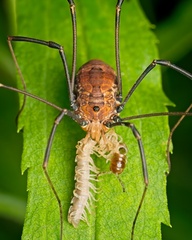
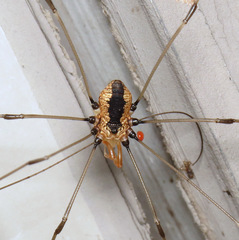
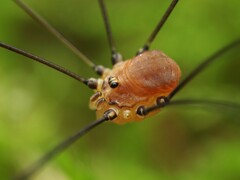
Leiobunum rotundum is a chestnut-brown harvestman with a small, smooth, very long oval body and thin black legs. It lives among long grass, herbaceous plants, shrubs and trees in the western part of the Old World. It eats a variety of small invertebrates and also consumes fungi, plant matter, water, and the juice of overripe fruit.
Source: Wikipedia
How to recognize it
The head and abdomen are not separated, giving it a single smooth body.
Source: Wikipedia
What it eats
It eats small invertebrates like caterpillars, mites, woodlice and slugs. It also consumes fungi, plant matter, drinks water, and sometimes sips juice from overripe or bruised fruit.
Source: Wikipedia
Where it comes from
The species occurs in the western portion of the Old World.
Source: Wikipedia
Where it is found in the US
Recorded in 2 of 51 states and DC. Most records: Washington, Arizona.
Darker = more records. Counts are museum and citizen-science records, not population size.
Source: GBIF
Status: introduced in North America; introduced in United States; introduced in Canada. Source: iNaturalist
Months it is reported in the US
Source: GBIF
More photos


Questions people ask
What does Leiobunum rotundum eat?
It eats small invertebrates such as caterpillars, mites, woodlice and slugs, and also consumes fungi, plant matter, water, and juice from overripe fruit.
Source: Wikipedia
Same family (Sclerosomatidae)


Sources
- Wikipedia: https://en.wikipedia.org/wiki/Leiobunum_rotundum
Look it up elsewhere: GBIF · iNaturalist · BugGuide · Wikipedia
Text written 2026-10-23 from the sources above and checked sentence by sentence against them. Data fetched 2026-10-22.