 Bug FAQ
Leiobunum blackwalli
Leiobunum blackwalli · Order: Opiliones · Family: Sclerosomatidae
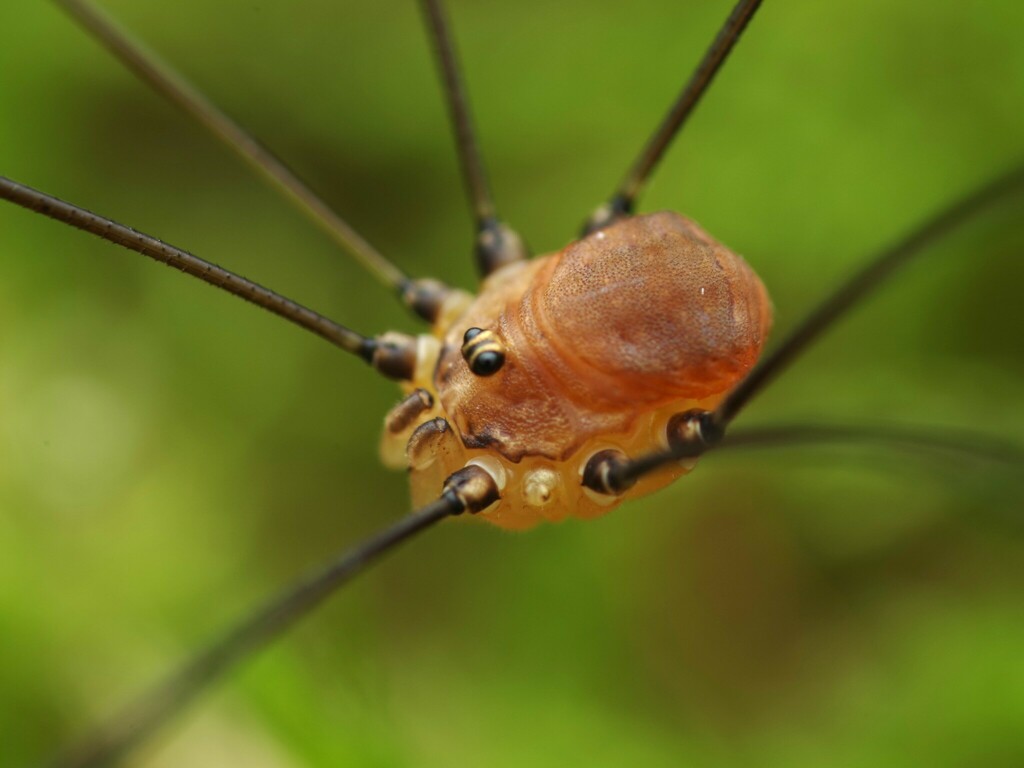
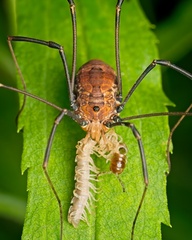
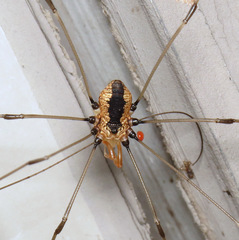
Females grow to about 6 mm and males to about 4 mm, while the second pair of legs can reach 50 mm long. It looks like L. rotundum but has a broader rear abdomen, a wider dark marking at the back with a sharper edge, and pale palps.
Source: Wikipedia
Size
Females grow to about 6 mm and males to about 4 mm. The second pair of legs can reach up to 50 mm.
Source: Wikipedia
Where it lives
It is usually found in woods, damp places, and gardens.
Source: Wikipedia
Lookalikes
It is similar in appearance to L. rotundum.
Source: Wikipedia
Where it is found in the US
Recorded in 1 of 51 states and DC. Most records: Washington.
Darker = more records. Counts are museum and citizen-science records, not population size.
Source: GBIF
Status: introduced in North America; introduced in United States; introduced in Canada. Source: iNaturalist
Months it is reported in the US
Source: GBIF
More photos

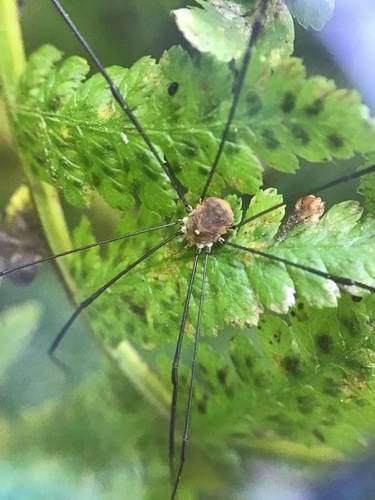
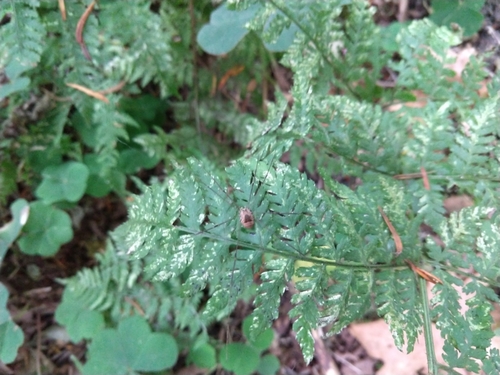
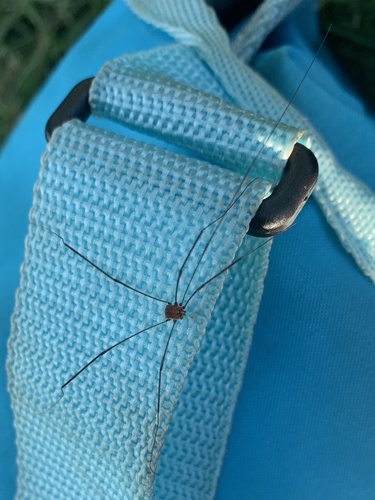
Same family (Sclerosomatidae)

Sources
- Wikipedia: https://en.wikipedia.org/wiki/Leiobunum_blackwalli
Look it up elsewhere: GBIF · iNaturalist · BugGuide · Wikipedia
Text written 2026-10-23 from the sources above and checked sentence by sentence against them. Data fetched 2026-10-22.