 Bug FAQ
Leiobunum
Leiobunum · Order: Opiliones · Family: Sclerosomatidae
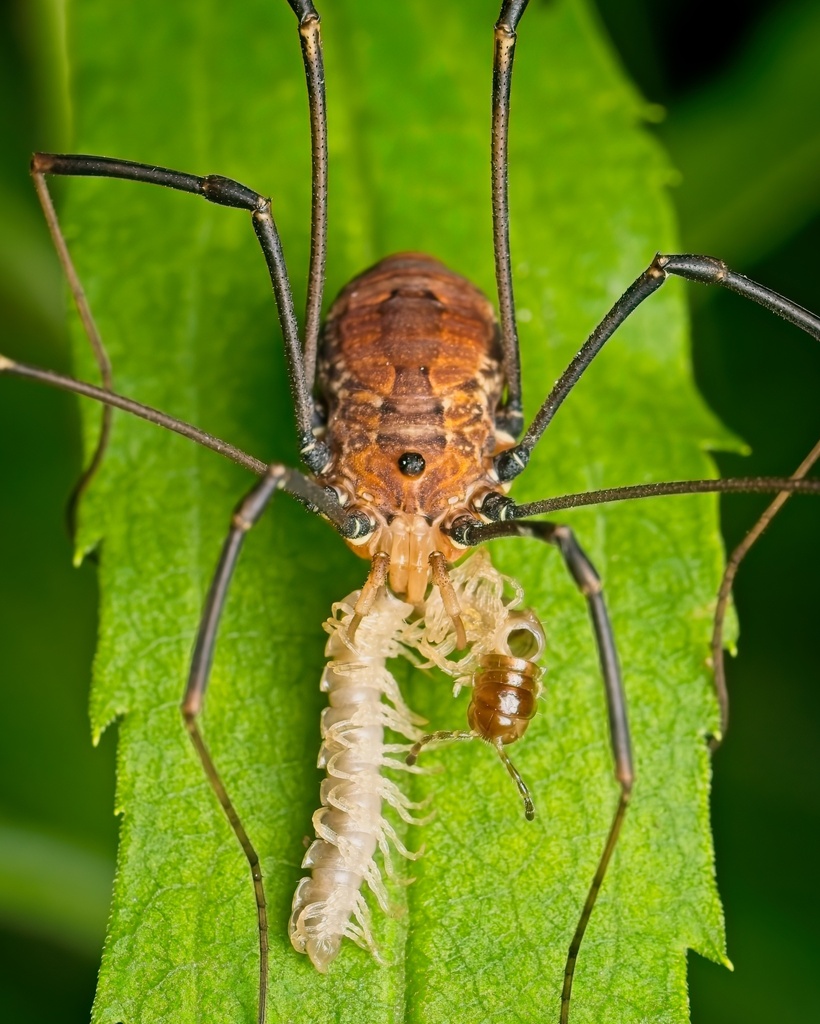
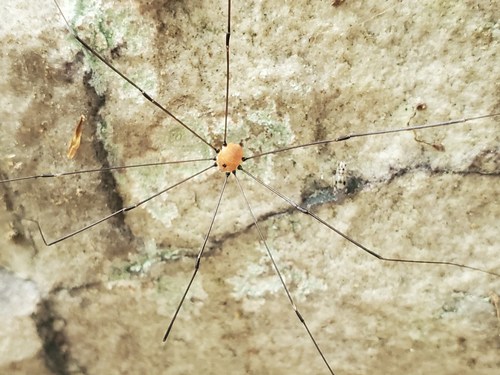
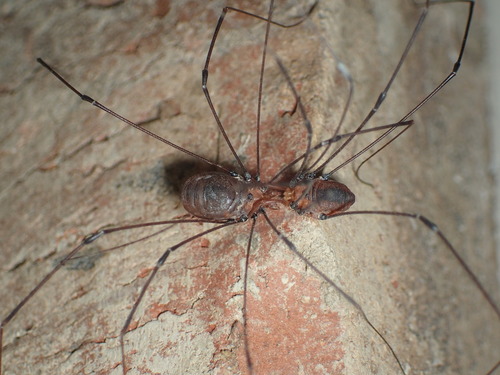
Leiobunum, often called daddy longlegs, are harvestmen with a small oval body and very long legs. They are omnivorous predators and scavengers that eat small invertebrates such as earthworms.
Source: University of Minnesota Extension, hgic.clemson.edu, Wikipedia
How to recognize it
They belong to the arachnid order Opiliones, the harvestmen. They look like spiders but lack silk glands and venom.
Source: Wikipedia, hgic.clemson.edu
Is it a pest in the house?
In fall they may gather in large groups on eaves and windows, but they rarely enter finished living spaces.
Source: hgic.clemson.edu
Does it bite or sting?
They have no venom glands or fangs, so they cannot bite or sting people.
How to get rid of it
If needed, they can be removed with a vacuum or a broom.
Source: hgic.clemson.edu
Where it lives
They are found on tree trunks, fences, building walls, stone walls, and under roof gutters.
Source: Wikipedia
What it eats
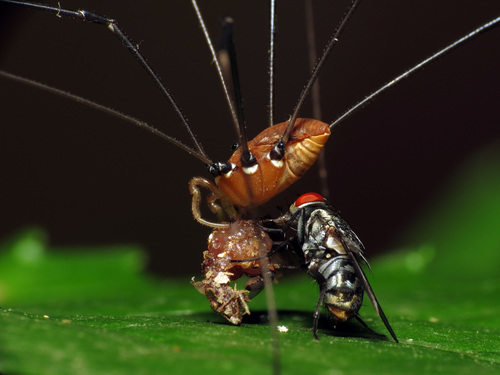
They are omnivores that prey on invertebrates such as earthworms and also scavenge.
Source: Wikipedia
Life cycle
Mating is brief, with males using a true penis and no courtship behavior.
Source: Wikipedia
Where it comes from
Species occur in the US, Europe, Mexico, Japan, Turkey, Morocco, and other regions.
Source: Wikipedia
Lookalikes
Although they have eight legs like spiders, they are not spiders and lack silk and venom.
Source: Wikipedia, hgic.clemson.edu
Where it is found in the US
Recorded in 48 of 51 states and DC. Most records: Texas, Pennsylvania, Maryland, Virginia, New York, Illinois, Massachusetts, Michigan.
Darker = more records. Counts are museum and citizen-science records, not population size.
Source: GBIF
Status: native in North America; native in United States. Source: iNaturalist
Months it is reported in the US
Source: GBIF
More photos
Questions people ask
Do they bite?
No, they have no venom glands or fangs and cannot bite people.
How can I get rid of them?
You can vacuum them up or sweep them away with a broom.
Source: hgic.clemson.edu
Why do they gather on my house in the fall?
They form large clusters on eaves and windows during autumn, but they rarely go inside living spaces.
Source: hgic.clemson.edu
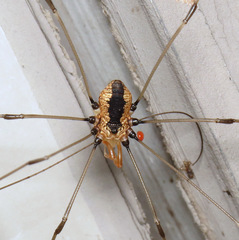
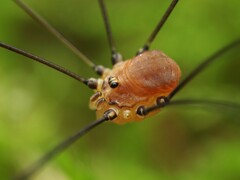
Same family (Sclerosomatidae)

Sources
- hgic.clemson.edu: https://hgic.clemson.edu/factsheet/daddy-longlegs/
- University of Minnesota Extension: https://apps.extension.umn.edu/garden/diagnose/insect/general-curiosity-insects/relatives/small/harvestmen.html
- Wikipedia: https://en.wikipedia.org/wiki/Leiobunum
Look it up elsewhere: GBIF · iNaturalist · BugGuide · ITIS · Wikipedia
Text written 2026-10-23 from the sources above and checked sentence by sentence against them. Data fetched 2026-10-23.