 Bug FAQ
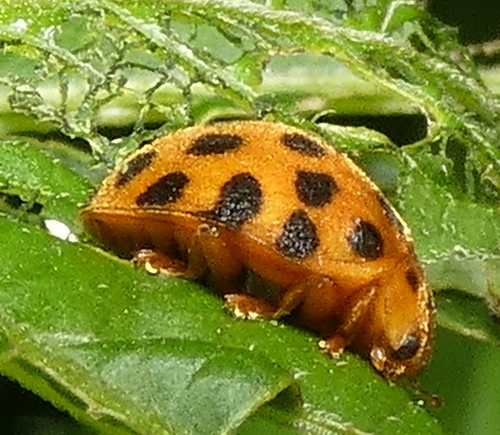
Hadda Beetle
Henosepilachna vigintioctopunctata · Order: Coleoptera · Family: Coccinellidae
Also called: 28-spotted Potato Ladybird
Source: Wikipedia
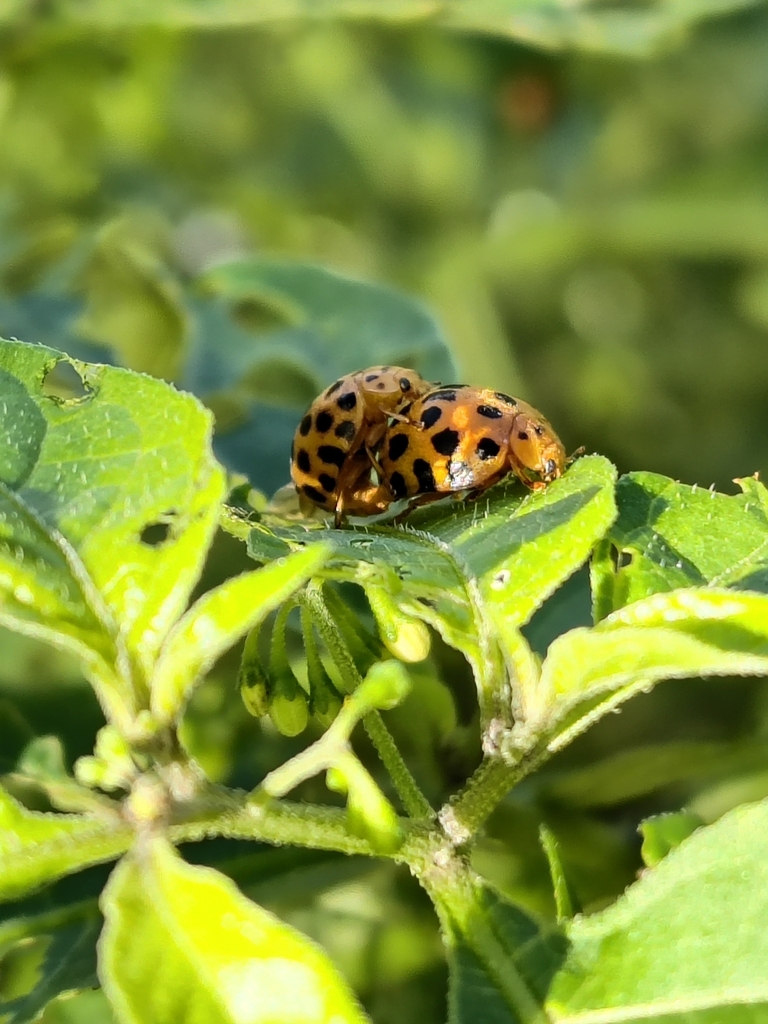
The Hadda beetle feeds on the leaves of potatoes and related crops, making it a garden pest. It is native to southeastern Asia, especially India, and its numbers rise with warmer, more humid weather.
Source: Wikipedia
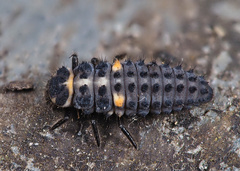
How to recognize it
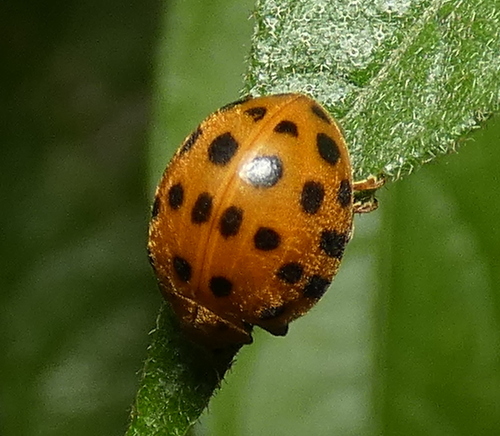
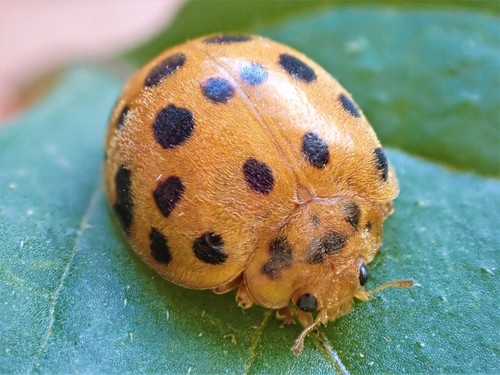
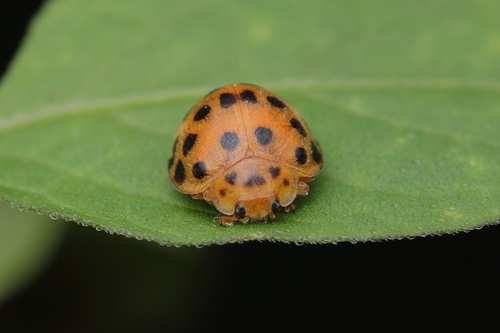
It is also called the 28-spotted potato ladybird or Hadda beetle.
Source: Wikipedia
What it eats
Its diet consists of the leaves of potatoes and other members of the nightshade family.
Source: Wikipedia
Life cycle
It belongs to a cryptic species complex previously named Epilachna vigintioctopunctata.
Source: Wikipedia
When you see it
Higher minimum temperatures and humidity increase its seasonal abundance.
Source: Wikipedia
Where it comes from
It originates from southeastern Asia, mainly India.
Source: Wikipedia
Lookalikes
It is often mistaken for the related species Henosepilachna vigintioctomaculata, which shares the same common name.
Source: Wikipedia
More photos
Questions people ask
What crops does the Hadda beetle damage?
It feeds on potatoes and other solanaceous crops, stripping their leaves.
Source: Wikipedia
When are Hadda beetles most common?
Their numbers rise when minimum temperatures and humidity are higher.
Source: Wikipedia
Where does the Hadda beetle come from?
It is native to southeastern Asia, especially India.
Source: Wikipedia
How can I tell a Hadda beetle apart from similar species?
It is frequently confused with Henosepilachna vigintioctomaculata, which lives in Russia, China, Japan, and Korea.
Source: Wikipedia
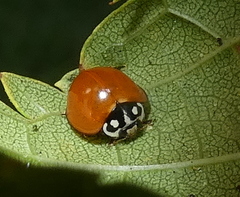
Same family (Coccinellidae)

Sources
- Wikipedia: https://en.wikipedia.org/wiki/Henosepilachna_vigintioctopunctata
Look it up elsewhere: GBIF · iNaturalist · BugGuide · Wikipedia
Text written 2026-10-22 from the sources above and checked sentence by sentence against them. Data fetched 2026-10-22.