 Bug FAQ
Grey Cross Spider
Larinioides sclopetarius · Order: Araneae · Family: Araneidae
Also called: Bridge Orbweaver
Source: Wikipedia

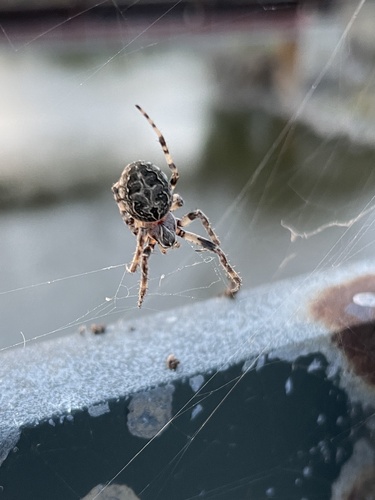
They are commonly found on bridges, steel structures and near lights, especially over water. They rarely bite humans; if they do, the sting feels like a mosquito bite or a honey-bee sting.
Source: Wikipedia
How to recognize it
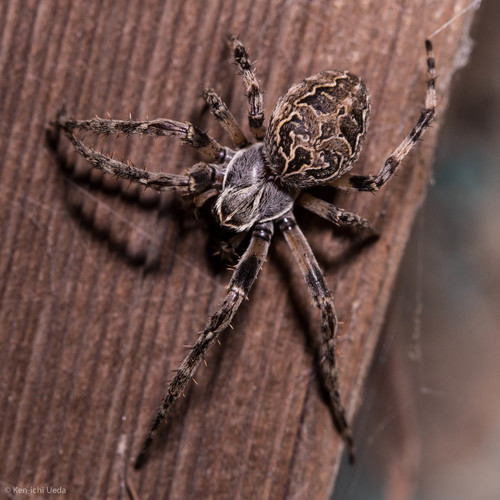
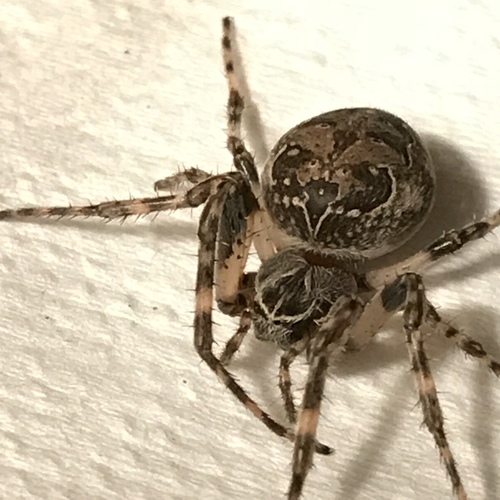
They have white hairs outlining the head and dark spots on the abdomen, which set them apart from similar species.
Source: Wikipedia
Size
Other measurements give females 4.5 to 6.25 mm and males 4.25 to 7 mm.
Source: Wikipedia
Is it a pest in the house?
They gather around artificial lights in urban areas. On a restaurant boat, staff had to clear webs each morning because they deterred customers.
Source: Wikipedia
Does it bite or sting?
Even in large numbers they usually do not bite people. Their venom causes a sensation ranging from a mosquito bite to a honey-bee sting.
Source: Wikipedia
How to get rid of it
They are highly active in new environments, helping them spread in cities. In experiments they explore new settings more than other urban spiders like Zygiella x-notata.
Source: Wikipedia
Where it lives
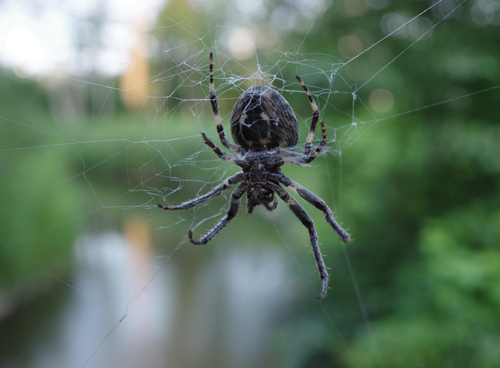
They favor bridges, especially near lights and over water. They often live on steel objects rather than plants. In North America they are common near buildings, especially around the Great Lakes. In Central Europe they are also found near water.
Source: Wikipedia
What it eats
Their diet changes with the seasons, but tiny flies called chironomids can make up to 94 % of what they eat.
Source: Wikipedia
Life cycle
They live about a year and a half under good conditions. Adults can mature any time of year, with most mature spiders appearing in late summer.
Source: Wikipedia
When you see it
Males are mostly seen in summer, while females stay active until November in Central Europe. In Chicago they migrate annually, ballooning onto high-rise buildings.
Source: Wikipedia
Where it comes from
The species originated in Europe.
Source: Wikipedia
Lookalikes
They differ from close relatives L. patagiatus and L. cornutus by their white head hairs and dark abdominal markings.
Source: Wikipedia
Where it is found in the US
Recorded in 35 of 51 states and DC. Most records: Washington, Wisconsin, New York, Minnesota, Illinois, Michigan, Massachusetts, Pennsylvania.
Darker = more records. Counts are museum and citizen-science records, not population size.
Source: GBIF
Status: introduced in North America; introduced in Canada; introduced in United States. Source: iNaturalist
Months it is reported in the US
Source: GBIF
More photos
Questions people ask
Do Grey Cross Spiders bite humans?
They rarely bite, and if they do the bite feels like a mosquito bite or a honey-bee sting.
Source: Wikipedia
Where are these spiders usually found?
They are most often seen on bridges, steel structures and near lights, especially over water.
Source: Wikipedia
Are they a problem inside homes?
They tend to gather around outdoor lights and can make messy webs, but they do not damage the house itself.
Source: Wikipedia
Same family (Araneidae)


Sources
- Wikipedia: https://en.wikipedia.org/wiki/Larinioides_sclopetarius
Look it up elsewhere: GBIF · iNaturalist · BugGuide · ITIS · Wikipedia
Text written 2026-10-22 from the sources above and checked sentence by sentence against them. Data fetched 2026-10-22.