 Bug FAQ
Green Burgundy Stink Bug
Banasa dimidiata · Order: Hemiptera · Family: Pentatomidae
Also called: Banasa Stink Bug, Green and Red Stink Bug, Stink Bug
Source: Wikipedia
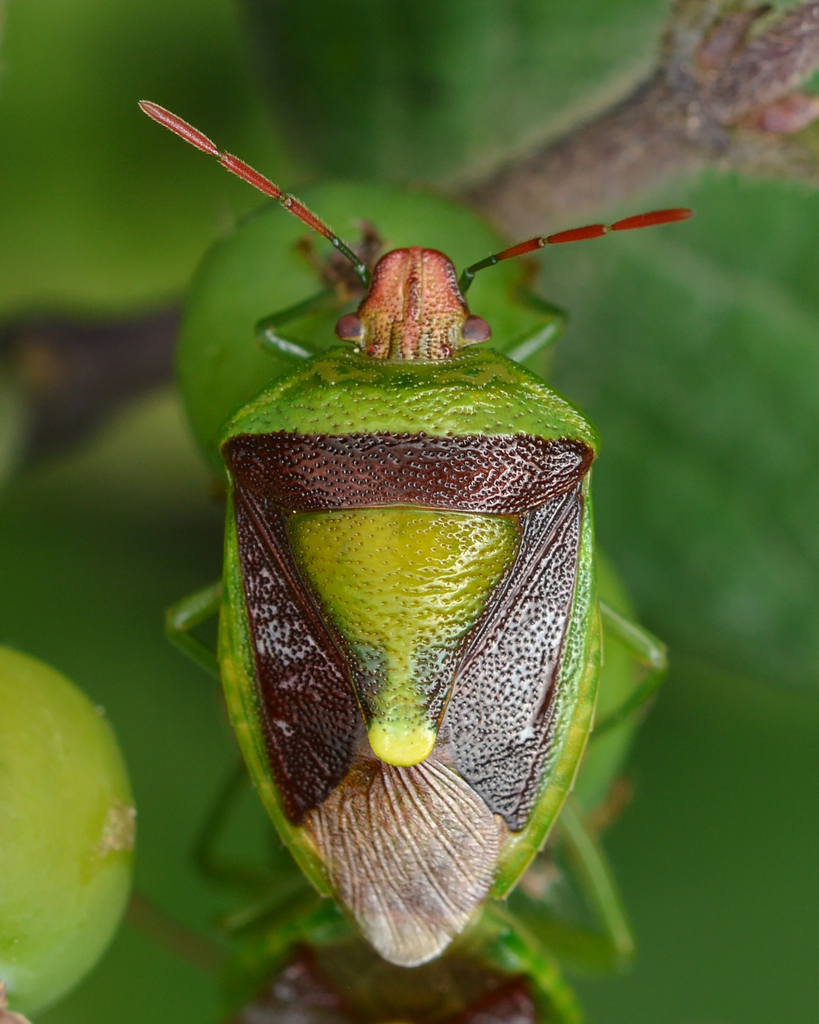
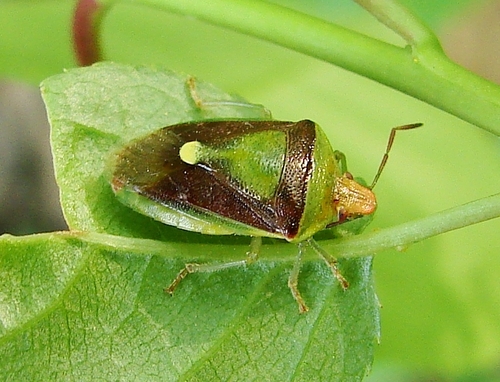
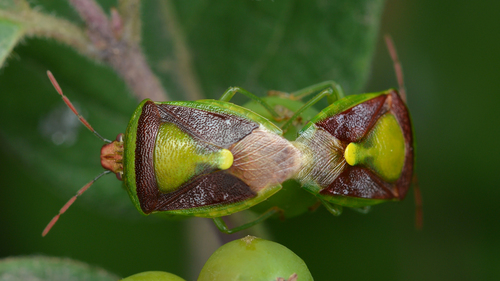
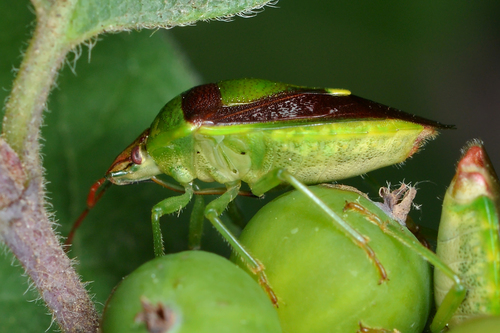
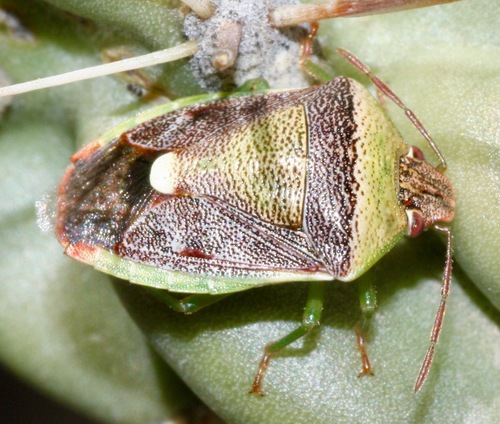
The green burgundy stink bug is a small insect about 8.5 to 11 mm long, with bright green bodies and burgundy-brown wing tips and rear, plus long reddish-brown antennae. It lives in Canada and the United States and is most commonly seen from April through October, peaking in June and July. It feeds on many trees and shrubs, favoring berries such as blueberries, which can lead to damage in gardens and orchards.
Source: Wikipedia
How to recognize it
Its main color is vivid green, while the lower wing areas and the back are burgundy-brown, and its antennae end in a reddish-brown tip.
Source: Wikipedia
Size
Adults measure between 8.5 mm and 11.0 mm in length.
Source: Wikipedia
What it eats
It is a plant feeder that lives on many trees and shrubs, especially on berries like blueberries.
Source: Wikipedia
Life cycle
Adults are most often observed from April to October, with numbers highest in June and July.
Source: Wikipedia
When you see it
The bug is active from spring through fall, peaking in early summer.
Source: Wikipedia
Where it comes from
It is native to Canada and the United States.
Source: Wikipedia
Where it is found in the US
Recorded in 47 of 51 states and DC. Most records: Texas, Washington, Pennsylvania, California, Massachusetts, New York, Wisconsin, Oregon.
Darker = more records. Counts are museum and citizen-science records, not population size.
Source: GBIF
Status: native in North America; native in Canada; native in United States. Source: iNaturalist
Months it is reported in the US
Source: GBIF
More photos
Questions people ask
Does the green burgundy stink bug damage my garden?
Yes, it feeds on a variety of trees, shrubs, and especially berry plants, which can cause noticeable damage to garden fruit and foliage.
Source: Wikipedia
Same family (Pentatomidae)
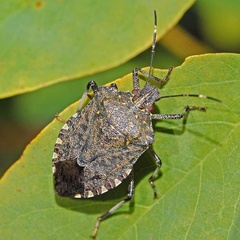 Brown Marmorated Stink BugHalyomorpha halysDamages trees, gardens or crops
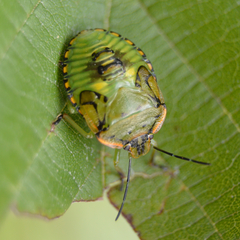 Green Stink BugChinavia hilarisDamages trees, gardens or crops
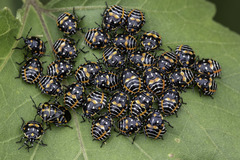 Harlequin BugMurgantia histrionicaDamages trees, gardens or crops
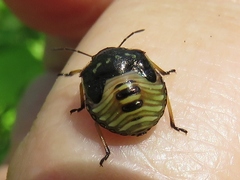 Brown Stink BugEuschistus servusDamages trees, gardens or crops
 Green Shield BugPalomena prasina
 European Striped Shield BugGraphosoma italicum
Sources
- Wikipedia: https://en.wikipedia.org/wiki/Banasa_dimidiata
Look it up elsewhere: GBIF · iNaturalist · BugGuide · Wikipedia
Text written 2026-10-22 from the sources above and checked sentence by sentence against them. Data fetched 2026-10-22.