 Bug FAQ
Gorse Orbweaver
Agalenatea redii · Order: Araneae · Family: Araneidae
Also called: Gorse Orb-weaver, Gorse Orbweb Spider
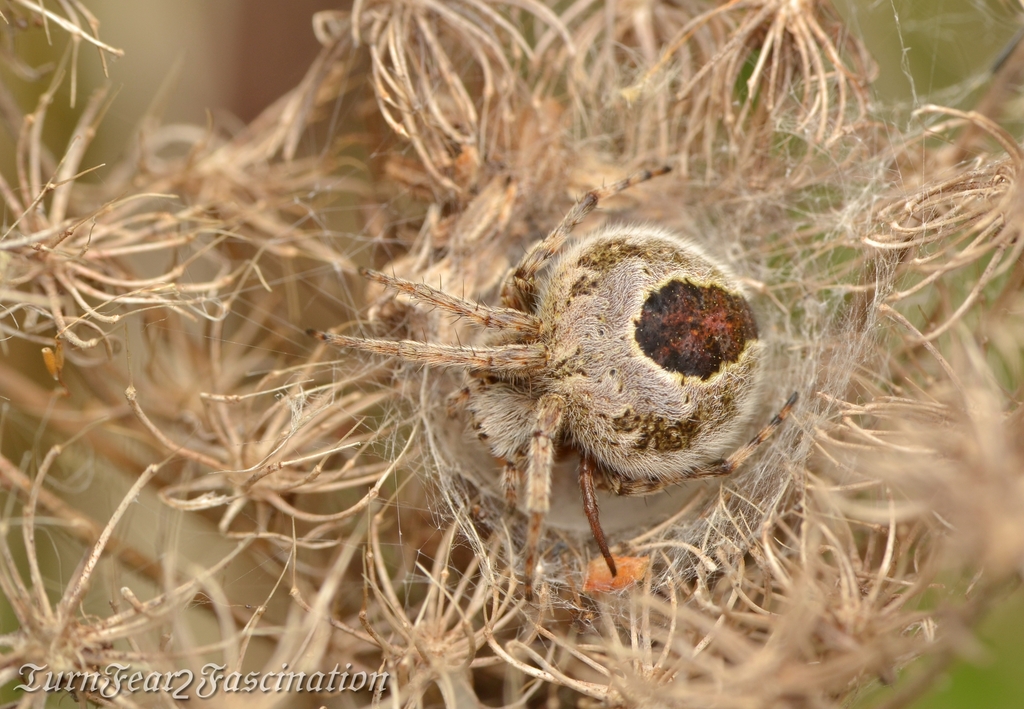
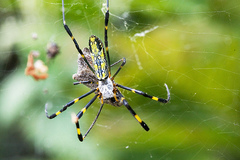
Adult males measure about 4.6 to 6.2 mm and females 6.5 to 10.3 mm in length. They have variable brown to yellow-orange bodies, often with a dark stripe down the abdomen and crosswise bands. They live in open, sunny habitats such as dry grasslands, shrubs, and warm woodland edges.
Source: Wikipedia
How to recognize it
Body colour ranges from light or dark brown to yellow-orange, usually with a dark longitudinal band and some transverse bands on the abdomen.
Source: Wikipedia
Size
Males are 4.6 to 6.2 mm long; females are larger at 6.5 to 10.3 mm.
Source: Wikipedia
Where it lives
Prefers open, sunny places like sandy grasslands, dry shrubs, warm steppe edges and sunny woodland margins.
Source: Wikipedia
Life cycle
Has one generation per year; newborns become sub-adults by early winter, overwinter, and mature in spring.
Source: Wikipedia
When you see it
Adults are active early in the year from April; males are seen until June, females persist through July and fade by August.
Source: Wikipedia
More photos

Same family (Araneidae)


Sources
- Wikipedia: https://en.wikipedia.org/wiki/Agalenatea_redii
Look it up elsewhere: GBIF · iNaturalist · BugGuide · ITIS · Wikipedia
Text written 2026-10-22 from the sources above and checked sentence by sentence against them. Data fetched 2026-10-22.