 Bug FAQ
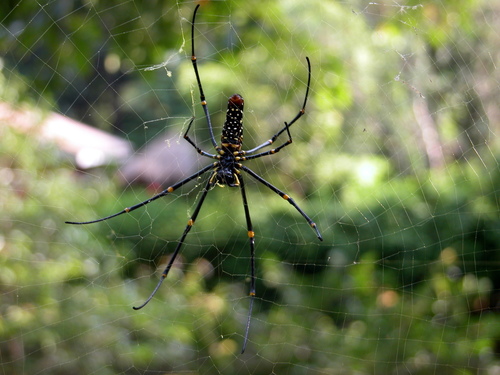
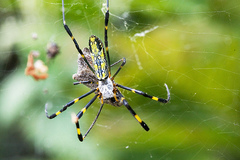
Giant Golden Orbweaver
Nephila pilipes · Order: Araneae · Family: Araneidae
Also called: Giant Golden Orb Weaver, Giant Golden Orb-weaving Spider, Golden orb weaver, Large Woodland Spider
Source: Wikipedia
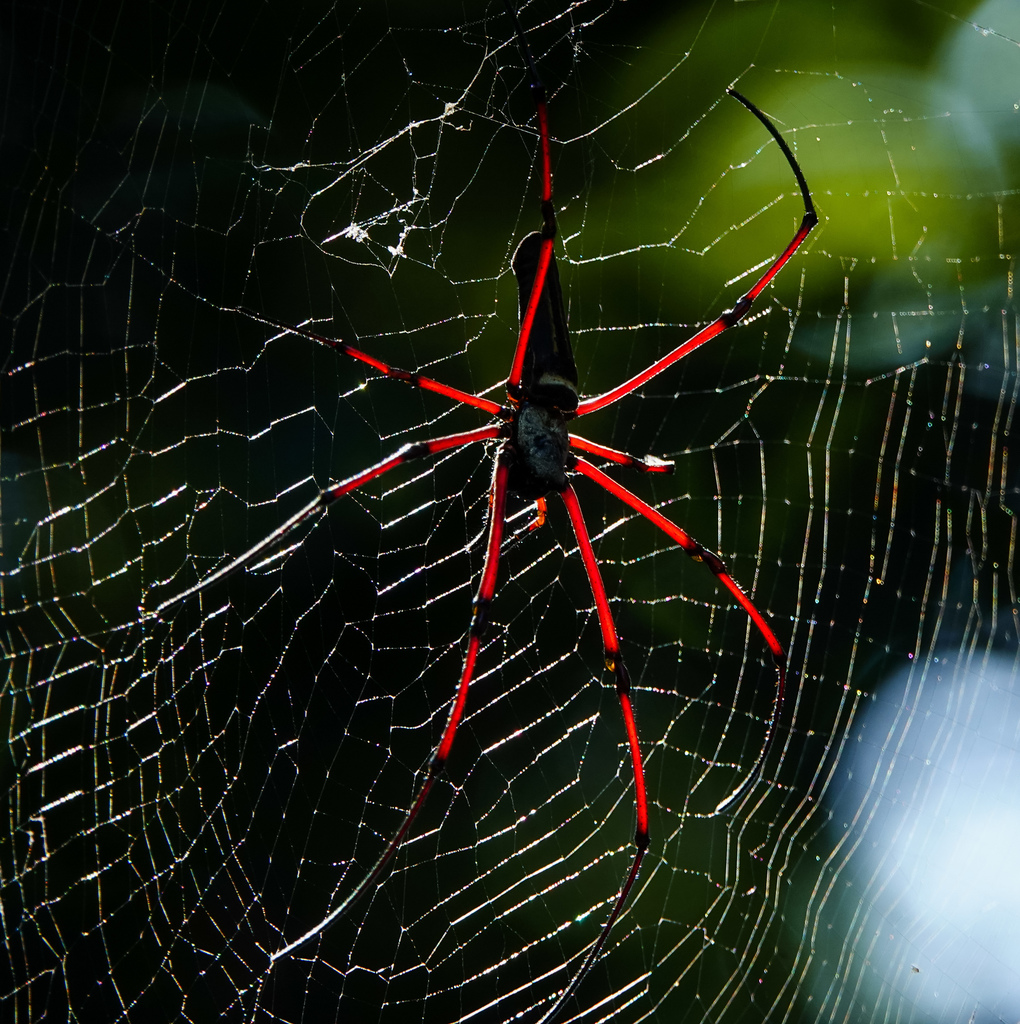
Adult females are very large, 25 to 50 mm long, while males are tiny, only 4 to 6 mm. They live in moist forests, coastal areas, near surface water, and on buildings, preferring shady spots.
Source: Wikipedia
How to recognize it
Juvenile females have dense hairy brushes on the first, second, and fourth leg pairs, which disappear in adults.
Source: Wikipedia
Size
Adult females measure 25 to 50 mm (1 to 2 in) in body length. Males are only 4 to 6 mm (about 0.2 in) long.
Source: Wikipedia
Does it bite or sting?
Bites on humans are rarely reported. When they occur, symptoms are similar to other orb-weavers: acute muscle pain, tightness, and heightened reflexes.
Source: Wikipedia
Where it lives
Found in forests and coastal zones, often near surface water and on buildings. Prefers moist habitats without direct sunlight.
Source: Wikipedia
What it eats
Can capture a wide range of insects, from 2 mm up to larger than themselves.
Source: Wikipedia
Life cycle
Spiderlings feed together on a shared web before adulthood. Adults build their own individual webs.
Source: Wikipedia
When you see it
Adult females are active year-round and continuously lay eggs.
Source: Wikipedia
Where it comes from
Occurs throughout East and Southeast Asia and Oceania, including Japan, China, India, Australia, and many neighboring countries.
Source: Wikipedia
More photos
Questions people ask
Do they bite humans?
Bites are rare, but when they happen they cause temporary muscle pain and a feeling of tightness.
Source: Wikipedia
How big are giant golden orbweavers?
Females reach 25 to 50 mm in body length, while males are only 4 to 6 mm.
Source: Wikipedia
Where are they found?
They live in moist forests, coastal areas, near surface water, and on buildings, preferring shady, humid spots.
Source: Wikipedia
Same family (Araneidae)


Sources
- Wikipedia: https://en.wikipedia.org/wiki/Nephila_pilipes
Look it up elsewhere: GBIF · iNaturalist · BugGuide · ITIS · Wikipedia
Text written 2026-10-22 from the sources above and checked sentence by sentence against them. Data fetched 2026-10-22.