 Bug FAQ
Garden soldier fly
Exaireta spinigera · Order: Diptera · Family: Stratiomyidae
Also called: Blue soldier fly
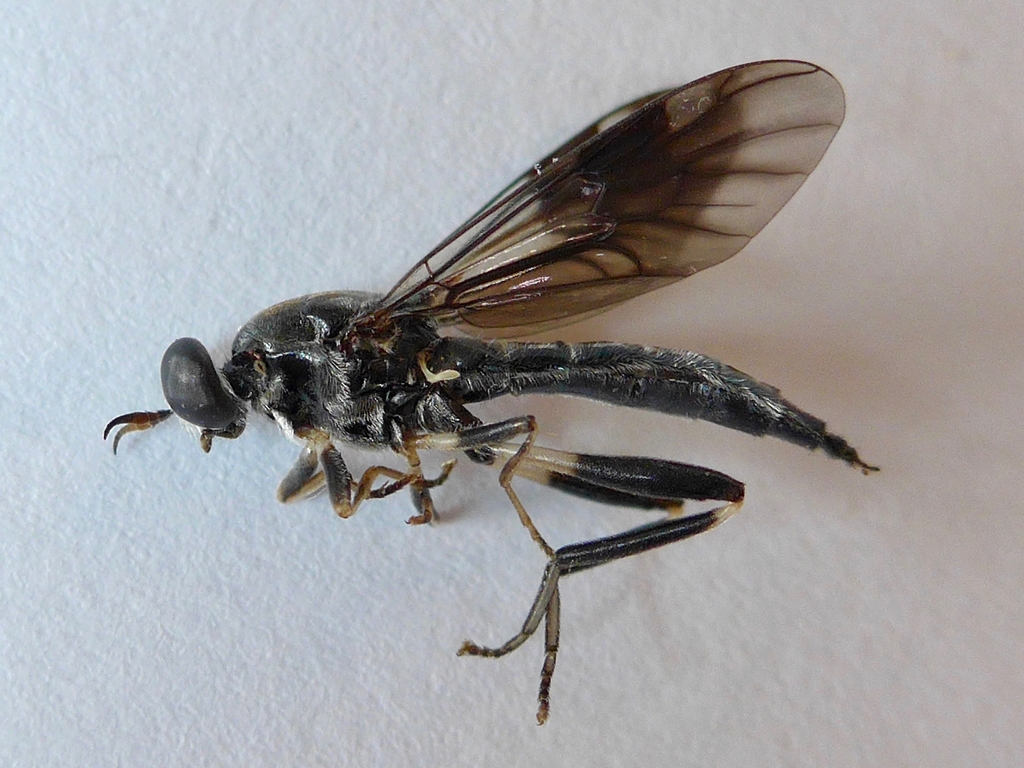
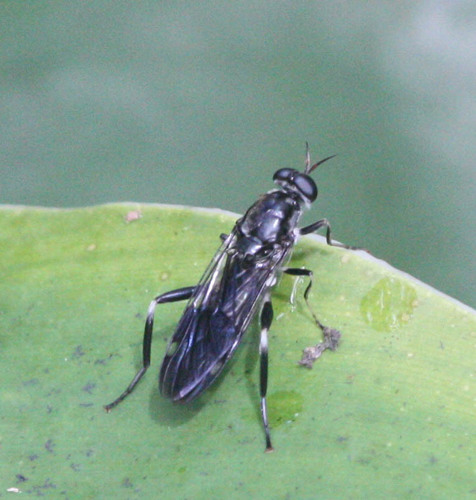
Garden soldier flies are about 14-16 mm long and have black bodies with a violet sheen and shaded wings.
Source: Wikipedia
How to recognize it
The abdomen is elongated and bears four yellow-tipped spikes that stick out from the scutellum near the thorax. The body is black with violet undertones and the wings are shaded.
Source: Wikipedia
Size
Adults measure between 14 mm and 16 mm in length. Males are about 9-10 mm long with 7-8 mm wings, while females are 13-15 mm long with 11-12 mm wings.
Source: Wikipedia
Where it lives
Larvae live in decaying organic matter, often in residential compost bins. Adults hover around decaying organic material and are commonly seen in garden areas.
Source: Wikipedia
What it eats
Larvae consume detritus and are being studied as bioconverters of food waste. Adults may feed on pollen and nectar, though this is assumed rather than confirmed.
Source: Wikipedia
When you see it
In Australia, adults are most active in autumn and spring, with peaks from March to May and again from September to December.
Source: Wikipedia
Where it comes from
The species is native to Australia. It was first recorded in Honolulu, Hawaii in the 1890s and spread widely by the early 1900s.
Source: Wikipedia
Lookalikes
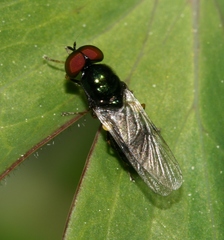
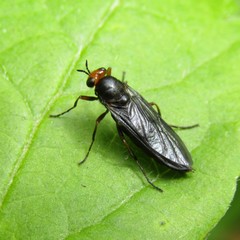
Garden soldier fly belongs to the Stratiomyidae family.
Source: Wikipedia
Where it is found in the US
Recorded in 4 of 51 states and DC. Most records: Hawaii, California, Washington, Oregon.
Darker = more records. Counts are museum and citizen-science records, not population size.
Source: GBIF
Status: introduced in Canada. Source: iNaturalist
Months it is reported in the US
Source: GBIF
More photos
Questions people ask
How big are garden soldier flies?
Adults are 14-16 mm long; males are smaller (9-10 mm) and females larger (13-15 mm).
Source: Wikipedia
Where do I usually find them?
Larvae live in decaying organic matter such as compost bins, and adults hover around similar material in gardens.
Source: Wikipedia
What do they look like?
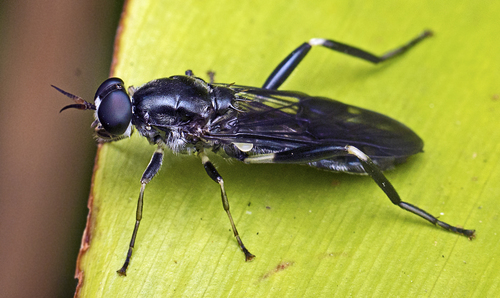
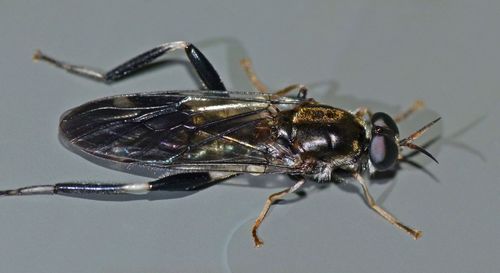
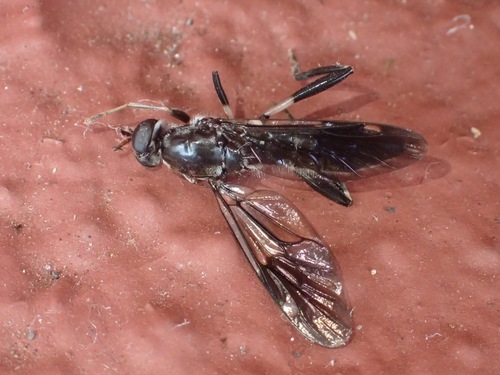
They are black with violet undertones, have shaded wings, an elongated abdomen, and four yellow-tipped spikes near the thorax.
Source: Wikipedia
Are they native to my area?
They are native to Australia but have been present in Hawaii since the 1890s and spread widely thereafter.
Source: Wikipedia
Same family (Stratiomyidae)



Sources
- Wikipedia: https://en.wikipedia.org/wiki/Exaireta_spinigera
Look it up elsewhere: GBIF · iNaturalist · BugGuide · ITIS · Wikipedia
Text written 2026-10-22 from the sources above and checked sentence by sentence against them. Data fetched 2026-10-22.