 Bug FAQ
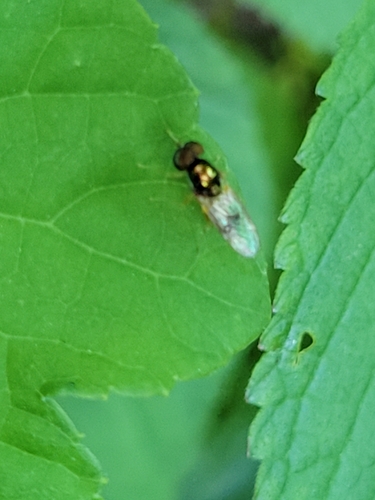
Black-horned Gem Fly
Microchrysa polita · Order: Diptera · Family: Stratiomyidae
Also called: Soldier Fly, Black-horned Gem
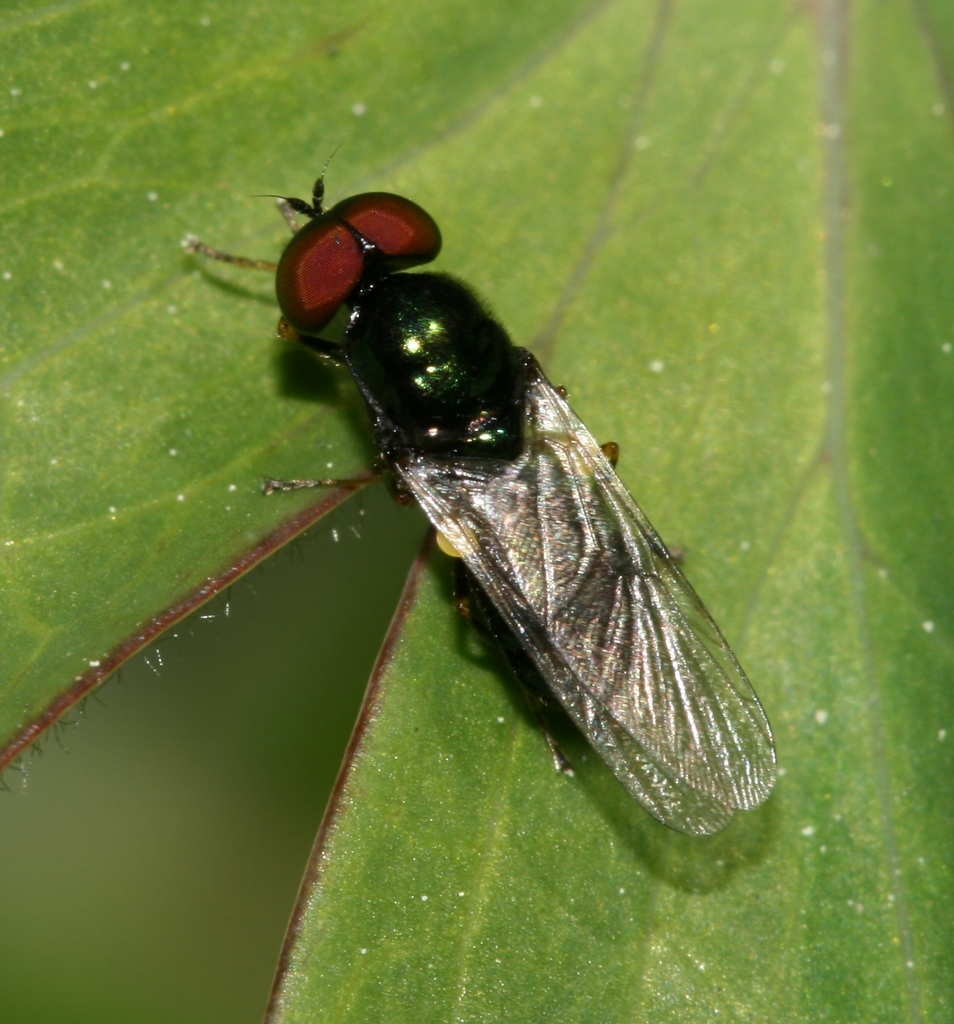
The black-horned gem fly is a small soldier fly, about 4.5 to 5.5 mm long, with mostly black legs and black hairs on the middle of the thorax and abdomen in males. It lives on the edges of deciduous woods, in hedgerows, gardens and parks, and its larvae develop in soil, decaying grass, leaves and compost. Adults fly from March through September and are found across Europe, Asia, North America and parts of Russia and Central Asia.
Source: Wikipedia
How to recognize it
Legs are mainly black, and males have black hair on the middle part of the thorax and abdomen.
Source: Wikipedia
Size
Body length ranges from 4.5 to 5.5 mm.
Source: Wikipedia
Where it lives
Larvae live in soil, decomposing grass and leaves, and in compost.
Source: Wikipedia
Life cycle
Adults are on the wing from March to September.
Source: Wikipedia
When you see it
Flight period spans March through September.
Source: Wikipedia
Where it comes from
Occurs in Russia, Siberia, Central Asia, Mongolia, western Europe, the United States and Canada.
Source: Wikipedia
Where it is found in the US
Recorded in 34 of 51 states and DC. Most records: Alaska, New York, Pennsylvania, Illinois, Virginia, Colorado, Massachusetts, Ohio.
Darker = more records. Counts are museum and citizen-science records, not population size.
Source: GBIF
Status: native in North America; native in Canada. Source: iNaturalist
Months it is reported in the US
Source: GBIF
More photos
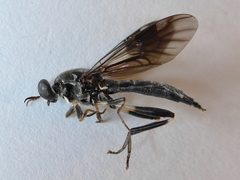
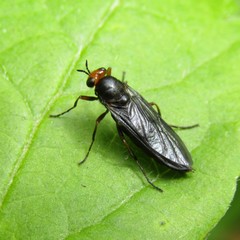
Same family (Stratiomyidae)




Sources
- Wikipedia: https://en.wikipedia.org/wiki/Microchrysa_polita
Look it up elsewhere: GBIF · iNaturalist · BugGuide · ITIS · Wikipedia
Text written 2026-10-23 from the sources above and checked sentence by sentence against them. Data fetched 2026-10-22.