 Bug FAQ
Fungus-eating ladybird
Illeis galbula · Order: Coleoptera · Family: Coccinellidae

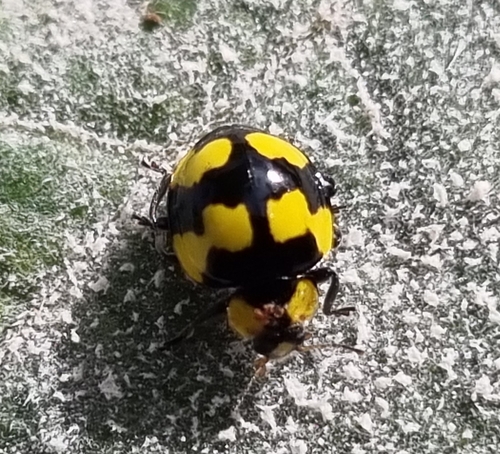
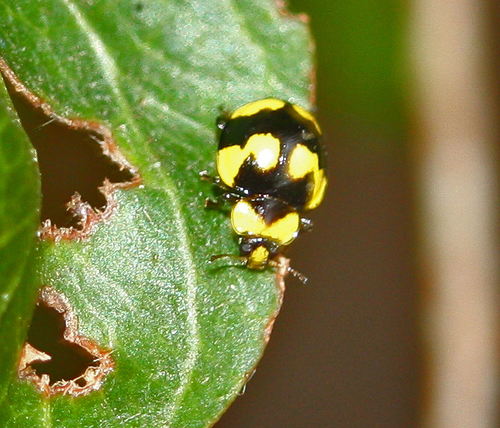
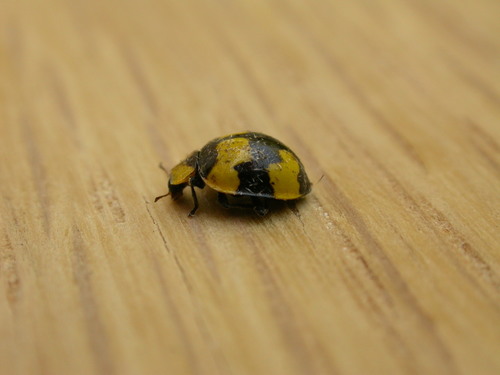
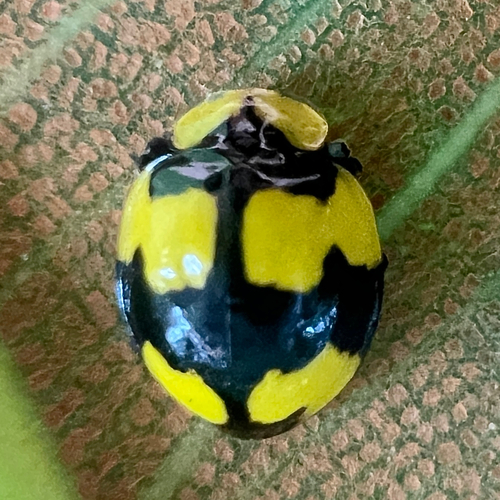
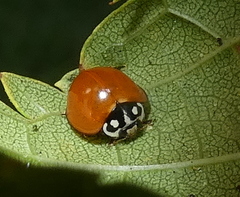
Adult fungus-eating ladybirds are tiny, about 4 to 5 mm long, black with bright yellow spots, while the larvae are larger, 8 to 10 mm, grey with black tubercles and short spines. They live in gardens, especially on cucurbit plants like pumpkin and zucchini, where both adults and larvae feed on powdery mildew, and in Australia adults also eat pollen from wattles and privet in spring.
Source: Wikipedia
How to recognize it
Adults are black with bright yellow markings.
Source: Wikipedia
Size
Adults measure 4 to 5 mm; larvae are 8 to 10 mm long.
Source: Wikipedia
Where it lives
Found in gardens on cucurbit crops such as pumpkin and zucchini.
Source: Wikipedia
What it eats
Both adults and larvae eat powdery mildew on cucurbit crops. Overwintering adults also consume pollen from wattles and privet.
Source: Wikipedia
Life cycle
When disturbed during the day they move quickly, fly, or drop.
Source: Wikipedia
Where it comes from
Native to eastern Australia.
Source: Wikipedia
More photos
Questions people ask
What do fungus-eating ladybirds look like?
Adults are black with bright yellow spots and about 4 to 5 mm long; larvae are grey with black tubercles and short spines, 8 to 10 mm long.
Source: Wikipedia
Where can I find fungus-eating ladybirds?
They are common in gardens on pumpkin and zucchini plants, and in Australia they also appear on wattles and privet where they feed on pollen in spring.
Source: Wikipedia
What do they eat?
Both stages feed on powdery mildew on cucurbit crops, and adults also eat pollen from wattles and privet.
Source: Wikipedia
Same family (Coccinellidae)

Sources
- Wikipedia: https://en.wikipedia.org/wiki/Illeis_galbula
Look it up elsewhere: GBIF · iNaturalist · BugGuide · Wikipedia
Text written 2026-10-22 from the sources above and checked sentence by sentence against them. Data fetched 2026-10-22.