 Bug FAQ
Fulvous Wood Cockroach
Parcoblatta fulvescens · Order: Blattodea · Family: Ectobiidae
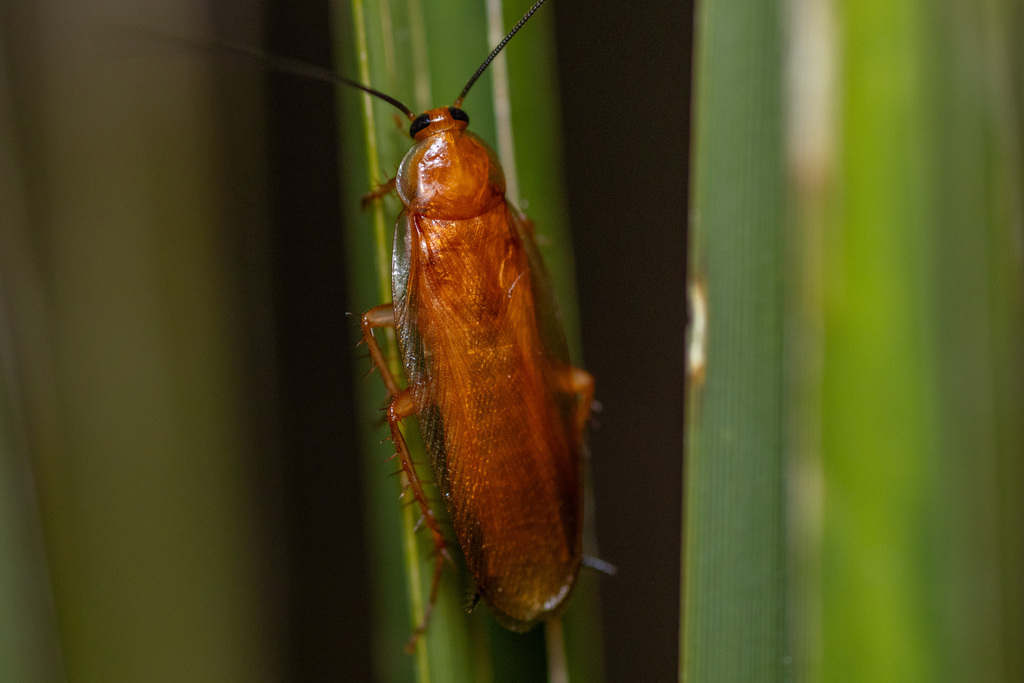
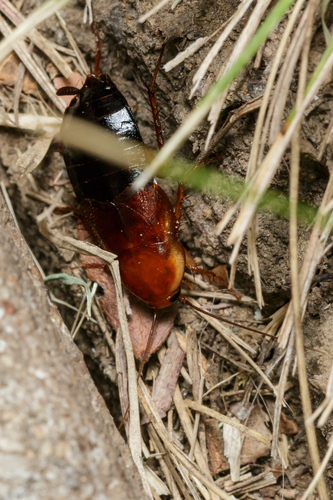
The fulvous wood cockroach is about 13 mm (0.5 in) long. It lives in various forested habitats such as heavy barrier-beach forest, pine-barrens, swamp edges, deciduous and oak woods, often under leaves, pine needles, logs or loose bark. Males are slender with long forewings and are slightly longer than females; the insects are uniformly pale brownish-yellow with sometimes darker pronotum and legs and dark brown cerci.
Source: Wikipedia
How to recognize it
Males are relatively slender, have long tegmina (outer forewings), and are a bit longer than females. The cockroach is mostly a uniform pale brownish-yellow, sometimes with a darker pronotum and legs, and usually has dark brown cerci.
Source: Wikipedia
Size
Adults measure around 13 mm (0.5 in) in length.
Source: Wikipedia
Where it lives
Individuals may be discovered under dead leaves, pine needles (especially beneath shortleaf pine), logs, loose bark, or wandering at night.
Source: Wikipedia
Lookalikes
Male fulvous wood cockroaches look very similar to males of Parcoblatta uhleriana. Female specimens can be confused with Parcoblatta virginica and Parcoblatta lata.
Source: Wikipedia
Where it is found in the US
Recorded in 15 of 51 states and DC. Most records: Florida, South Carolina, Texas, Alabama, Georgia, California, New York, New Jersey.
Darker = more records. Counts are museum and citizen-science records, not population size.
Source: GBIF
Months it is reported in the US
Source: GBIF
More photos
Questions people ask
Where am I likely to find a fulvous wood cockroach?
Look for them in forested areas such as heavy barrier-beach forest, pine-barrens, swamp edges, deciduous and oak woods, especially under dead leaves, pine needles, logs or loose bark.
Source: Wikipedia
Same family (Ectobiidae)
 German CockroachBlattella germanicaCan spread germs or disease
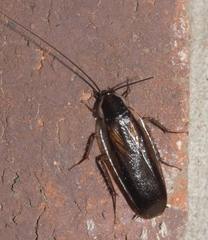 Pennsylvania Wood CockroachParcoblatta pennsylvanicaNuisance, not dangerous
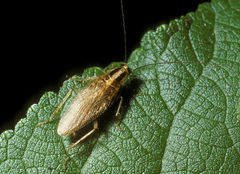 Asian CockroachBlattella asahinaiNuisance, not dangerous
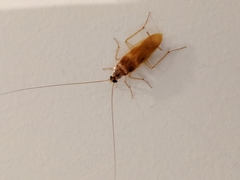 Brown-banded CockroachSupella longipalpaCan spread germs or disease
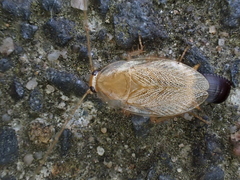 Variable CockroachPlanuncus tingitanus
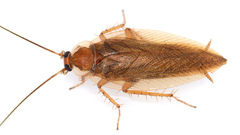 Amber Wood CockroachEctobius vittiventrisHarmless
Sources
- Wikipedia: https://en.wikipedia.org/wiki/Parcoblatta_fulvescens
Look it up elsewhere: GBIF · iNaturalist · BugGuide · ITIS · Wikipedia
Text written 2026-10-26 from the sources above and checked sentence by sentence against them. Data fetched 2026-10-26.