 Bug FAQ
Foxglove Aphid
Aulacorthum solani · Order: Hemiptera · Family: Aphididae
Also called: Glasshouse potato aphid
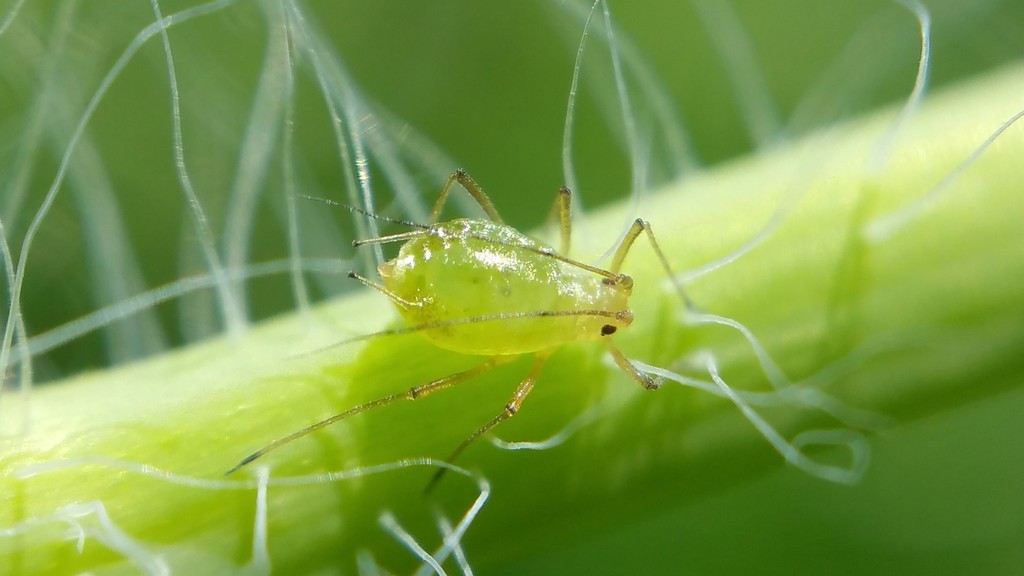
The foxglove aphid (Aulacorthum solani) is an aphid in the order Hemiptera.
Source: Wikipedia
How to recognize it
Aulacorthum solani belongs to the superfamily Aphidoidea within the true-bug order Hemiptera.
Source: Wikipedia
Is it a pest in the house?
The species is considered a serious pest of many garden vegetables and ornamental bulbs.
Source: Wikipedia
Where it lives
It is a major pest on tomato, pepper, tobacco, celery, carrot, tulip bulb, cucumber family and legume crops.
Source: Wikipedia
What it eats
It extracts plant juices by sucking sap from its host plants.
Source: Wikipedia
Where it is found in the US
Recorded in 22 of 51 states and DC. Most records: California, North Carolina, Washington, Oregon, Tennessee, Hawaii, Maine, Idaho.
Darker = more records. Counts are museum and citizen-science records, not population size.
Source: GBIF
Months it is reported in the US
Source: GBIF
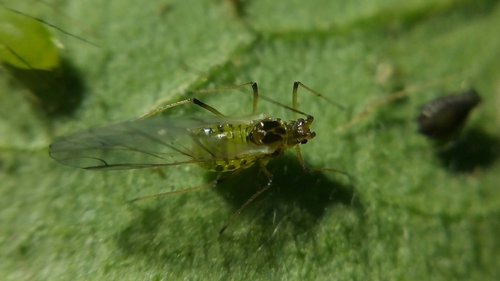
More photos
Questions people ask
What does the foxglove aphid eat?
It feeds on plant sap, piercing the plant tissue to draw fluids.
Source: Wikipedia
Same family (Aphididae)
 Melon AphidAphis gossypiiDamages trees, gardens or crops
 Oleander AphidAphis neriiDamages trees, gardens or crops
 Witch-hazel Cone Gall AphidHormaphis hamamelidis
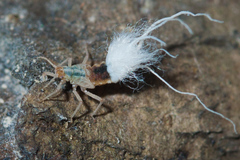 Beech Blight AphidGrylloprociphilus imbricatorDamages trees, gardens or crops
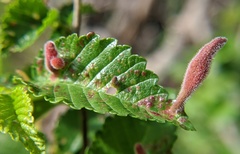 Rice Root AphidTetraneura nigriabdominalis
 Bean AphidAphis fabaeDamages trees, gardens or crops
Sources
- Wikipedia: https://en.wikipedia.org/wiki/Aulacorthum_solani
Look it up elsewhere: GBIF · iNaturalist · BugGuide · ITIS · Wikipedia
Text written 2026-10-24 from the sources above and checked sentence by sentence against them. Data fetched 2026-10-24.