 Bug FAQ
Four-spotted Spurleg
Brachiacantha quadripunctata · Order: Coleoptera · Family: Coccinellidae
Also called: Four-spotted Lady Beetle, Four-spotted Spurleg Lady Beetle
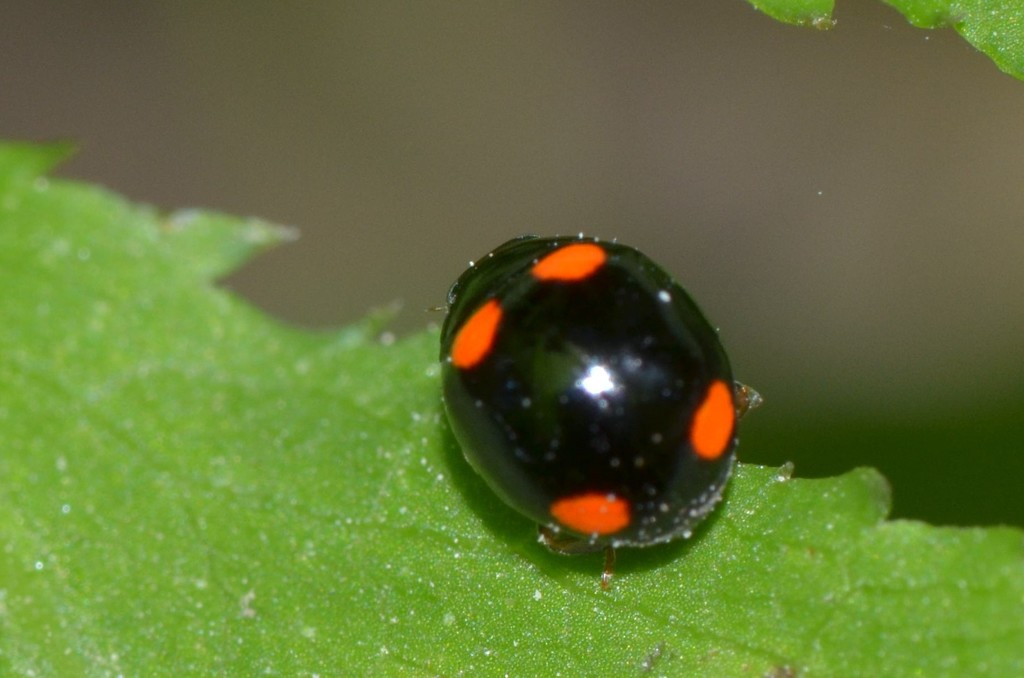
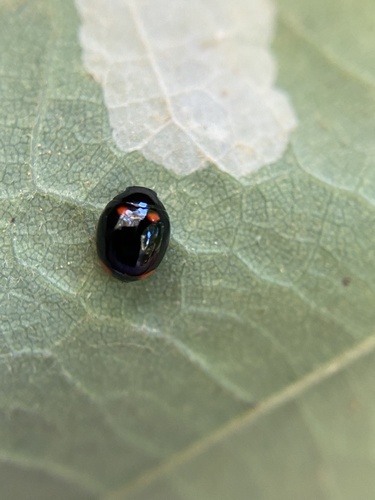
Adults measure roughly 2.5 to 4 mm in length. Males have yellow heads, females have black heads, and the pronotum is black with a yellow edge and front corners; females’ wing covers show two black spots while males add a humeral spot.
Source: Wikipedia
How to recognize it
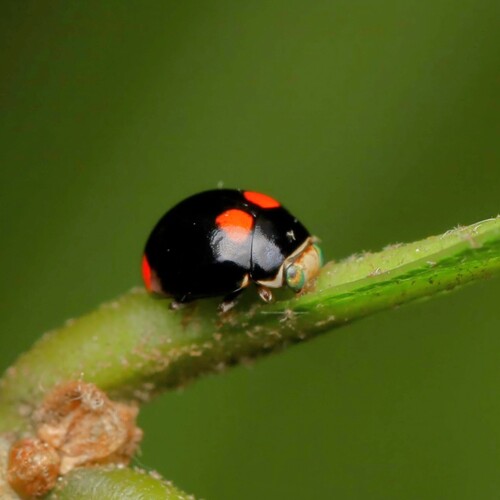
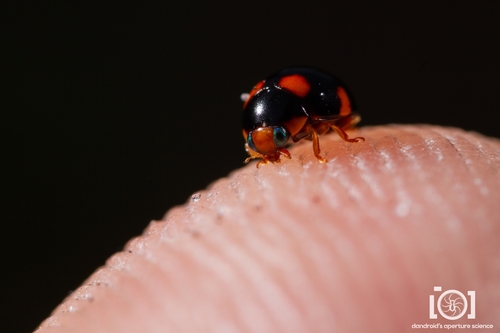
Males have yellow heads, while females have black heads. The pronotum is black with a yellow margin and front-side corners. Female elytra are black with a spot at the base and another at the tip. Males also display an extra spot near the shoulder (humeral spot).
Source: Wikipedia
Size
Adults are about 2.5 to 4 mm long.
Source: Wikipedia
Where it comes from
It is found in North America.
Source: Wikipedia
Lookalikes
The subspecies flavifrons is similar but its elytra have an additional marginal spot.
Source: Wikipedia
Where it is found in the US
Recorded in 28 of 51 states and DC. Most records: Ohio, North Carolina, Indiana, Kentucky, South Carolina, Tennessee, Virginia, New York.
Darker = more records. Counts are museum and citizen-science records, not population size.
Source: GBIF
Status: native in North America; native in Canada. Source: iNaturalist
Months it is reported in the US
Source: GBIF
More photos
Questions people ask
How can I tell male and female four-spotted spurlegs apart?
Males have yellow heads and an extra humeral spot on the wing covers, while females have black heads and only the basal and apical spots on the elytra.
Source: Wikipedia
Same family (Coccinellidae)

Sources
- Wikipedia: https://en.wikipedia.org/wiki/Brachiacantha_quadripunctata
Look it up elsewhere: GBIF · iNaturalist · BugGuide · ITIS · Wikipedia
Text written 2026-10-26 from the sources above and checked sentence by sentence against them. Data fetched 2026-10-26.