 Bug FAQ
Flat-headed Poplar Borer
Dicerca tenebrica · Order: Coleoptera · Family: Buprestidae
Also called: Flatheaded Poplar Borer
Source: Wikipedia
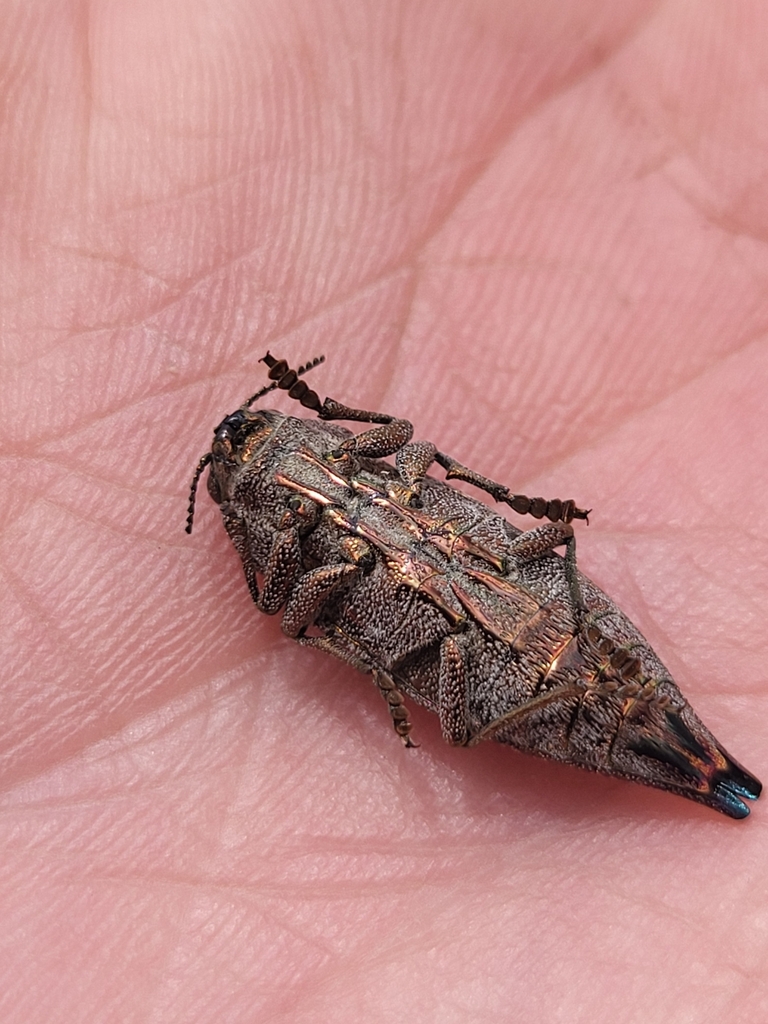
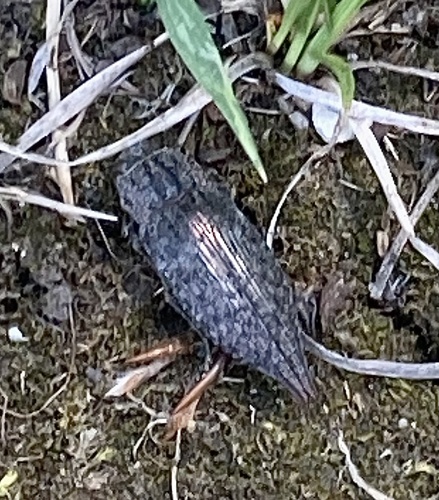
Adults are 14.5 to 26 mm long, have a flat head and a coarsely punctated back. They fly from March through November and feed on poplar, pine, spruce and related trees, where they also lay eggs.
Source: Wikipedia
How to recognize it
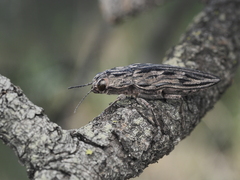
The beetle’s head is flat and the top of the head is slightly indented in the middle. Both the disc and the vertex are coarsely punctated.
Source: Wikipedia
Size
Males measure 15 to 21.5 mm long and 4.8 to 7.2 mm wide; females range 14.5 to 26 mm long and 4.5 to 9.0 mm wide.
Source: Wikipedia
Where it lives
In Alberta it feeds on and lays eggs in lodgepole pine, aspens, jack pine and white spruce.
Source: Wikipedia
What it eats
Adults feed on poplar species, especially balsam poplar. In Alberta they also feed on lodgepole pine, aspens, jack pine and white spruce.
Source: Wikipedia
Life cycle
Adults are on the wing from March through November.
Source: Wikipedia
When you see it
The flight period spans March to November.
Source: Wikipedia
Where it comes from
It occurs in Canada and the southern and northeastern United States.
Source: Wikipedia
Where it is found in the US
Recorded in 23 of 51 states and DC. Most records: Minnesota, Idaho, Vermont, Alaska, Utah, Colorado, New Mexico, Maine.
Darker = more records. Counts are museum and citizen-science records, not population size.
Source: GBIF
Status: native in North America; native in Canada. Source: iNaturalist
Months it is reported in the US
Source: GBIF
More photos
Questions people ask
What trees does the flat-headed poplar borer damage?
It feeds on poplar, lodgepole pine, aspens, jack pine and white spruce, where it also lays its eggs.
Source: Wikipedia
How can I recognize a flat-headed poplar borer?
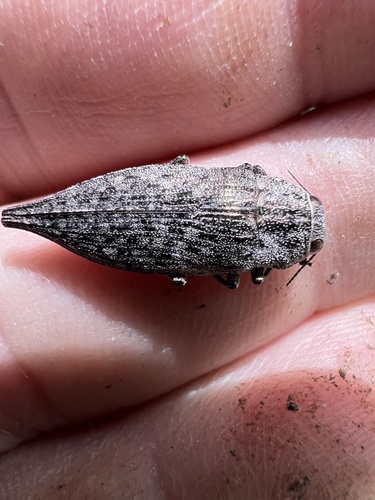
Look for a flat head with a slightly indented top and a coarsely punctated back; adults are 14 to 26 mm long and brassy to black.
Source: Wikipedia
Same family (Buprestidae)
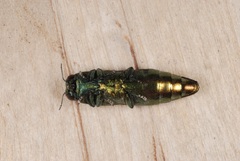 Emerald Ash BorerAgrilus planipennisDamages trees, gardens or crops
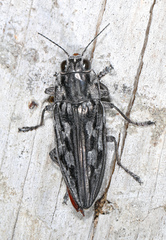 Sculptured Pine BorerChalcophora virginiensisDamages trees, gardens or crops
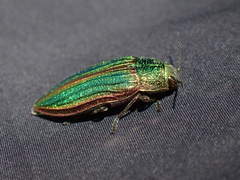 Golden Buprestid BeetleBuprestis aurulenta
 Anthaxia nitidulaAnthaxia nitidulaDamages trees, gardens or crops
 Western Sculptured Pine BorerChalcophora angulicollis
 Anthaxia quadripunctataAnthaxia quadripunctata
Sources
- Wikipedia: https://en.wikipedia.org/wiki/Dicerca_tenebrica
Look it up elsewhere: GBIF · iNaturalist · BugGuide · ITIS · Wikipedia
Text written 2026-10-24 from the sources above and checked sentence by sentence against them. Data fetched 2026-10-24.