 Bug FAQ
False Stable Fly
Muscina stabulans · Order: Diptera · Family: Muscidae
Also called: Stable fly
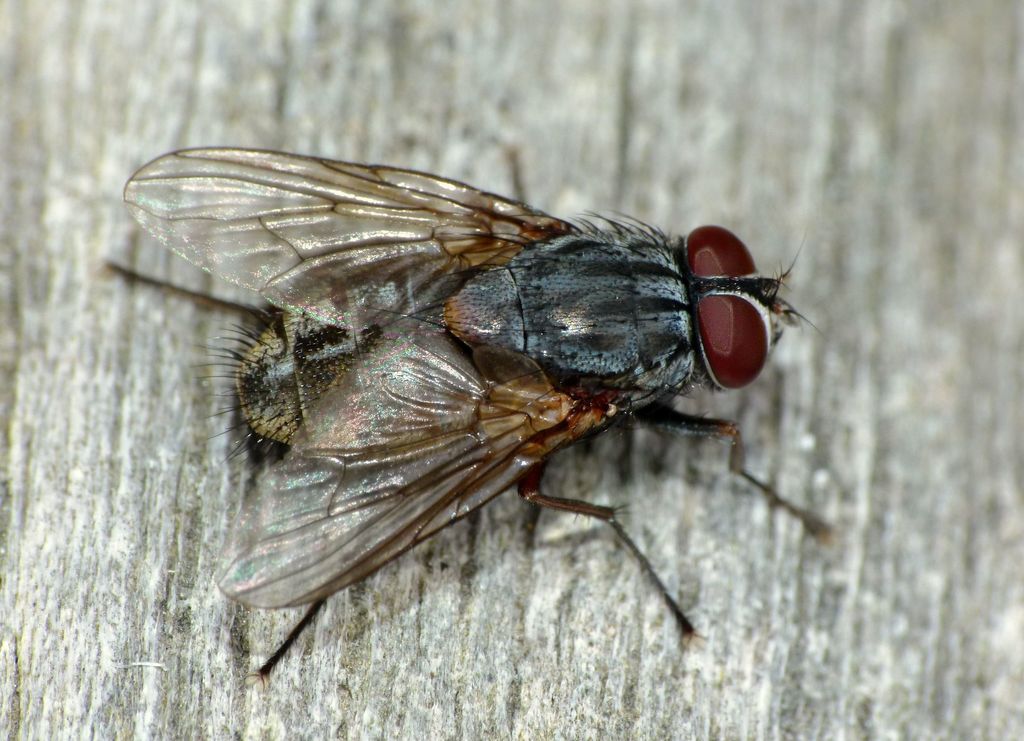
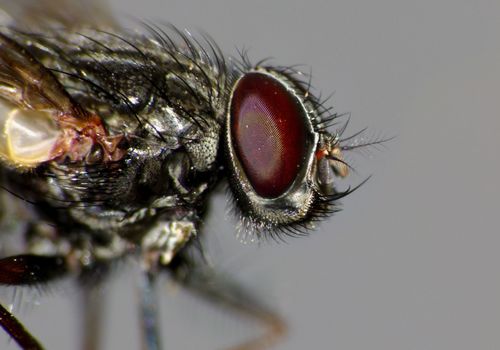
The false stable fly is about 8 mm long and has reddish-brown legs, four dark stripes on the thorax and a pale spot above it. It is most common in rural and natural areas and is active throughout the year, with numbers peaking in summer.
Source: Wikipedia
How to recognize it
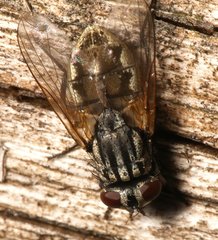
Adults show partially reddish-brown legs, four dark thoracic stripes and a pale spot above the thorax. The abdomen is black or black with red sides, and the head ranges from dark-grey to whitish.
Source: Wikipedia
Size
They measure about 8 mm (0.3 in) in length.
Source: Wikipedia
Is it a pest in the house?
They have been found in animal housing such as poultry houses and on later stages of carrion.
Source: Wikipedia
Does it bite or sting?
Rare cases of intestinal myiasis have been reported in humans.
Source: Wikipedia
Where it lives
Found mainly in rural and natural neighborhoods, rarely in cities.
Source: Wikipedia
What it eats
Larvae feed on decomposing material such as fruit, fungi, excrement and carrion.
Source: Wikipedia
Life cycle
The species is active year-round, with activity and generation cycles peaking in summer.
Source: Wikipedia
When you see it
Activity is highest during the summer months.
Source: Wikipedia
Where it comes from
Muscina species are distributed throughout the United States.
Source: Wikipedia
Where it is found in the US
Recorded in 16 of 51 states and DC. Most records: Alaska, California, New York, Utah, Massachusetts, Illinois, Maryland, Washington.
Darker = more records. Counts are museum and citizen-science records, not population size.
Source: GBIF
Status: native in North America; native in Canada. Source: iNaturalist
Months it is reported in the US
Source: GBIF
More photos
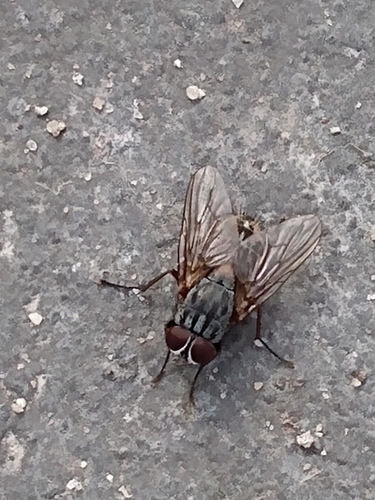
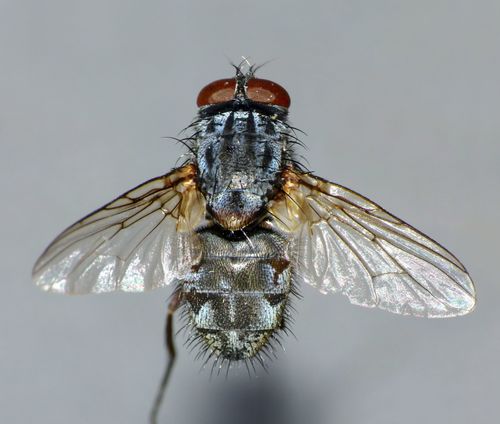
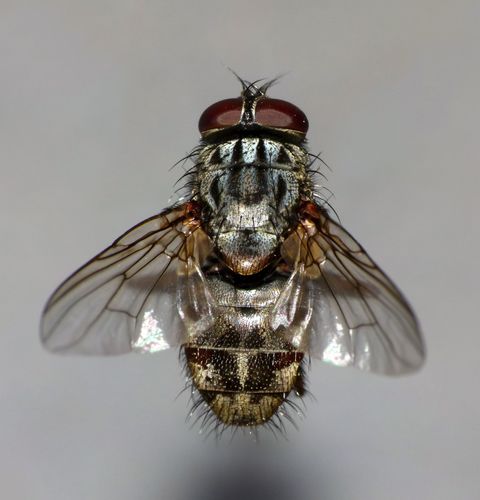
Questions people ask
How can I identify a false stable fly?
Look for a fly about 8 mm long with reddish-brown legs, four dark stripes on the thorax, a pale spot above the thorax, and a black or black-with-red abdomen.
Source: Wikipedia
Where are false stable flies most likely to be found?
They are most common in rural and natural areas and are rarely seen in cities.
Source: Wikipedia
Same family (Muscidae)




Sources
- Wikipedia: https://en.wikipedia.org/wiki/Muscina_stabulans
Look it up elsewhere: GBIF · iNaturalist · BugGuide · ITIS · Wikipedia
Text written 2026-10-23 from the sources above and checked sentence by sentence against them. Data fetched 2026-10-22.