 Bug FAQ
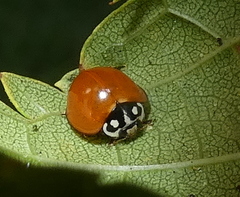
Eye-spotted Lady Beetle
Anatis mali · Order: Coleoptera · Family: Coccinellidae
Also called: American Eye-spotted Ladybug, American Eyed Ladybug, American Eyespot Ladybug
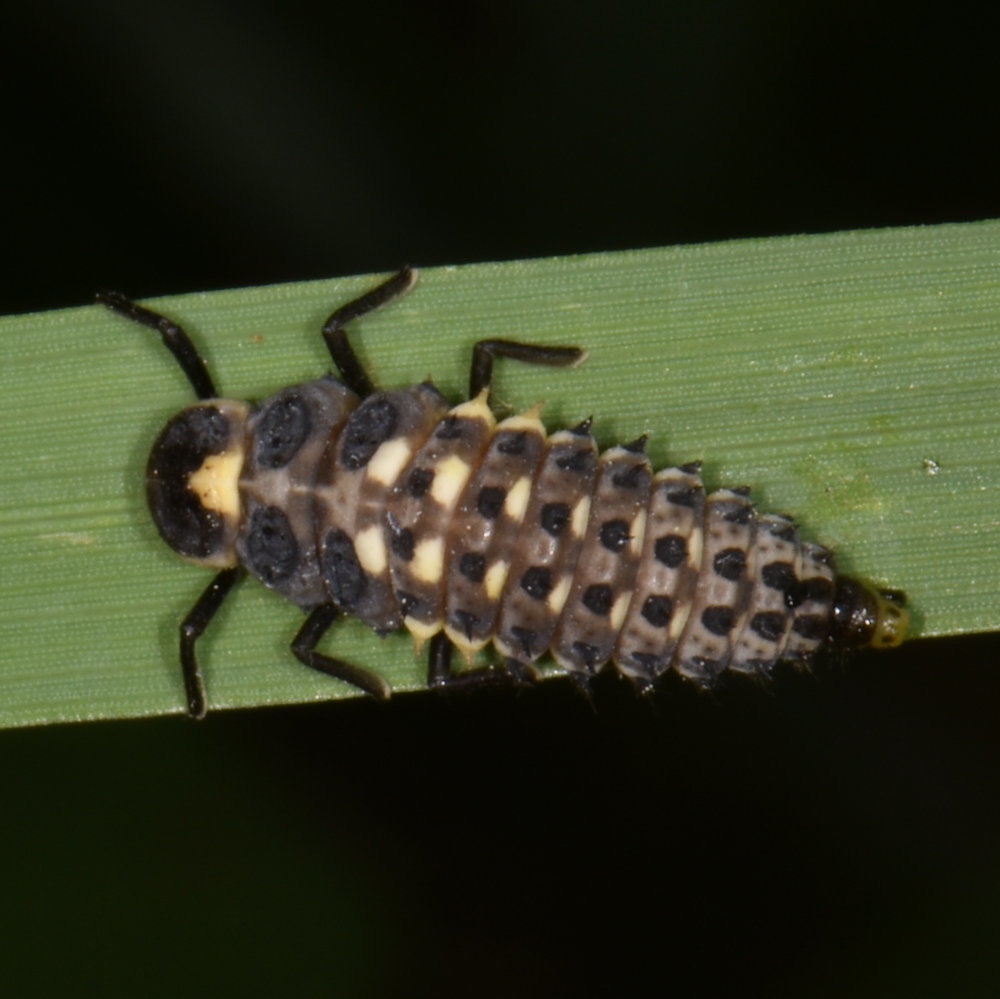
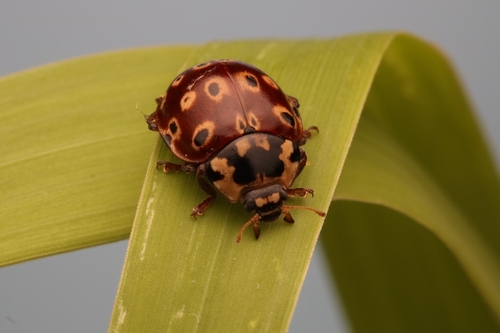
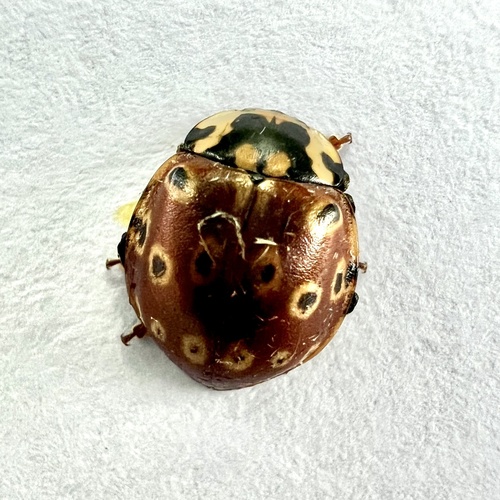
Adult eye-spotted lady beetles are about 7 to 10 mm long and have a yellow-to-brownish red color with black spots. They live across much of North America, from Ontario to British Columbia and south to Virginia and Oregon, and they feed mainly on aphids. A larva needs roughly 300 aphids to grow and pupate.
Source: Wikipedia
Size
Adults measure about 7.3 to 10 mm in length.
Source: Wikipedia
What it eats
It is a specialized predator of aphids.
Source: Wikipedia
Life cycle
A larva typically consumes about 296 aphids to complete development and pupate.
Source: Wikipedia
Where it comes from
Its native range covers the same North American region as its habitat.
Source: Wikipedia
Where it is found in the US
Recorded in 36 of 51 states and DC. Most records: Michigan, Alaska, Vermont, New York, Minnesota, Wisconsin, Pennsylvania, Maine.
Darker = more records. Counts are museum and citizen-science records, not population size.
Source: GBIF
Status: native in North America; native in Canada; native in United States. Source: iNaturalist
Months it is reported in the US
Source: GBIF
More photos

Questions people ask
Where are eye-spotted lady beetles found?
They occur across North America from Ontario to British Columbia and south to Virginia and Oregon.
Source: Wikipedia
Same family (Coccinellidae)

Sources
- Wikipedia: https://en.wikipedia.org/wiki/Anatis_mali
Look it up elsewhere: GBIF · iNaturalist · BugGuide · ITIS · Wikipedia
Text written 2026-10-22 from the sources above and checked sentence by sentence against them. Data fetched 2026-10-22.