 Bug FAQ
Exochomus marginipennis
Exochomus marginipennis · Order: Coleoptera · Family: Coccinellidae
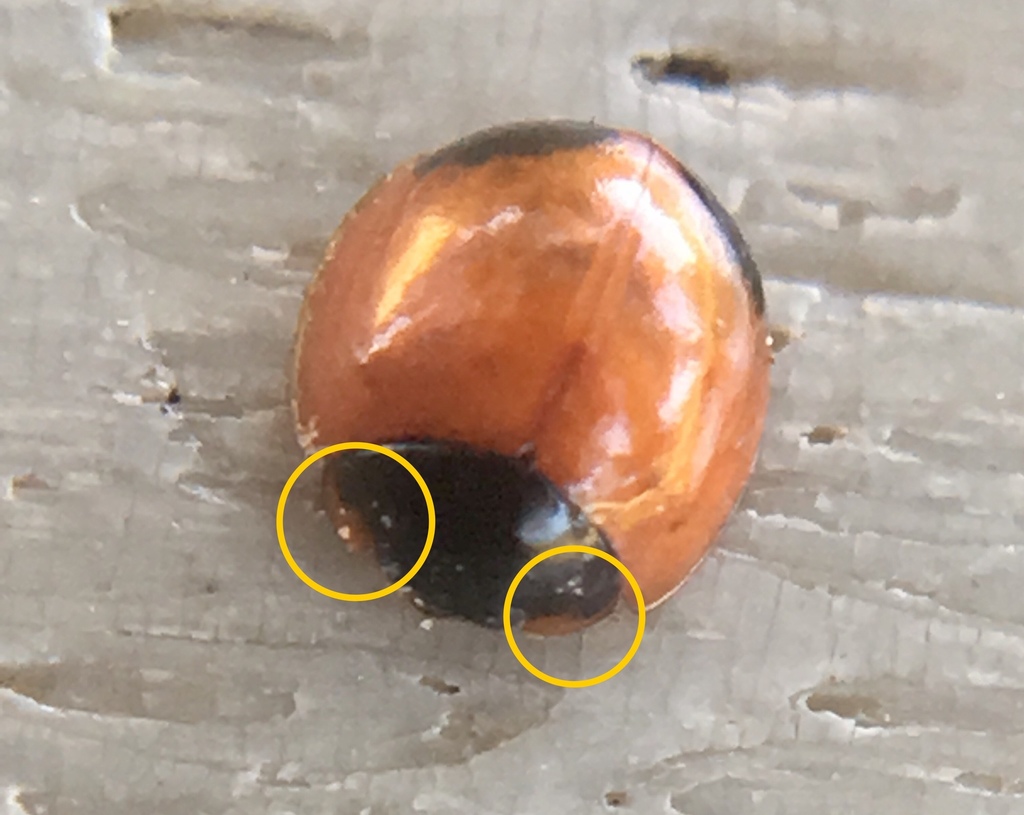
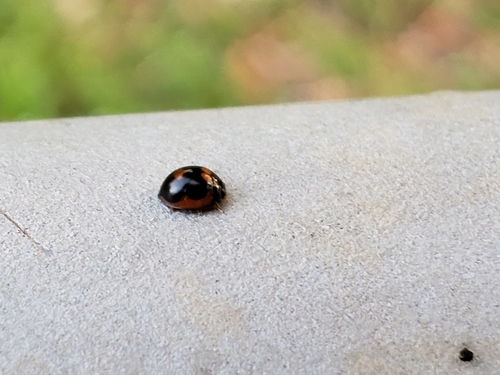
Adults measure about 2.5 to 3.6 mm long. The beetle’s elytra are reddish-yellow with black spots, its legs are dark, and the pronotum’s front-side corner is yellow in males but black or pale in females. It occurs in North America, recorded from New York down to Florida and west to Kansas and eastern Texas.
Source: Wikipedia
How to recognize it
Males have a yellow front-side corner of the pronotum, while females show that area in black or a pale shade. Both sexes possess dark legs. The wing covers are reddish-yellow with distinct black spots.
Source: Wikipedia
Size
Adults reach a length of roughly 2.5 to 3.6 mm.
Source: Wikipedia
Where it comes from
It is found in North America, from New York to Florida and westward to Kansas and eastern Texas.
Source: Wikipedia
Where it is found in the US
Recorded in 23 of 51 states and DC. Most records: Texas, Louisiana, South Carolina, Florida, California, Arizona, New Jersey, Mississippi.
Darker = more records. Counts are museum and citizen-science records, not population size.
Source: GBIF
Status: native in North America; native in United States. Source: iNaturalist
Months it is reported in the US
Source: GBIF
More photos
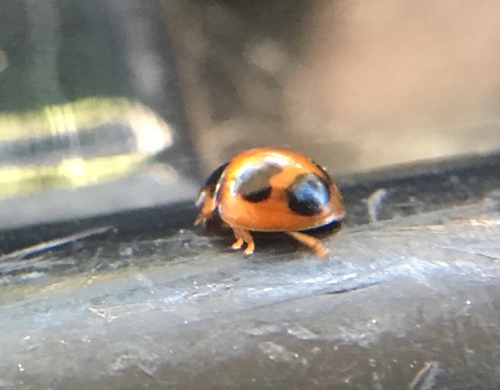
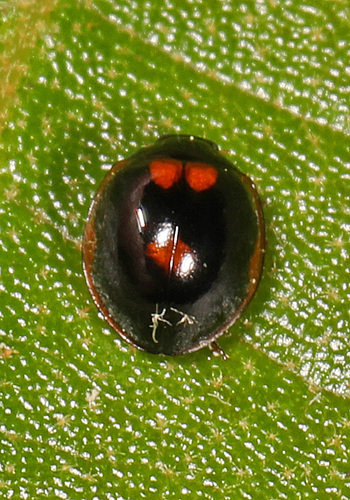
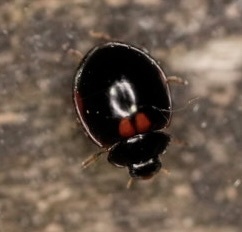
Questions people ask
What does Exochomus marginipennis look like?
It has reddish-yellow elytra with black spots, dark legs, and the front-side corner of the pronotum is yellow in males and black or pale in females.
Source: Wikipedia
Where is Exochomus marginipennis found?
It occurs in North America, recorded from New York down to Florida and west to Kansas and eastern Texas.
Source: Wikipedia
Same family (Coccinellidae)

Sources
- Wikipedia: https://en.wikipedia.org/wiki/Exochomus_marginipennis
Look it up elsewhere: GBIF · iNaturalist · BugGuide · ITIS · Wikipedia
Text written 2026-10-26 from the sources above and checked sentence by sentence against them. Data fetched 2026-10-26.