 Bug FAQ
European House Moth
Niditinea fuscella · Order: Lepidoptera · Family: Tineidae
Also called: Brown-dotted Clothes Moth, Brown-dotted Clothes
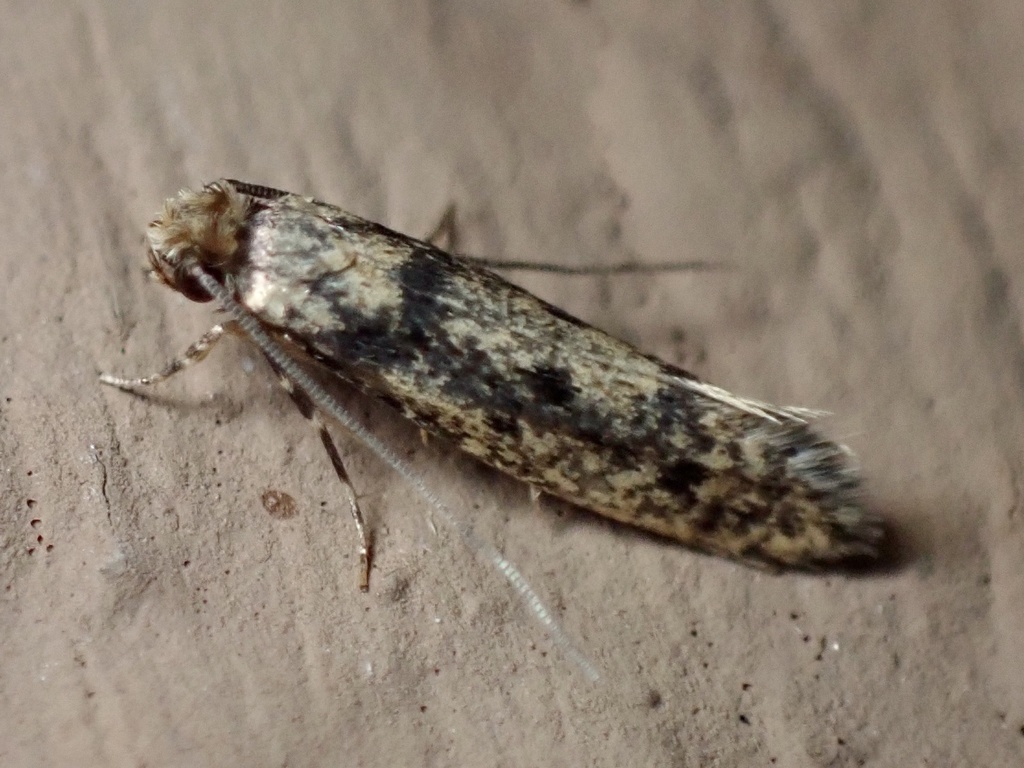
The European house moth has a wingspan of about 14 mm and dull brown-grey forewings with three distinct dark spots. Adults fly from May to September, preferring late afternoon and avoiding bright daylight. Caterpillars feed on dry animal and plant debris, especially in bird nests where they eat feathers and droppings.
Source: Wikipedia
Size
The adult moth’s wingspan is roughly 14 mm.
Source: Wikipedia
Is it a pest in the house?
Although called a clothes moth, it is rarely a pest of clothing and is more often found in bird nests where it feeds on feathers and droppings.
Source: Wikipedia
Where it lives
It is common across much of the western Palearctic, except for remote islands like Iceland and very cold areas such as northern Scotland, and has been introduced to Australia and New Zealand.
Source: Wikipedia
What it eats
Larvae eat dry animal and plant remains, including discarded wool, bird feathers, feces, dry peas, dried fruit, bran, rose flowers, dead beetles in mealworm cultures, and even pigskin bookbindings.
Source: Wikipedia
Life cycle
Adults are on the wing from May through September, emerging in the late afternoon and avoiding bright daylight.
Source: Wikipedia
When you see it
The flight period spans May to September, varying with location.
Source: Wikipedia
Where it comes from
Its native range covers much of the western Palearctic, avoiding outlying islands and the far north of Scotland, with introductions elsewhere such as Australia and New Zealand.
Source: Wikipedia
Lookalikes
Synonyms and former names for this species include Niditinea frigidella, N. fuscipunctella, N. griseella, N. ignotella, N. nubilipennella, N. spretella, and several Tinea names such as T. fuscella and T. fuscipunctella.
Source: Wikipedia
Where it is found in the US
Recorded in 30 of 51 states and DC. Most records: New York, Mississippi, California, Illinois, Maryland, Massachusetts, Minnesota, Georgia.
Darker = more records. Counts are museum and citizen-science records, not population size.
Source: GBIF
Months it is reported in the US
Source: GBIF
More photos

Questions people ask
What do the caterpillars eat?
They feed on dry animal and plant debris, including feathers, feces, discarded wool, dry peas, dried fruit, bran, rose flowers, dead beetles in mealworm cultures, and pigskin bookbindings.
Source: Wikipedia
When are the adult moths active?
Adults are active from May to September, usually appearing in the late afternoon and avoiding bright daylight.
Source: Wikipedia
Is this moth a problem for clothing?
It is rarely recorded as a pest of clothing; it more commonly occurs in bird nests.
Source: Wikipedia
Where is the European house moth found?
It is widespread in the western Palearctic, except for remote islands and very cold northern areas, and has been introduced to Australia and New Zealand.
Source: Wikipedia
Same family (Tineidae)
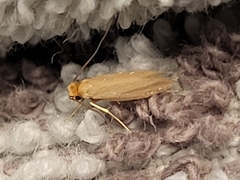 Webbing Clothes MothTineola bisselliellaCan damage your home
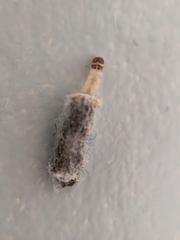 Case-bearing Clothes MothTinea pellionellaCan damage your home
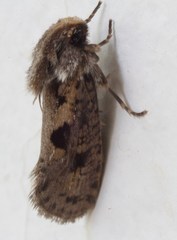 Clemens' Grass Tubeworm MothAcrolophus popeanella
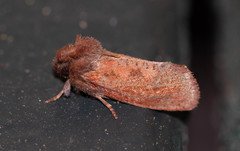 Eastern Grass Tubeworm MothAcrolophus plumifrontella
 Household CasebearerPhereoeca uterellaCan damage your home
 Arcane Grass Tubeworm MothAcrolophus arcanella
Sources
- Wikipedia: https://en.wikipedia.org/wiki/Niditinea_fuscella
Look it up elsewhere: GBIF · iNaturalist · BugGuide · Wikipedia
Text written 2026-10-28 from the sources above and checked sentence by sentence against them. Data fetched 2026-10-28.