 Bug FAQ
European grain moth
Nemapogon granella · Order: Lepidoptera · Family: Tineidae
Also called: Corn Moth, Wine Cork Moth
Source: Wikipedia
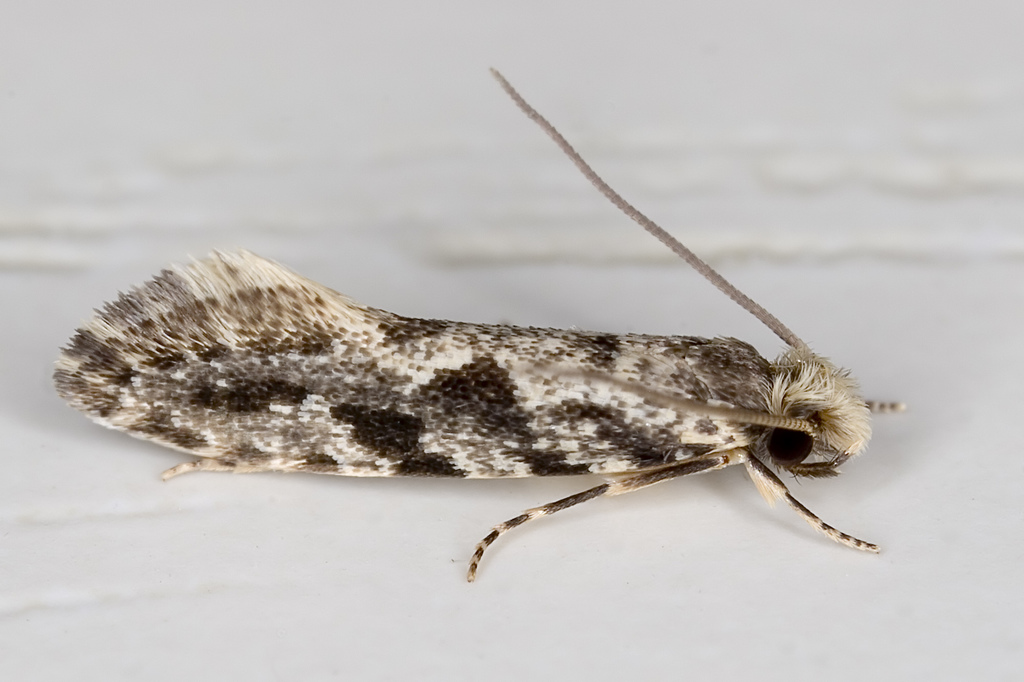
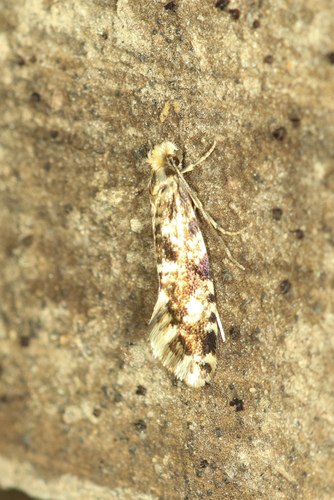
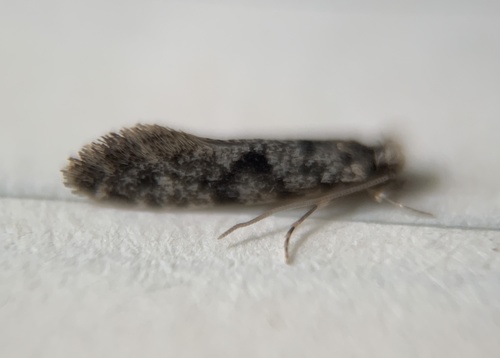
The European grain moth is a tiny moth with a wingspan of about 10 to 18 mm. Its forewings are mottled black, white and grey with a distinctive row of large black spots that form a zig-zag band across the wing. It is a synanthropic species found worldwide, originally ranging across the western Palearctic.
Source: Wikipedia
Size
Adults have a wingspan of 10 to 18 mm.
Source: Wikipedia
Is it a pest in the house?
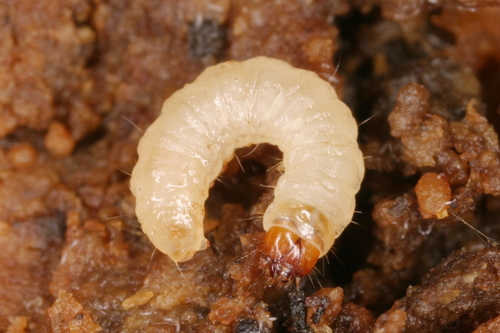
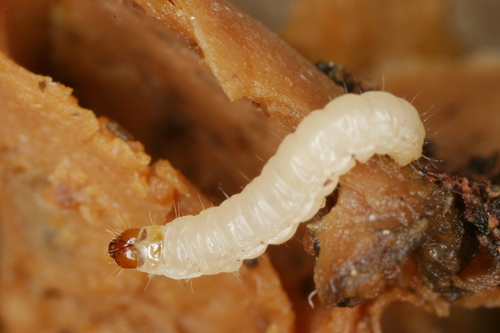
The larvae can infest stored dry foods such as dried fruit, mushrooms, cereal, legume seeds, flour, and even cork from wine bottles.
Source: Wikipedia
Where it lives
It is a synanthropic moth that has been spread essentially worldwide, though many introduced populations are short-lived.
Source: Wikipedia
What it eats
In nature the larvae feed on rotting wood, especially bracket fungi such as Polyporales. When associated with humans the larvae eat a variety of dry organic materials, including dried fruit, mushrooms, cereal and legume seeds, flour, Jerusalem artichoke stalks, cork, and the ergot fungus.
Source: Wikipedia
Life cycle
Adults are most commonly seen from March through September in the UK.
Source: Wikipedia
Where it comes from
Its native range covers much of the western Palearctic region.
Source: Wikipedia
Lookalikes
It resembles the cork moth (Nemapogon cloacella) but can be distinguished by its row of large black spots forming a zig-zag band on the forewing.
Source: Wikipedia
Where it is found in the US
Recorded in 20 of 51 states and DC. Most records: California, Virginia, Colorado, Idaho, Michigan, Montana, Massachusetts, Arizona.
Darker = more records. Counts are museum and citizen-science records, not population size.
Source: GBIF
Status: introduced in Canada; introduced in United States. Source: iNaturalist
Months it is reported in the US
Source: GBIF
More photos
Questions people ask
What do the larvae of the European grain moth eat?
In the wild they feed on rotting wood and bracket fungi, while in homes they eat dried fruit, mushrooms, cereal, legume seeds, flour, cork, and ergot fungus.
Source: Wikipedia
When are adult European grain moths active?
Adults are most often seen from March to September, but indoor populations can be found year-round.
Source: Wikipedia
How can I recognize a European grain moth?
Look for a small moth (10 to 18 mm wingspan) with forewings mottled black, white and grey, and a distinctive row of large black spots that form a zig-zag band across the wing.
Source: Wikipedia
Is the European grain moth a problem for stored food?
Yes, its larvae can damage stored dry foods such as dried fruit, flour, cereal, and even cork from wine bottles.
Source: Wikipedia
Same family (Tineidae)
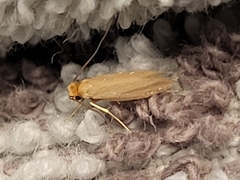 Webbing Clothes MothTineola bisselliellaCan damage your home
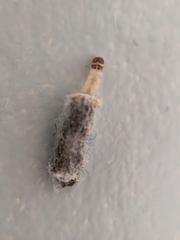 Case-bearing Clothes MothTinea pellionellaCan damage your home
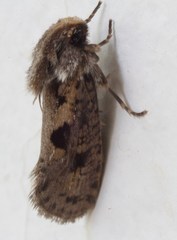 Clemens' Grass Tubeworm MothAcrolophus popeanella
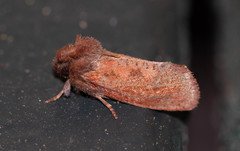 Eastern Grass Tubeworm MothAcrolophus plumifrontella
 Household CasebearerPhereoeca uterellaCan damage your home
 Arcane Grass Tubeworm MothAcrolophus arcanella
Sources
- Wikipedia: https://en.wikipedia.org/wiki/Nemapogon_granella
Look it up elsewhere: GBIF · iNaturalist · BugGuide · Wikipedia
Text written 2026-10-28 from the sources above and checked sentence by sentence against them. Data fetched 2026-10-28.