 Bug FAQ
Erythroneura infuscata
Erythroneura infuscata · Order: Hemiptera · Family: Cicadellidae
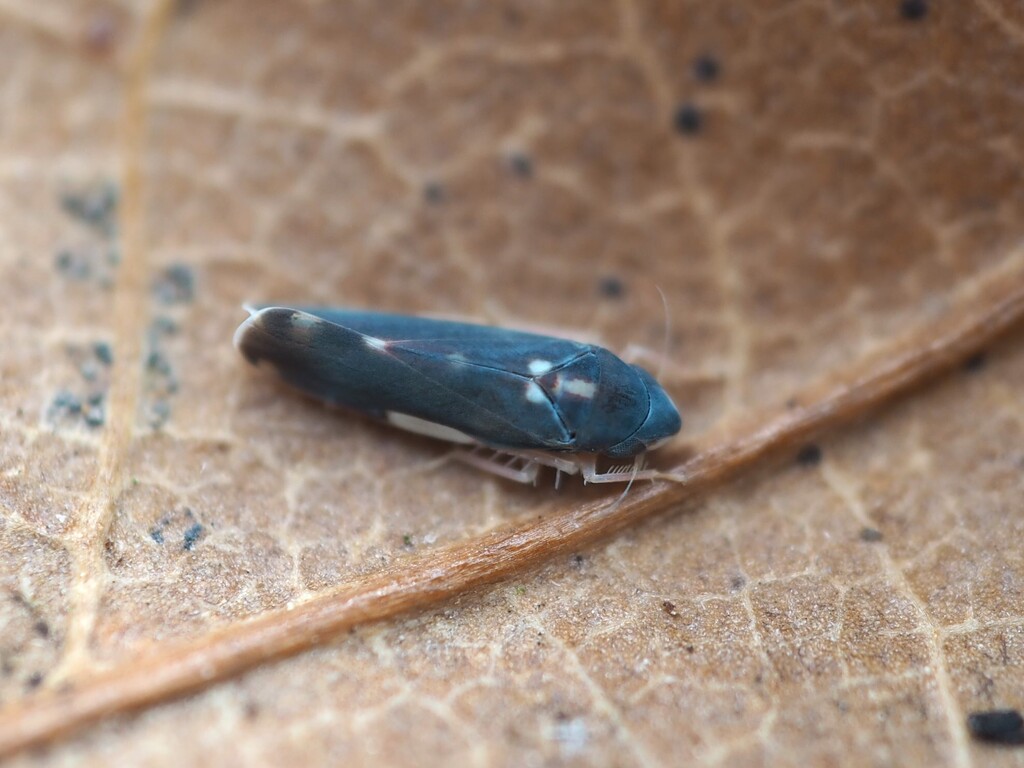
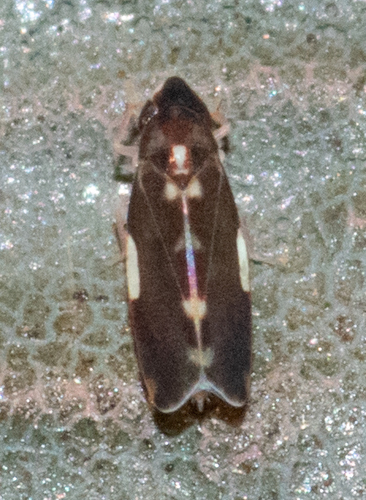
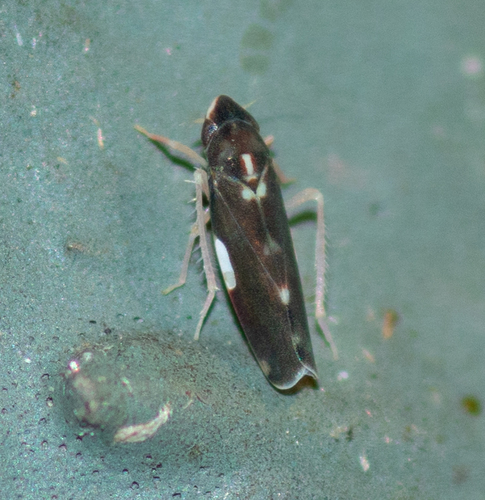
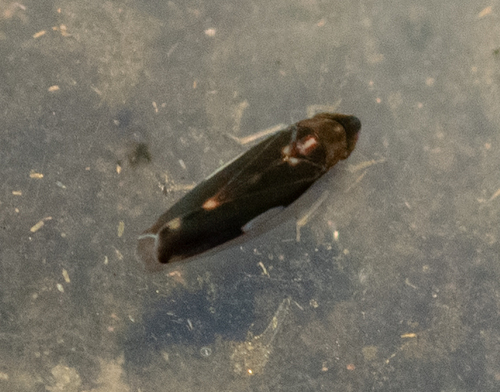
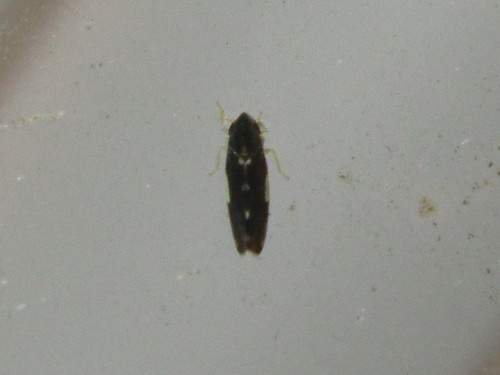
Adults measure about 2.8 to 3.0 mm long. They are mostly black with distinctive pale spots on the wings and a white patch followed by a red mark on each wing’s costal margin. They are found in mixed hardwood forests and are attracted to lights at night.
Source: Wikipedia
How to recognize it
The insect is mostly black with several small pale spots at the wing bases, along the mid-length of the wings, and on the scutellum.
Source: Wikipedia
Where it lives
It occurs in mixed hardwood forest habitats and is attracted to lights at night.
Source: Wikipedia
Lookalikes
It is a dark, mostly black species that stands out from most other Typhlocybinae members.
Source: Wikipedia
Where it is found in the US
Recorded in 20 of 51 states and DC. Most records: Illinois, North Carolina, Arkansas, Michigan, Indiana, Kansas, Alabama, Georgia.
Darker = more records. Counts are museum and citizen-science records, not population size.
Source: GBIF
Status: native in North America; native in Canada. Source: iNaturalist
Months it is reported in the US
Source: GBIF
More photos
Questions people ask
How can I identify Erythroneura infuscata?
Look for a tiny (2.8 to 3.0 mm) mostly black leafhopper with pale spots on the wings, a white patch and red mark on the wing edge, and whitish legs and face.
Source: Wikipedia
Same family (Cicadellidae)
 Red-banded LeafhopperGraphocephala coccineaDamages trees, gardens or crops
 Coppery LeafhopperJikradia olitoria
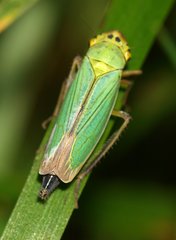 Green LeafhopperCicadella viridis
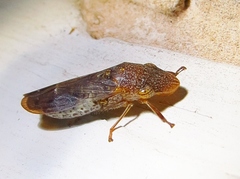 Glassy-winged SharpshooterHomalodisca vitripennisCan spread germs or disease
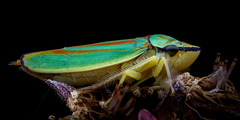 Rhododendron LeafhopperGraphocephala fennahiDamages trees, gardens or crops
 Japanese LeafhopperOrientus ishidaeCan spread germs or disease
Sources
- Wikipedia: https://en.wikipedia.org/wiki/Erythroneura_infuscata
Look it up elsewhere: GBIF · iNaturalist · BugGuide · Wikipedia
Text written 2026-10-28 from the sources above and checked sentence by sentence against them. Data fetched 2026-10-28.