 Bug FAQ
Eriopis connexa
Eriopis connexa · Order: Coleoptera · Family: Coccinellidae

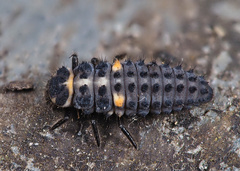
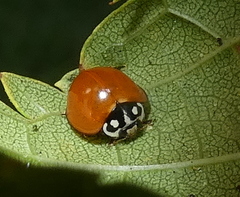
Eriopis connexa is an oblong ladybird beetle with a dark brown to black base color marked with yellow. It lives in many South-American agroecosystems and feeds mainly on aphids, also taking scale insects, mites, lepidopteran eggs and whiteflies.
Source: Wikipedia
How to recognize it
The beetle’s body is dark brown to black with yellow markings.
Source: Wikipedia
Size
Its shape is oblong.
Source: Wikipedia
Where it lives
It also works well on cabbage and greenhouse strawberry plants, showing a broader habitat potential.
Source: Wikipedia
What it eats
It is a predator that mainly eats aphids.
Source: Wikipedia
Life cycle
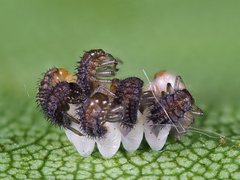
Both males and females mate with multiple partners of the opposite sex. Females lay unfertilized eggs that their hatchlings eat, boosting nutrition and reducing sibling cannibalism.
Source: Wikipedia
Questions people ask
What does Eriopis connexa eat?
It mainly feeds on aphids but will also take scale insects, mites, lepidopteran eggs and whiteflies.
Source: Wikipedia
Is Eriopis connexa harmful to crops?
No, it is a predatory beetle that helps control pest insects on many crops.
Source: Wikipedia
Same family (Coccinellidae)

Sources
- Wikipedia: https://en.wikipedia.org/wiki/Eriopis_connexa
Look it up elsewhere: GBIF · iNaturalist · BugGuide · Wikipedia
Text written 2026-10-22 from the sources above and checked sentence by sentence against them. Data fetched 2026-10-22.