 Bug FAQ
Emerton's Bitubercled Cobweaver
Theridula emertoni · Order: Araneae · Family: Theridiidae
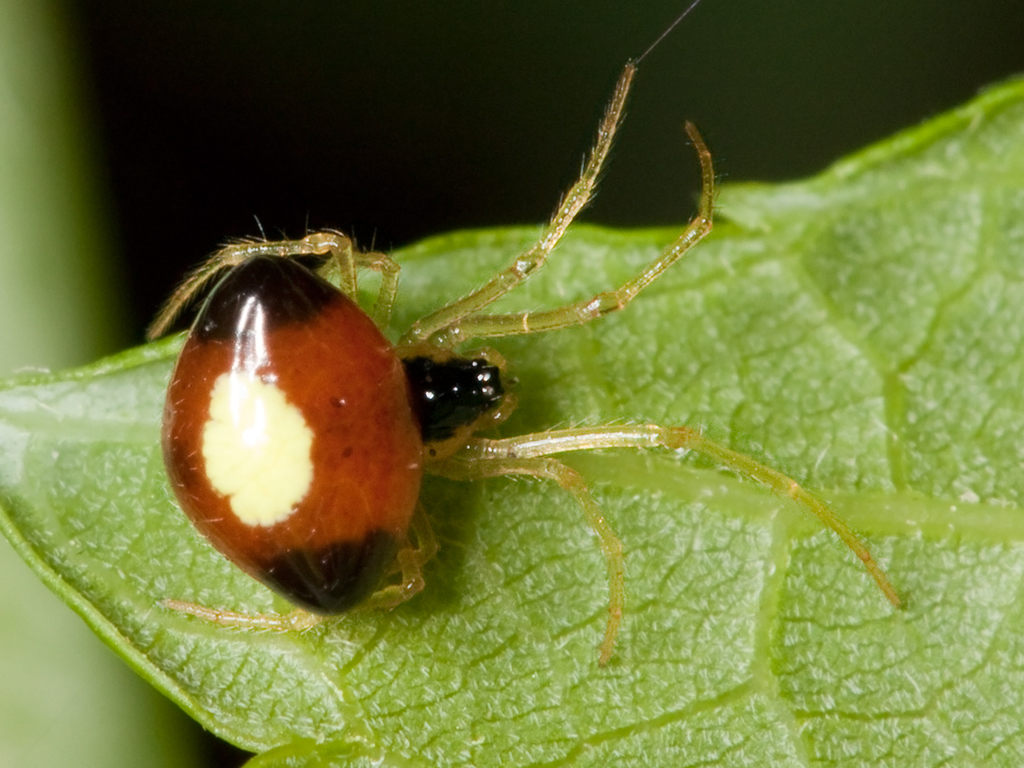
Adult females measure about 1.7 to 2.8 mm and males about 1.6 to 2.3 mm in length. It is a tangle-web spider that lives across the United States and Canada. Before 1954 it was often mistaken for Theridula opulenta, but the two can be separated by the female epigyne or the male pedipalp.
Source: Wikipedia
How to recognize it
Females can be identified by the shape of the epigyne and males by the structure of the pedipalp.
Source: Wikipedia
Size
Adult males range from 1.6 to 2.3 mm in length.
Source: Wikipedia
Where it comes from
Its native range includes the United States and Canada.
Source: Wikipedia
Lookalikes
Before its description in 1954 it was often confused with T. opulenta, a species that shares its range.
Source: Wikipedia
Where it is found in the US
Recorded in 21 of 51 states and DC. Most records: Ohio, Maine, Maryland, Pennsylvania, Kentucky, Vermont, Massachusetts, Minnesota.
Darker = more records. Counts are museum and citizen-science records, not population size.
Source: GBIF
Status: native in North America; native in Canada. Source: iNaturalist
Months it is reported in the US
Source: GBIF
More photos


Questions people ask
How can I tell Theridula emertoni apart from similar spiders?
Examine the female’s epigyne or the male’s pedipalp; their shapes are distinct from those of T. opulenta.
Source: Wikipedia
Where is Theridula emertoni found?
It occurs throughout the United States and Canada.
Source: Wikipedia
Same family (Theridiidae)


Sources
- Wikipedia: https://en.wikipedia.org/wiki/Theridula_emertoni
Look it up elsewhere: GBIF · iNaturalist · BugGuide · ITIS · Wikipedia
Text written 2026-10-29 from the sources above and checked sentence by sentence against them. Data fetched 2026-10-29.