 Bug FAQ
Eastern Subterranean Termite
Reticulitermes flavipes · Order: Blattodea · Family: Rhinotermitidae
Source: Wikipedia, Penn State Extension
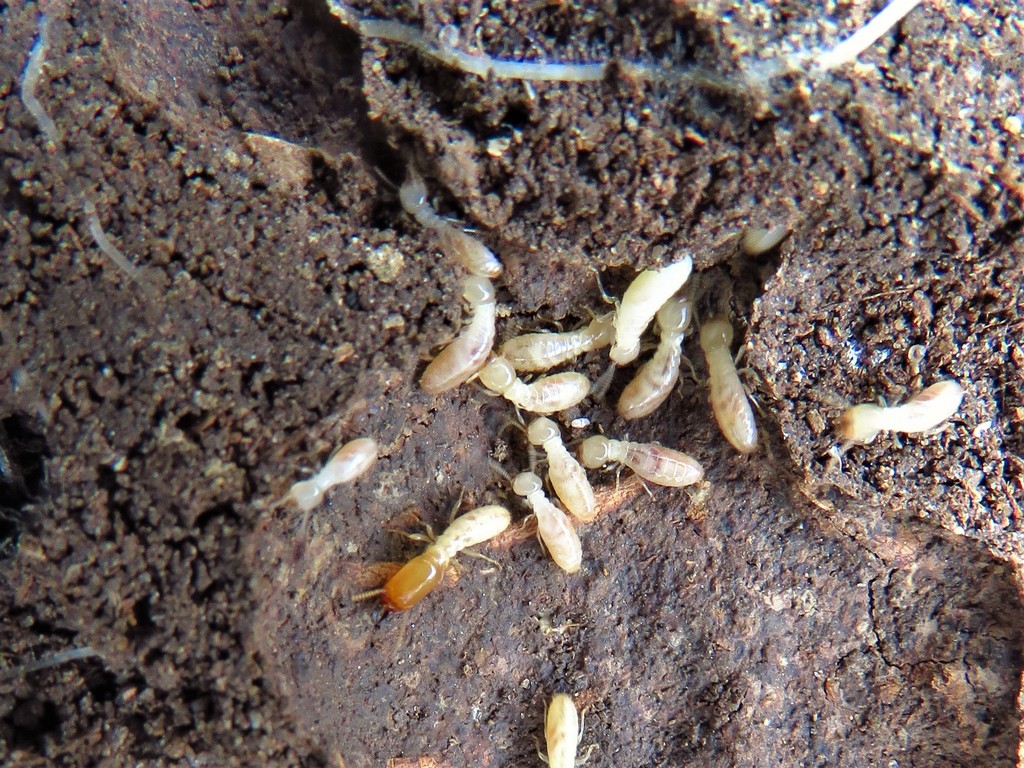
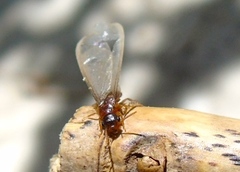
Winged alates are 8.5-10 mm long, dark brown to black, with yellowish feet and large ocelli spaced at least one ocellus-diameter from the eyes. They are often mistaken for flying ants, but termites have straight antennae and a broad waist.
Source: Wikipedia, Penn State Extension, UC IPM
How to recognize it
Alates have dark brown to black bodies, yellowish tarsi, and their ocelli sit far enough from the eyes to be a reliable ID feature. Termite antennae are straight, unlike the L-shaped antennae of ants.
Source: Wikipedia, Penn State Extension
Size
Winged alates measure 8.5-10 mm from wing tip to tip.
Source: Wikipedia
Is it a pest in the house?
Thousands of homes in California and many in Pennsylvania need treatment each year. In buildings they eat structural wood, fixtures, paper, books and cotton.
Source: UC IPM, Penn State Extension
How to get rid of it
Control methods include physical barriers, soil chemical treatments, baiting, and direct injection of insecticidal liquids, dusts or foams into galleries. Boric acid and antibiotics can disrupt gut microbes, damaging digestion. DIY pesticides are generally ineffective.
Source: Wikipedia, UC IPM, Penn State Extension
Where it lives
They live at, near, or below ground level.
Source: Wikipedia
What it eats
Their gut contains decayed wood and microscopic parasites.
Source: Wikipedia
Life cycle
Newly hatched termites can become any caste; they molt into nymphs, which later develop into winged alates.
Source: Wikipedia
Where it comes from
The species originates from the southeastern United States and is found throughout the eastern U.S., up to southern Ontario.
Source: Wikipedia
Lookalikes
Winged termites are often confused with flying ants; check the waist (broad in termites) and antennae shape to tell them apart.
Source: UC IPM, Penn State Extension
Where it is found in the US
Recorded in 40 of 51 states and DC. Most records: New York, Massachusetts, Tennessee, Georgia, Virginia, Texas, Pennsylvania, North Carolina.
Darker = more records. Counts are museum and citizen-science records, not population size.
Source: GBIF
Status: native in North America; native in Canada; native in United States. Source: iNaturalist
Months it is reported in the US
Source: GBIF
More photos

Questions people ask
How can I tell if I have termites or ants?
Look at the waist (termite’s is broad) and antennae (straight in termites, L-shaped in ants); also check the distance of the ocelli from the eyes (termite’s is larger).
Source: Wikipedia, Penn State Extension, UC IPM
What should I do if I find termite damage?
Contact a professional for soil barrier or chemical treatment, as DIY pesticides are usually not effective.
Source: Wikipedia, UC IPM, Penn State Extension
Same family (Rhinotermitidae)
 Western Subterranean TermiteReticulitermes hesperusCan damage your home
 Formosan subterranean termiteCoptotermes formosanusCan damage your home
 Asian subterranean termiteCoptotermes gestroiCan damage your home
 Desert Subterranean TermiteHeterotermes aureusCan damage your home
 Mediterranean TermiteReticulitermes lucifugus
Sources
- Wikipedia: https://en.wikipedia.org/wiki/Reticulitermes_flavipes
- Penn State Extension: https://extension.psu.edu/eastern-subterranean-termites
- UC IPM: https://ipm.ucanr.edu/PMG/PESTNOTES/pn7415.html
Look it up elsewhere: GBIF · iNaturalist · BugGuide · ITIS · Wikipedia
Text written 2026-10-22 from the sources above and checked sentence by sentence against them. Data fetched 2026-10-22.