 Bug FAQ
Desert Subterranean Termite
Heterotermes aureus · Order: Blattodea · Family: Rhinotermitidae
Source: Wikipedia
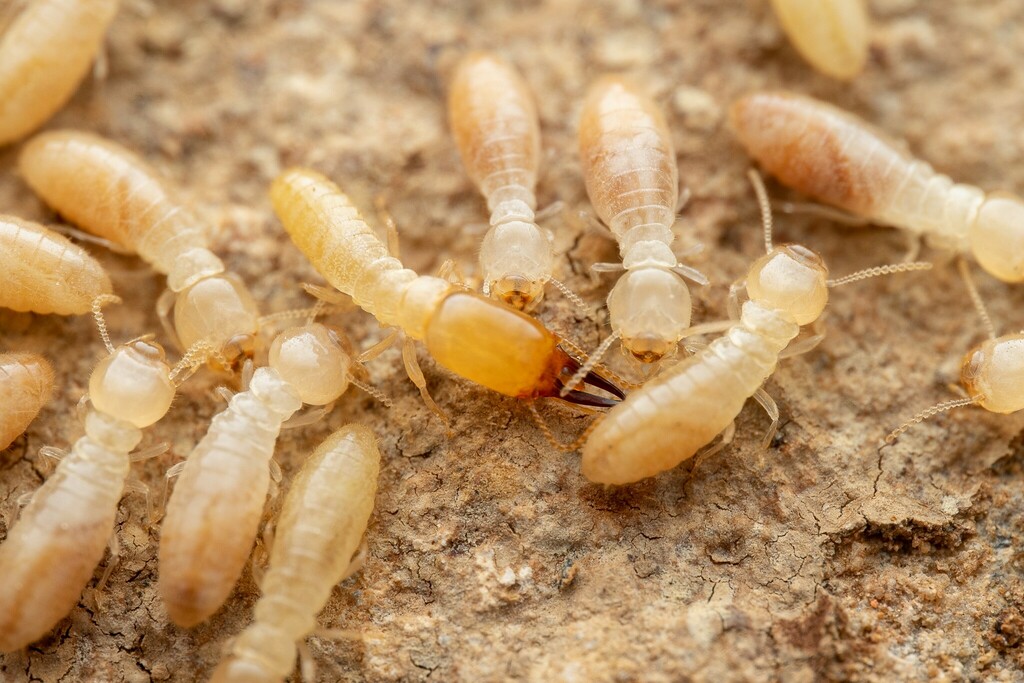
Desert subterranean termites are pale yellow-brown insects that live in arid deserts of northern Mexico and the southwestern U.S., feeding on dead wood and timber in buildings. Colonies contain a queen, winged alates, workers and soldiers; the soldiers have rectangular heads, a visible fontanelle and long, almost straight mandibles.
Source: Wikipedia
Size
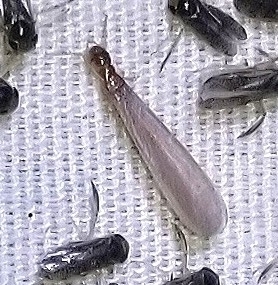
Winged reproductives are about 4 mm long, including their wings.
Source: Wikipedia
Is it a pest in the house?
When they infest a building they prefer wood that grew in spring, creating honeycomb-like galleries filled with soil.
Source: Wikipedia
Where it lives
They are found in dry desert areas, especially the Colorado and Sonoran Deserts. They can enter buildings through tiny cracks in concrete and eat structural timber, fences and utility poles.
Source: Wikipedia
What it eats
They consume dead wood, including standing timber, dead cacti and fallen pieces on the ground.
Source: Wikipedia
Life cycle
A colony consists of a deep-burrowing queen, winged alates, workers and soldiers. Worker numbers can range from about 45 000 to 300 000.
Source: Wikipedia
When you see it
Winged reproductives leave the nest on warm, humid summer nights for their nuptial flights.
Source: Wikipedia
Where it comes from
Their natural range is northern Mexico and the southwestern United States.
Source: Wikipedia
Lookalikes
Unlike the western subterranean termite, this species has straightish mandibles rather than thick, curved ones.
Source: Wikipedia
Where it is found in the US
Recorded in 2 of 51 states and DC. Most records: Arizona, California.
Darker = more records. Counts are museum and citizen-science records, not population size.
Source: GBIF
Months it is reported in the US
Source: GBIF
More photos

Questions people ask
How can I tell if I have desert subterranean termites in my house?
Look for honeycomb-like damage in wood, soil-filled galleries, and tiny cracks in concrete where they may have entered.
Source: Wikipedia
Same family (Rhinotermitidae)
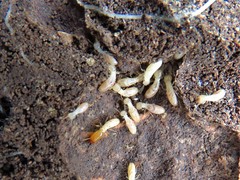 Eastern Subterranean TermiteReticulitermes flavipesCan damage your home
 Western Subterranean TermiteReticulitermes hesperusCan damage your home
 Formosan subterranean termiteCoptotermes formosanusCan damage your home
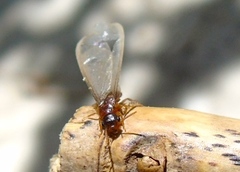 Asian subterranean termiteCoptotermes gestroiCan damage your home
 Mediterranean TermiteReticulitermes lucifugus
Sources
- Wikipedia: https://en.wikipedia.org/wiki/Heterotermes_aureus
Look it up elsewhere: GBIF · iNaturalist · BugGuide · ITIS · Wikipedia
Text written 2026-10-22 from the sources above and checked sentence by sentence against them. Data fetched 2026-10-22.