 Bug FAQ
Asian subterranean termite
Coptotermes gestroi · Order: Blattodea · Family: Rhinotermitidae
Also called: Philippine milk termite, Subterranean termite
Source: Wikipedia
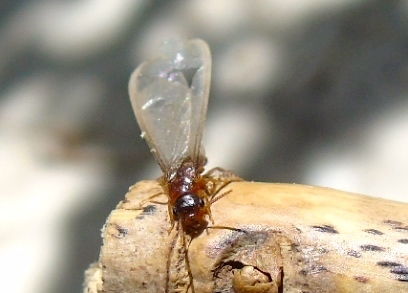
Asian subterranean termites live underground and enter buildings through cracks and utility openings. They feed on wood, cardboard, paper and even drill into rubber, plastic and styrofoam while searching for food. Colonies can become large enough to produce winged reproductives after several years.
Source: Wikipedia
How to recognize it
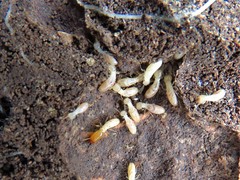
Worker termites are tiny, white and translucent, as are their legs. Soldier termites are larger, white with a dark brown ovoid head, forward-pointing mandibles, prothorax and front abdominal segments.
Source: Wikipedia
Is it a pest in the house?
They eat structural timbers from the inside out, leaving a thin surface film that may look blistered.
Source: Wikipedia
Where it lives
This species lives underground and is found in natural woodlands in the West Indies, but in Florida it is limited to man-made structures, nearby trees and boats.
Source: Wikipedia
What it eats
They are voracious feeders on wood, cardboard, paper and sometimes fabric. They also bore into rubber, plastic and styrofoam while searching for cellulose.
Source: Wikipedia
Life cycle
Mature colonies produce winged reproductives called alates. It can take several years for a colony to grow large enough to produce these alates.
Source: Wikipedia
When you see it
Alate flights usually occur in the evening or at night during spring.
Source: Wikipedia
Where it comes from
It originates from Southeast Asia and, like the Formosan subterranean termite, has spread to other regions including the United States.
Source: Wikipedia
Lookalikes
They look very similar to C. formosanus, but can be told apart by the number of hairs on the soldier’s head under a microscope.
Source: Wikipedia
Where it is found in the US
Recorded in 1 of 51 states and DC. Most records: Florida.
Darker = more records. Counts are museum and citizen-science records, not population size.
Source: GBIF
Questions people ask
How can I tell if I have these termites?
Look for tiny white workers and larger white soldiers with dark brown heads and mandibles, and for thin blistered wood surfaces.
Source: Wikipedia
Where do they come from?
They are native to Southeast Asia but have spread worldwide, including to the United States.
Source: Wikipedia
When do they produce winged termites?
Winged alates are produced after several years and usually fly at night in spring.
Source: Wikipedia
Same family (Rhinotermitidae)
 Eastern Subterranean TermiteReticulitermes flavipesCan damage your home
 Western Subterranean TermiteReticulitermes hesperusCan damage your home
 Formosan subterranean termiteCoptotermes formosanusCan damage your home
 Desert Subterranean TermiteHeterotermes aureusCan damage your home
 Mediterranean TermiteReticulitermes lucifugus
Sources
- Wikipedia: https://en.wikipedia.org/wiki/Coptotermes_gestroi
Look it up elsewhere: GBIF · iNaturalist · BugGuide · ITIS · Wikipedia
Text written 2026-10-22 from the sources above and checked sentence by sentence against them. Data fetched 2026-10-22.