 Bug FAQ
Dried Fruit Moth
Vitula edmandsii · Order: Lepidoptera · Family: Pyralidae
Also called: American Wax Moth
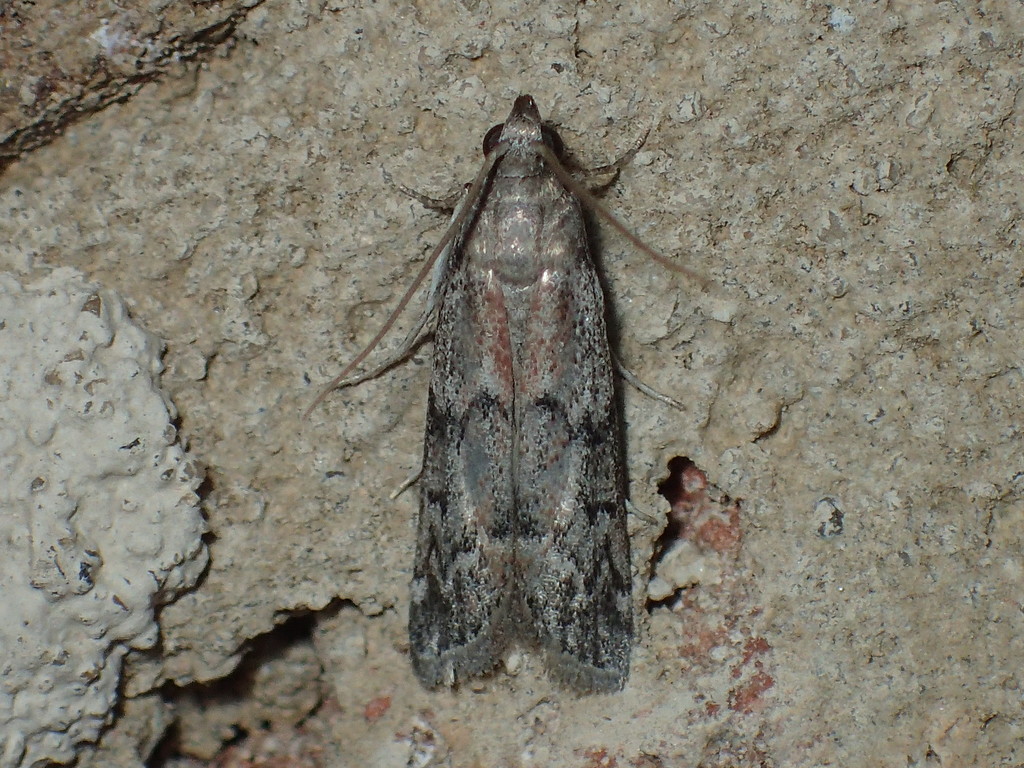
The dried fruit moth has a wingspan of about 20 to 25 mm and brownish hindwings. It is found in eastern North America and is known for entering beehives, though it is not considered a true stored-product pest. Early records from Massachusetts and Connecticut noted larvae inside bee nests when the species was first described in 1865.
Source: Wikipedia
How to recognize it
Its hindwings are brownish in colour.
Source: Wikipedia
Size
The adult’s wingspan ranges from 20 to 25 mm.
Source: Wikipedia
Is it a pest in the house?
Although it invades beehives, it is not considered a true stored-product pest.
Source: Wikipedia
Where it lives
It can invade beehives.
Source: Wikipedia
What it eats
It enters beehives but is not regarded as a true pest of stored products.
Source: Wikipedia
Life cycle
The species was first described in 1865, with early US records from Cambridge, Massachusetts and Bridgeport, Connecticut, where larvae were found in bee nests.
Source: Wikipedia
Where it comes from
It occurs in eastern North America.
Source: Wikipedia
Lookalikes
It has been confused with a subspecies called Vitula edmandsii serratilineella and with Cadra calidella when referred to as a “dried fruit moth”.
Source: Wikipedia
Where it is found in the US
Recorded in 33 of 51 states and DC. Most records: Alabama, North Carolina, Mississippi, California, New York, Tennessee, Illinois, Virginia.
Darker = more records. Counts are museum and citizen-science records, not population size.
Source: GBIF
Status: native in North America; native in Canada. Source: iNaturalist
Months it is reported in the US
Source: GBIF
More photos

Questions people ask
How can I tell this moth apart from similar species?
Look for brownish hindwings and a 20 to 25 mm wingspan; other “dried fruit moth” names may refer to different species such as Cadra calidella.
Source: Wikipedia
Same family (Pyralidae)
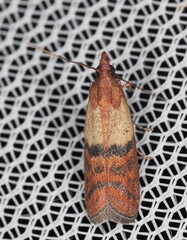 Indian-Meal MothPlodia interpunctellaCan damage your home
 Greater Wax MothGalleria mellonella
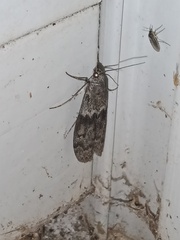 Mediterranean Flour MothEphestia kuehniellaCan damage your home
 Meal mothPyralis farinalisDamages trees, gardens or crops
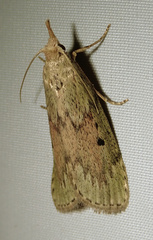 Bee MothAphomia sociellaNuisance, not dangerous
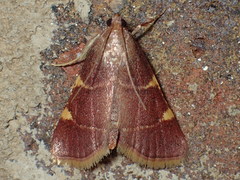 Yellow-fringed Dolichomia MothHypsopygia olinalis
Sources
- Wikipedia: https://en.wikipedia.org/wiki/Vitula_edmandsii
Look it up elsewhere: GBIF · iNaturalist · BugGuide · Wikipedia
Text written 2026-10-25 from the sources above and checked sentence by sentence against them. Data fetched 2026-10-25.