 Bug FAQ
Discolored Lady Beetle
Micraspis discolor · Order: Coleoptera · Family: Coccinellidae
Also called: Lady beetle
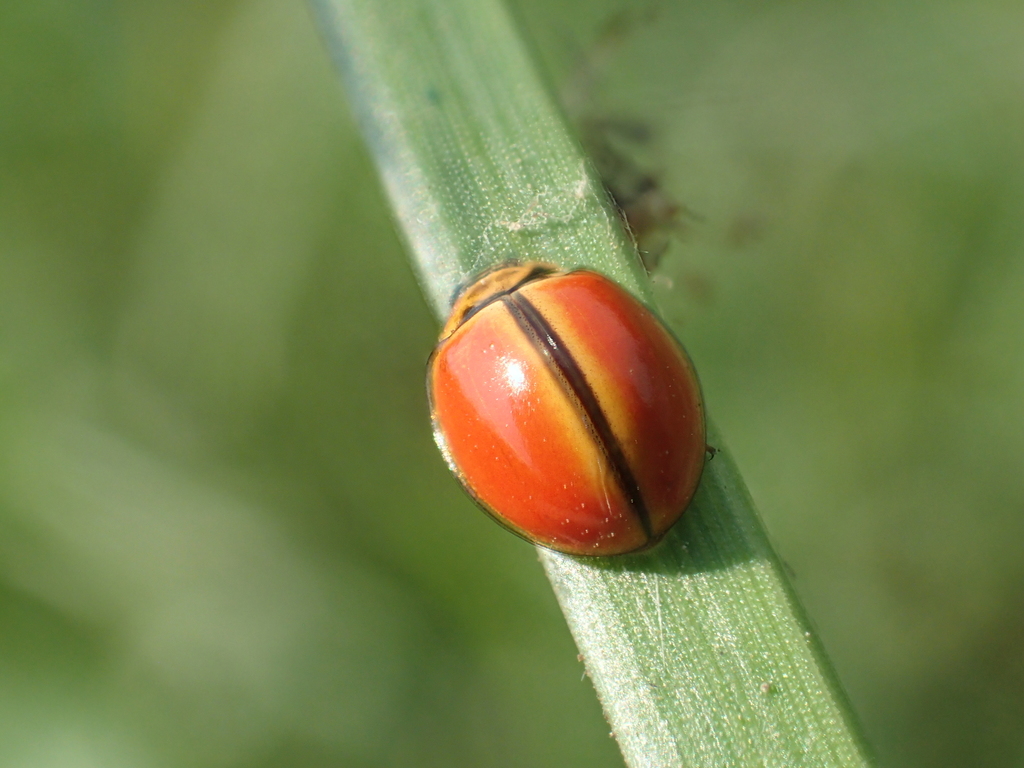
The discolored lady beetle is a small oval beetle about 5 to 6 mm long with a reddish-orange body and black stripes on its wing covers. It occurs widely across Asia, North America and parts of Oceania and is common in rice fields, where it feeds on many pest insects. Because it preys on crop pests, it is sometimes used as a biological control agent.
Source: Wikipedia
How to recognize it
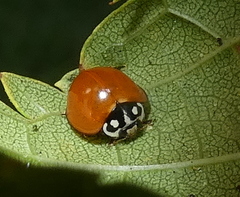
Adults are reddish-orange and oval, with black stripes on the elytra.
Source: Wikipedia
Size
Body length ranges from 5 to 6 mm.
Source: Wikipedia
What it eats
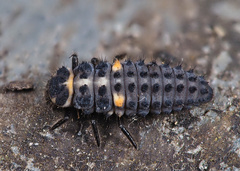
Both adults and nymphs aggressively hunt many pest insects such as several aphid species, planthoppers and leafhoppers.
Source: Wikipedia
Life cycle
The species can be employed as a biological control agent for brown planthopper.
Source: Wikipedia
Where it comes from
Its distribution includes Asia, North America and parts of Oceania.
Source: Wikipedia
Questions people ask
What do discolored lady beetles eat?
They prey on many pest insects, including several aphid species, leafhoppers and planthoppers.
Source: Wikipedia
Are they useful for garden pest control?
Yes, they are used as biological control agents because they eat many common crop pests.
Source: Wikipedia
Same family (Coccinellidae)

Sources
- Wikipedia: https://en.wikipedia.org/wiki/Micraspis_discolor
Look it up elsewhere: GBIF · iNaturalist · BugGuide · ITIS · Wikipedia
Text written 2026-10-23 from the sources above and checked sentence by sentence against them. Data fetched 2026-10-22.