 Bug FAQ
Diplolepis californica
Diplolepis californica · Order: Hymenoptera · Family: Cynipidae
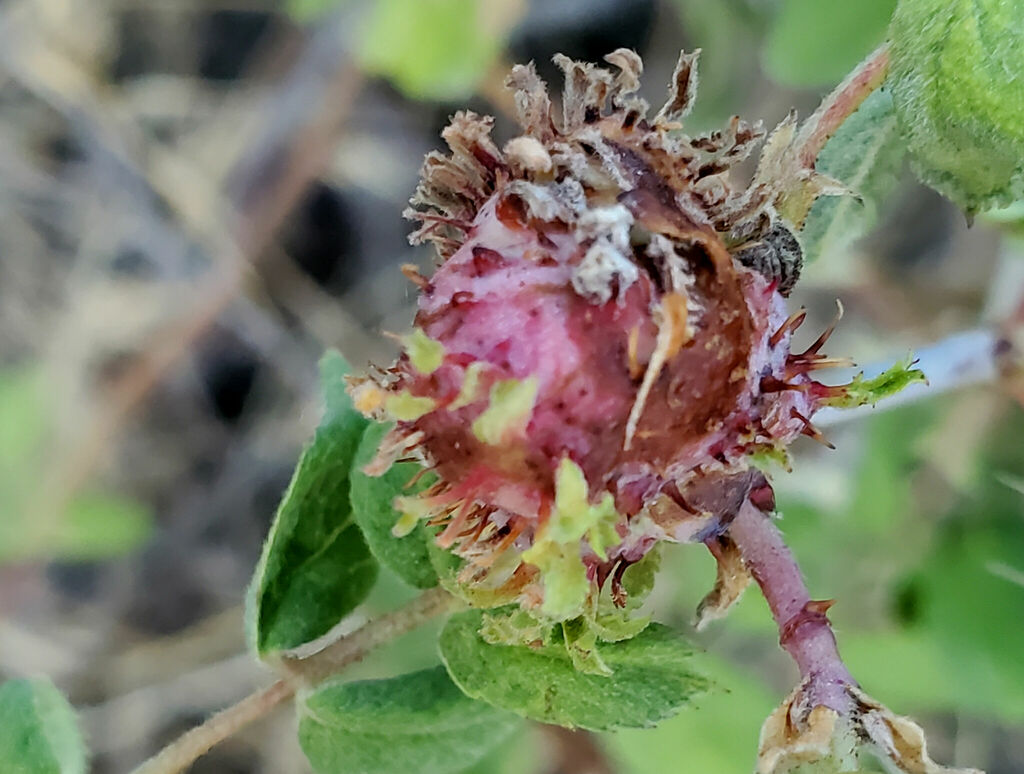
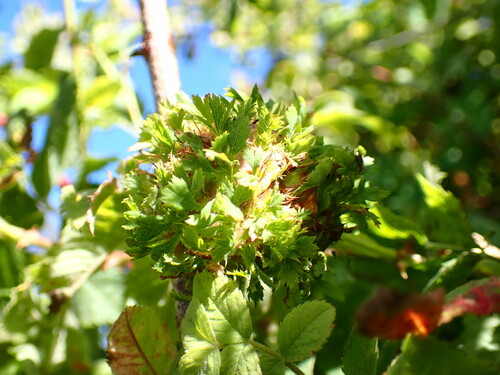
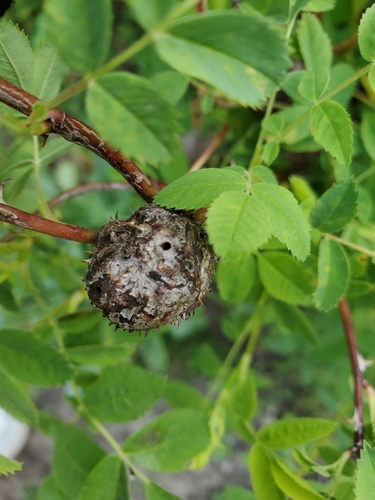
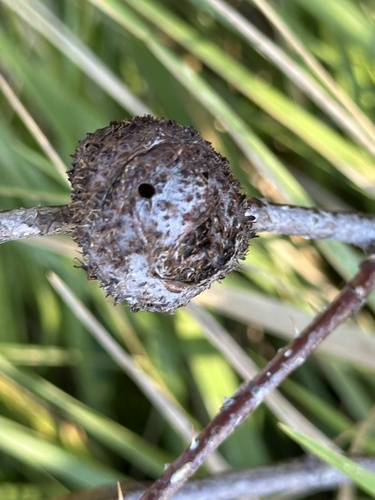
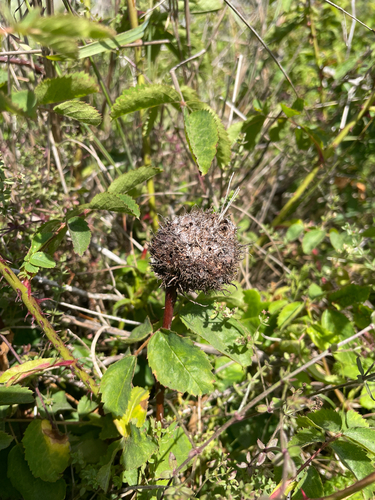
The leafy bract gall wasp makes galls on wild roses along the Pacific coast. Its galls are marked by flat, leaf-like lobes that look like tiny aborted leaflets. Each gall holds several chambers where the larvae develop.
Source: Wikipedia
How to recognize it
The gall has flat, leafy lobes that resemble aborted leaflets.
Source: Wikipedia
What it eats
One of its host plants is the California wild rose (Rosa californica).
Source: Wikipedia
Life cycle
Each gall contains multiple larval chambers.
Source: Wikipedia
Where it comes from
It is native to the Pacific coast of North America.
Source: Wikipedia
Where it is found in the US
Recorded in 6 of 51 states and DC. Most records: California, Washington, Idaho, Oregon, Nevada, Utah.
Darker = more records. Counts are museum and citizen-science records, not population size.
Source: GBIF
Status: native in North America; native in United States. Source: iNaturalist
Months it is reported in the US
Source: GBIF
More photos
Questions people ask
What plants does Diplolepis californica use?
It uses the California wild rose (Rosa californica) as a host for its galls.
Source: Wikipedia
Where can I find these wasps?
They are found on wild roses along the Pacific coast of North America.
Source: Wikipedia
How can I recognize the galls they make?
The galls have flat, leaf-like lobes that look like tiny aborted leaflets and hold several larval chambers.
Source: Wikipedia
Same family (Cynipidae)


Sources
- Wikipedia: https://en.wikipedia.org/wiki/Diplolepis_californica
Look it up elsewhere: GBIF · iNaturalist · BugGuide · Wikipedia
Text written 2026-10-26 from the sources above and checked sentence by sentence against them. Data fetched 2026-10-26.