 Bug FAQ
Mossy Rose Gall Wasp
Diplolepis rosae · Order: Hymenoptera · Family: Cynipidae
Also called: Gall wasp, mossyrose gall wasp
Source: Wikipedia
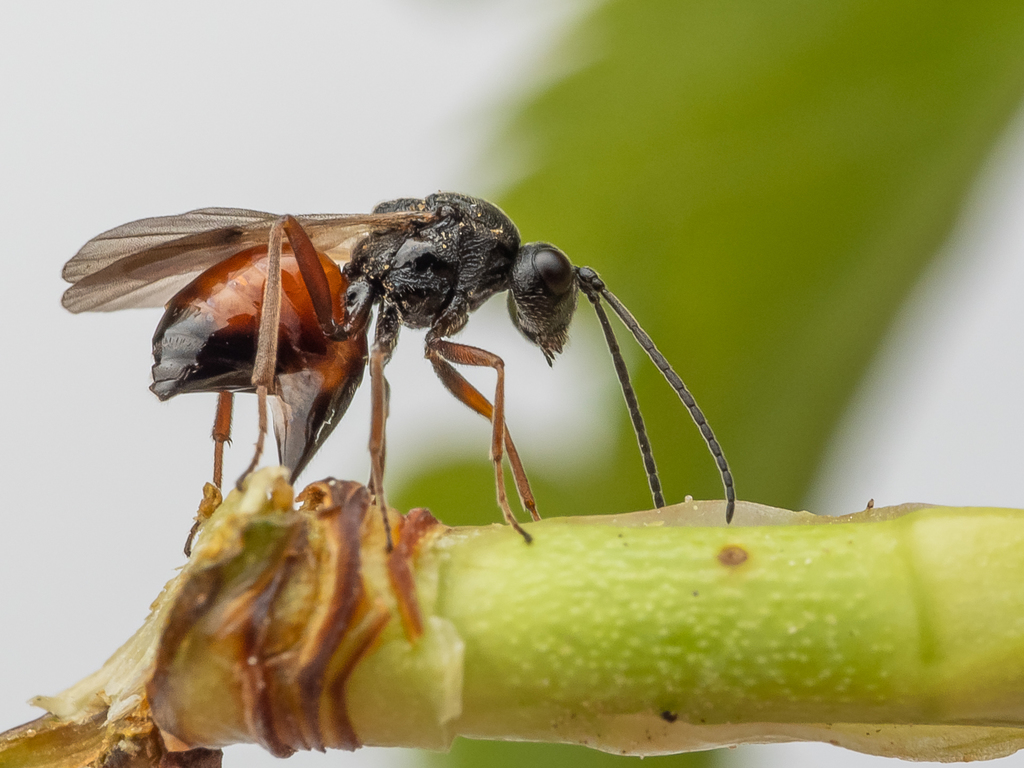
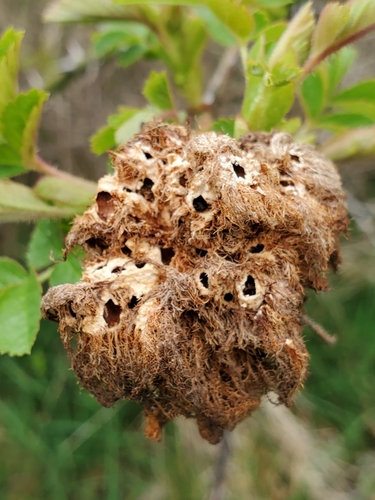
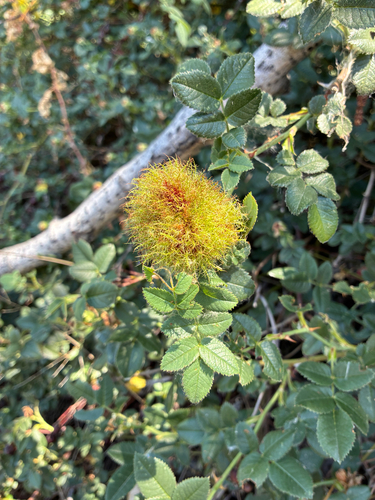
Females are about 4 mm long and males about 3 mm, with black bodies and yellow-red markings on the abdomen and legs. They induce a moss-like gall on rose buds that is covered in bright, sticky filaments which change colour through the season. Adults emerge from the old galls from May to August; removing galls before they dry can keep numbers low.
Source: Wikipedia
Size
Females are roughly 4 mm long; males are about 3 mm long and have bicoloured yellow legs.
Source: Wikipedia
Is it a pest in the house?
They may appear in large numbers on rose scrub but cause no measurable damage.
Source: Wikipedia
How to get rid of it
Cutting off and destroying galls before they dry reduces the number of emerging wasps.
Source: Wikipedia
Where it lives
The gall forms on unopened leaf buds of field rose or dog rose, especially when the plants are stressed by drought, waterlogging, or cutting.
Source: Wikipedia
What it eats
The gall interior consists of nutritious plant tissue that the larva eats, and the larva later pupates inside the dried gall.
Source: Wikipedia
Life cycle
Eggs hatch about a week after being laid; the larva feeds on bud tissue, grows through several instars, and overwinters as a prepupa inside the gall.
Source: Wikipedia
When you see it
Adults leave the old galls from May through August, and the filament colour is brightest in September.
Source: Wikipedia
Where it comes from
Diplolepis rosae is the wasp that creates the rose bedeguar (mossy rose) gall.
Source: Wikipedia
Lookalikes
A similar, less common gall is made by Diplolepis mayri, which has fewer, short, unbranched filaments and usually grows on twigs.
Source: Wikipedia
Where it is found in the US
Recorded in 33 of 51 states and DC. Most records: Oregon, Washington, Idaho, Utah, California, Colorado, New York, Michigan.
Darker = more records. Counts are museum and citizen-science records, not population size.
Source: GBIF
Status: introduced in North America; introduced in Canada; introduced in United States. Source: iNaturalist
Months it is reported in the US
Source: GBIF
More photos


Questions people ask
Do mossy rose gall wasps bite or sting?
No, they do not bite or sting people or pets.
Source: Wikipedia
Are these wasps a problem for my garden?
They cause no measurable harm to rose plants, though they can be numerous on stressed shrubs.
Source: Wikipedia
How can I get rid of them?
Remove and destroy the galls before they dry and the adults emerge.
Source: Wikipedia
Same family (Cynipidae)



Sources
- Wikipedia: https://en.wikipedia.org/wiki/Diplolepis_rosae
Look it up elsewhere: GBIF · iNaturalist · BugGuide · ITIS · Wikipedia
Text written 2026-10-22 from the sources above and checked sentence by sentence against them. Data fetched 2026-10-22.