 Bug FAQ
California Gall Wasp
Andricus quercuscalifornicus · Order: Hymenoptera · Family: Cynipidae
Also called: California Oak Apple Wasp, California Oak Gall Wasp
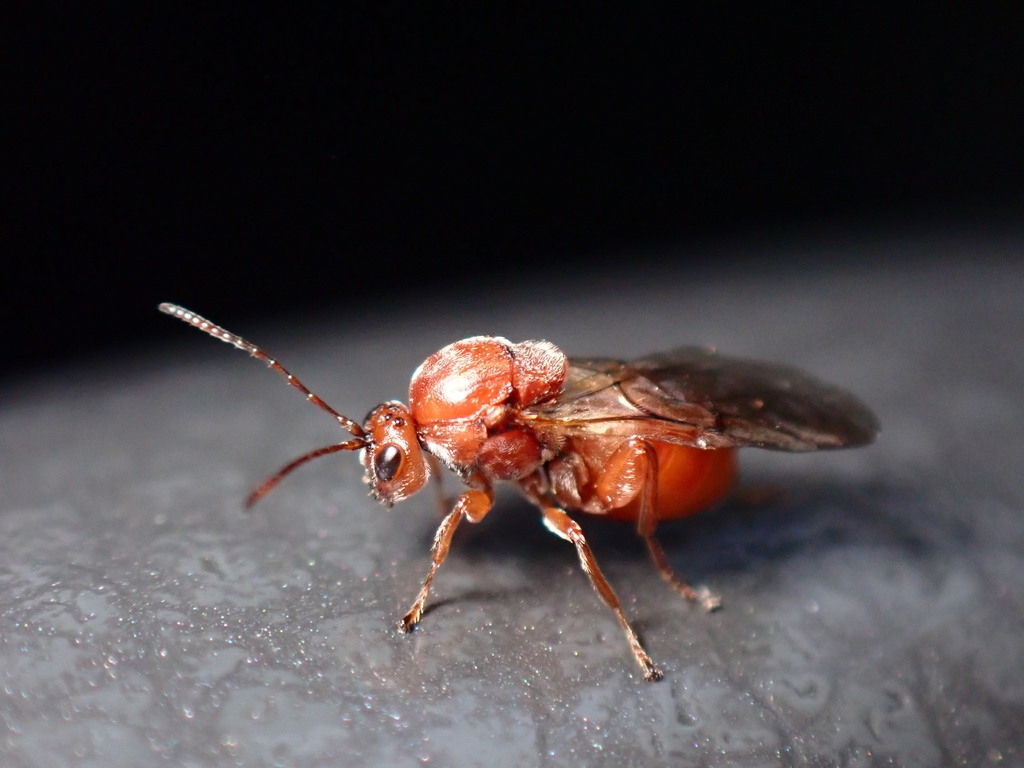
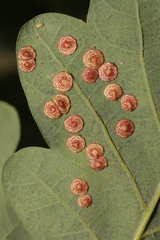
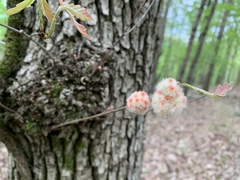
The California gall wasp lays eggs in oak twigs, and the resulting galls grow on a variety of oak species, especially Valley Oak. The wasp lives from California down into northern Mexico and is found in forests, woodlands, savannas, groves and suburban areas.
Source: Wikipedia
How to recognize it
Adult wasps are small, stout, brown insects about 5 mm long with clear wings that are roughly twice the body length.
Source: Wikipedia
Size
They measure about five millimetres in length.
Source: Wikipedia
Where it lives
They are most often found in the galls of Valley Oak but also use many other oak species.
Source: Wikipedia
What it eats
Females insert eggs into the cambium layer of oak twigs in the fall using their ovipositor. The resulting galls host fungi and other insects.
Source: Wikipedia
Life cycle
The species reproduces only by parthenogenesis; no males have been found. Eggs overwinter on the twig and hatch in early April.
Source: Wikipedia
When you see it
Eggs hatch in early spring, and adults emerge in late summer or early fall.
Source: Wikipedia
Where it comes from
Their native range extends from most of California (reaching southern Washington) down into northern Mexico.
Source: Wikipedia
Where it is found in the US
Recorded in 3 of 51 states and DC. Most records: California, Oregon, Washington.
Darker = more records. Counts are museum and citizen-science records, not population size.
Source: GBIF
Status: native in North America; native in United States. Source: iNaturalist
Months it is reported in the US
Source: GBIF
More photos


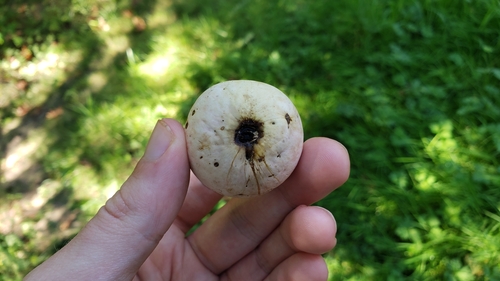
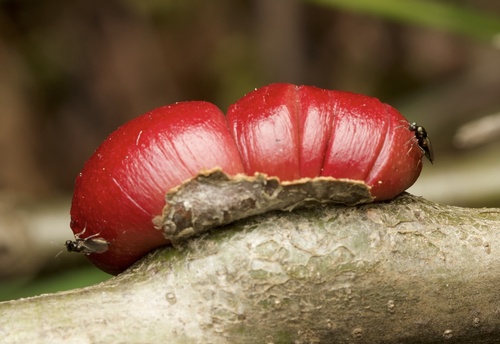
Same family (Cynipidae)
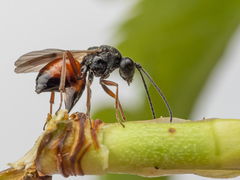



Sources
- Wikipedia: https://en.wikipedia.org/wiki/Andricus_quercuscalifornicus
Look it up elsewhere: GBIF · iNaturalist · BugGuide · ITIS · Wikipedia
Text written 2026-10-22 from the sources above and checked sentence by sentence against them. Data fetched 2026-10-22.