 Bug FAQ
Knopper Gall Wasp
Andricus quercuscalicis · Order: Hymenoptera · Family: Cynipidae
Also called: Knopper Gall
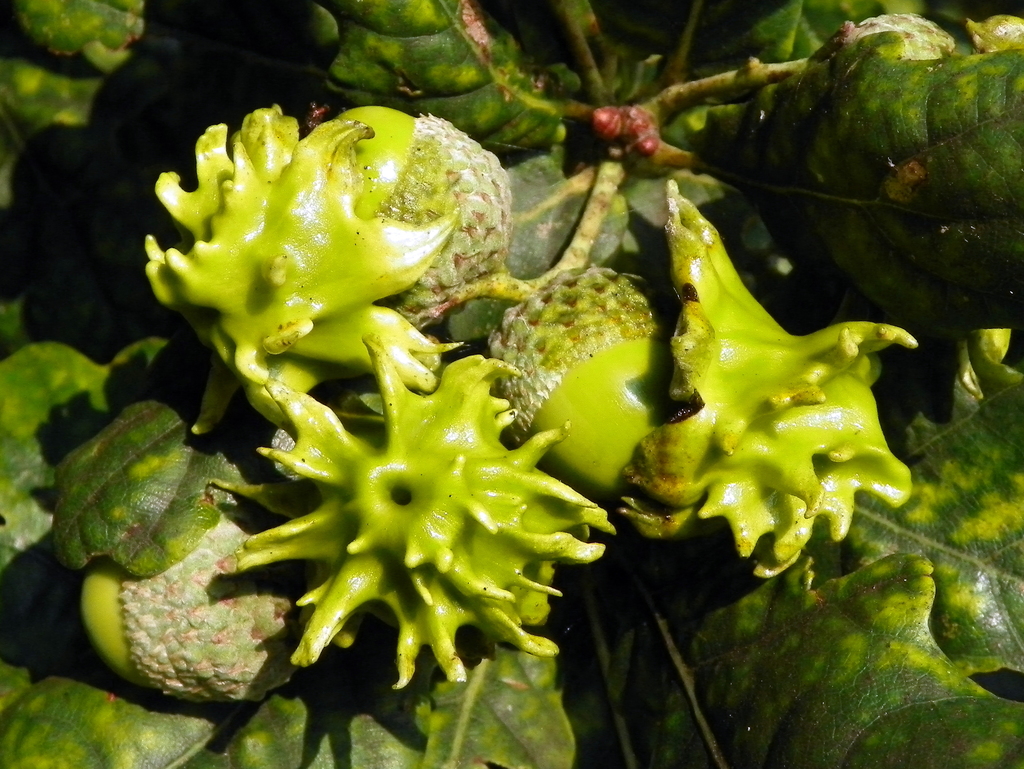
Female wasps lay eggs in oak buds, causing the oak to produce distinctive green-yellow galls that grow to about 2 cm. The wasp needs both Turkey oak and pedunculate (or sometimes sessile) oak to complete its two-phase life cycle, and the galls become woody and fall in autumn.
Source: Wikipedia
How to recognize it
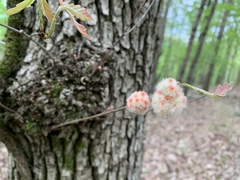
The gall looks like a 2 cm green to yellowish-green, ridged mass that can be sticky at first and later turns woody and brown.
Source: Wikipedia
Size
Galls are about 2 cm across.
Source: Wikipedia
How to get rid of it
Although there was a population explosion in 1979, it has not caused serious damage to oak fertility and control measures are not needed.
Source: Wikipedia
Where it lives
Galls form on the developing acorns of pedunculate oak trees where the wasp lays its eggs. They were first recorded in southern Scotland in 1995 and are now common where Turkey oak has been planted, especially on old estates.
Source: Wikipedia
What it eats
The wasp’s larvae develop inside the oak galls; adults need both Turkey oak and pedunculate (or occasionally sessile) oak.
Source: Wikipedia
Life cycle
It has a two-phase cycle: a spring generation makes small conical galls on Turkey oak catkins, and an autumn generation makes the knopper galls on pedunculate oak.
Source: Wikipedia
When you see it
Galls turn woody and brown in early autumn, fall off, and adult females emerge from the gall tops in spring.
Source: Wikipedia
Where it comes from
The species originally occurred where Turkey oak grows in southeastern Europe and has recently spread to Great Britain and Ireland.
Source: Wikipedia
Lookalikes
Knopper galls can be confused with acorn cup galls made by Andricus grossulariae under certain conditions.
Source: Wikipedia
Questions people ask
Do the galls harm oak trees?
The galls can reduce the number of viable acorns on affected oak trees.
Source: Wikipedia
How can I tell a knopper gall from other oak galls?
Look for a 2 cm green-yellow, ridged, initially sticky gall on the acorn; other oak galls may look different or be less ridged.
Source: Wikipedia
Same family (Cynipidae)


Sources
- Wikipedia: https://en.wikipedia.org/wiki/Andricus_quercuscalicis
Look it up elsewhere: GBIF · iNaturalist · BugGuide · Wikipedia
Text written 2026-10-22 from the sources above and checked sentence by sentence against them. Data fetched 2026-10-22.