 Bug FAQ
Dimorphic Flower Longhorn Beetle
Anastrangalia laetifica · Order: Coleoptera · Family: Cerambycidae
Also called: Dimorphic Flower Longhorn
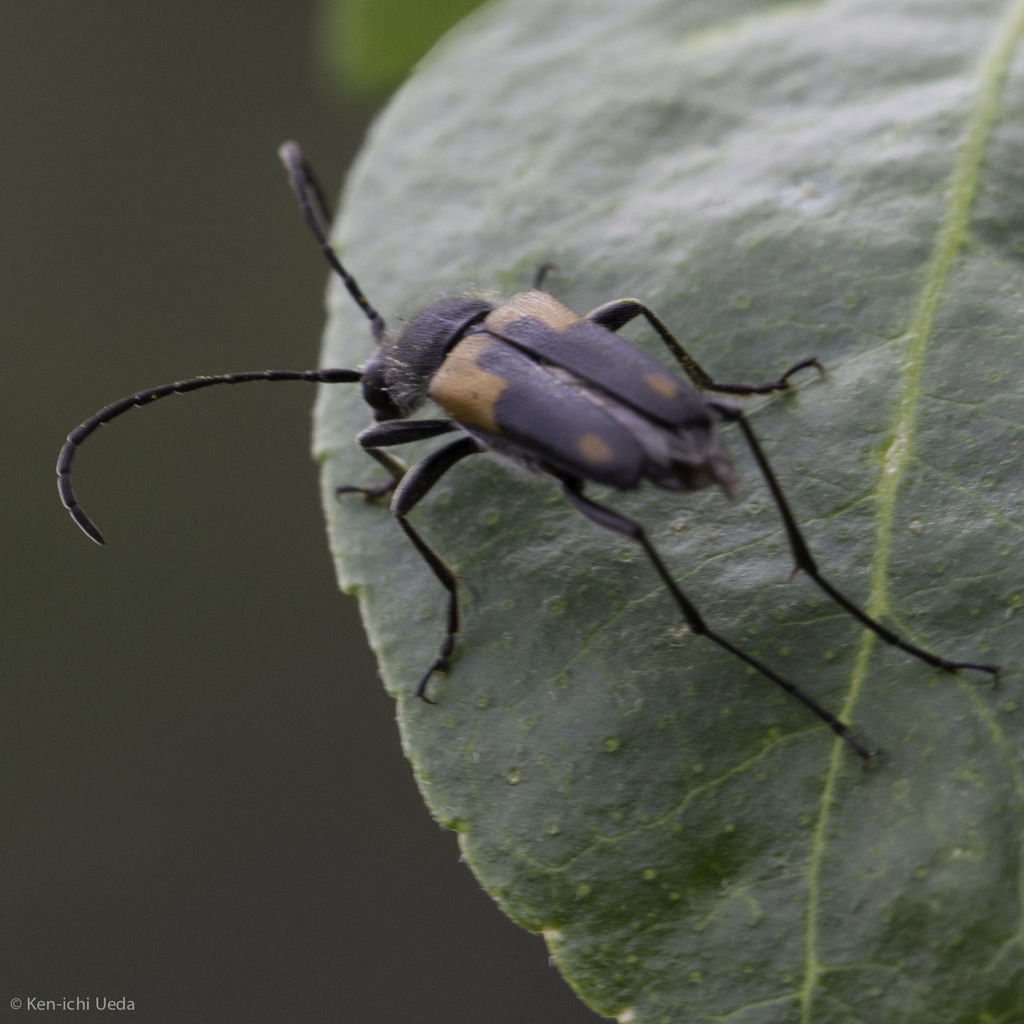
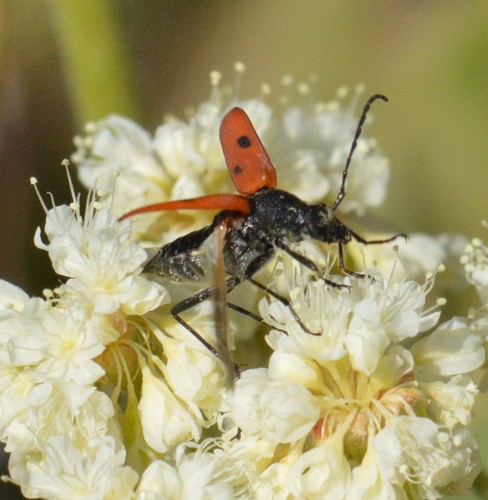
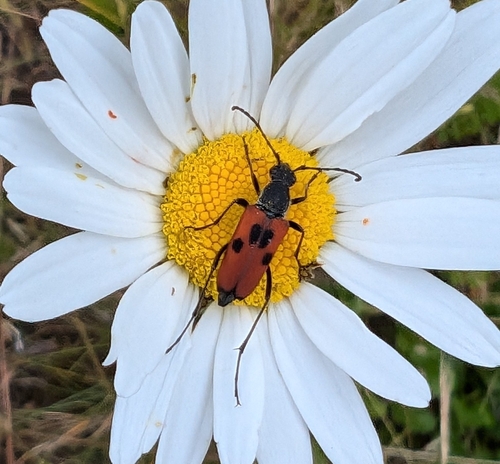
Males have completely black wing covers, while females show four black spots on red wing covers. They live in Canada, the United States, and Mexico. Their food is the plant Frasera albicaulis.
Source: Wikipedia
How to recognize it
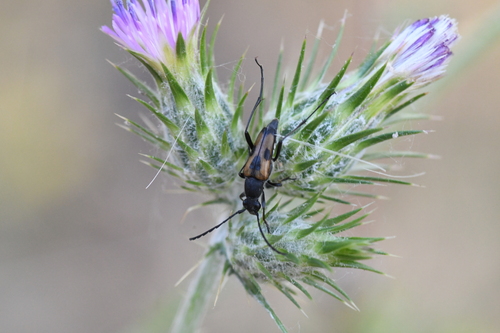
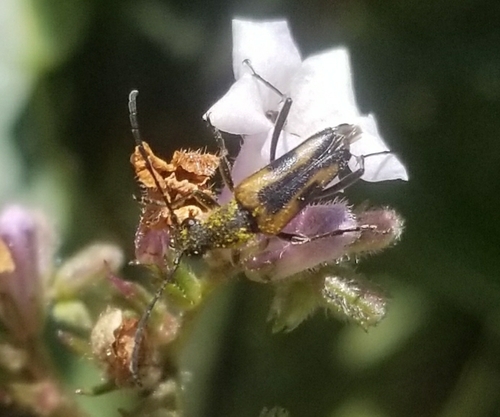
Males are all black on the elytra; females have four black dots on red elytra.
Source: Wikipedia
Where it lives
They are found in Canada, the United States, and Mexico.
Source: Wikipedia
What it eats
They feed on the plant Frasera albicaulis.
Source: Wikipedia
Where it comes from
Their native range includes Canada, the United States, and Mexico.
Source: Wikipedia
Where it is found in the US
Recorded in 6 of 51 states and DC. Most records: California, Oregon, Washington, Idaho, Montana, New Mexico.
Darker = more records. Counts are museum and citizen-science records, not population size.
Source: GBIF
Status: native in North America; native in Canada. Source: iNaturalist
Months it is reported in the US
Source: GBIF
More photos
Questions people ask
How can I tell male and female Dimorphic Flower Longhorn Beetles apart?
Males have all-black elytra, while females have red elytra with four black spots.
Source: Wikipedia
What does the Dimorphic Flower Longhorn Beetle eat?
It feeds on the plant Frasera albicaulis.
Source: Wikipedia
Same family (Cerambycidae)
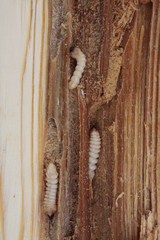 House LonghornHylotrupes bajulusCan damage your home
 Asian Longhorned BeetleAnoplophora glabripennisDamages trees, gardens or crops
 Red Milkweed BeetleTetraopes tetrophthalmus
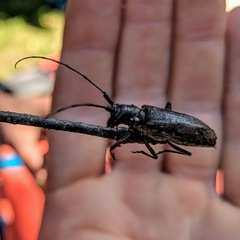 White-spotted SawyerMonochamus scutellatusCan damage your home
 Red Pine Longhorn BeetleStictoleptura rubra
 Spotted Longhorn BeetleRutpela maculataDamages trees, gardens or crops
Sources
- Wikipedia: https://en.wikipedia.org/wiki/Anastrangalia_laetifica
Look it up elsewhere: GBIF · iNaturalist · BugGuide · ITIS · Wikipedia
Text written 2026-10-23 from the sources above and checked sentence by sentence against them. Data fetched 2026-10-23.